The 1960s File Feature
There But For Fortune
There But For Fortune: Joan Baez and a Political Folk Classic on the 1965 Charts The autumn of 1965 was a moment of considerable political intensity in Ameri…
01 The Story
There But For Fortune: Joan Baez and a Political Folk Classic on the 1965 Charts
The autumn of 1965 was a moment of considerable political intensity in American life, and the folk music tradition that had helped soundtrack the early civil rights movement was evolving rapidly in response to the escalating conflict in Vietnam and the broader social upheavals that were reshaping the country. Joan Baez was at the center of that tradition, a singer whose pure, powerful voice had made her one of the most recognizable figures in American folk music, and her version of Phil Ochs's “There But For Fortune” was a track that placed political consciousness and commercial appeal in productive tension.
Joan Baez in 1965
By September 1965, Joan Baez was already a major figure in American popular music and political activism. Her early recordings had established her voice as one of the period's most extraordinary, capable of carrying traditional ballads with a classical purity that was unlike anything else in the pop mainstream. She had also established herself as a committed political activist, using her platform to support civil rights and to oppose the Vietnam War at a time when such opposition required genuine courage. Her identity as an artist and as an activist were inseparable in a way that was unusual in commercial pop music and that gave her recordings a weight that purely musical considerations could not fully explain.
Phil Ochs and the Song's Origins
Phil Ochs wrote “There But For Fortune” as part of his early catalog of topical folk songs, material that engaged directly with social and political realities in the tradition that Woody Guthrie had established. Ochs was one of the most prolific and politically engaged songwriters of the early 1960s folk revival, and this particular song had a quality that transcended the immediate political context: a meditation on chance and circumstance, on the arbitrary nature of suffering and privilege, that remained relevant beyond any specific political moment. Baez's decision to record and release it as a single was itself a political statement about what deserved to be heard on commercial radio.
Seven Weeks to Number 50
“There But For Fortune” entered the Billboard Hot 100 on September 11, 1965, at number 90. The ascent over the following weeks was steady: 90, 71, 62, 53, before reaching its peak of number 50 on October 9, 1965. Seven weeks on the chart and a top-50 peak position was a significant achievement for a song with explicitly political content in the commercial pop market. The performance demonstrated that Baez's audience was large enough and committed enough to follow her into material that mainstream radio programmers might have been expected to resist.
The British Dimension
The UK release of “There But For Fortune” had reached number eight on the British charts, and that British success reflected the stronger tradition of political folk music in the UK market where artists like Donovan and the growing Brit-folk scene created more receptive conditions for topically engaged material. The contrast between British and American performance illustrated something real about the different cultural contexts in which political folk music operated on either side of the Atlantic. Baez's American chart success, while more modest, was achieved in a more resistant environment and was therefore in some ways the more remarkable achievement.
Legacy: The Song That Lasted
Both Joan Baez's version and the Phil Ochs original have proven to be among the more durable artifacts of the 1960s folk revival. The song's meditation on privilege and circumstance has remained relevant across the decades because the underlying realities it describes have not changed: people continue to experience suffering for reasons that are fundamentally arbitrary, and the appropriate response to that arbitrariness continues to be the question the song poses. Press play and hear 1965's most compassionate question posed in one of the period's most beautiful voices.
The Political Courage of the Choice
It is easy to underestimate now how much commercial and professional courage it required to release politically engaged material on mainstream pop radio in 1965. Radio programmers had incentives to avoid controversy, and record labels were invested in protecting their commercial relationships with the broadcasters who determined chart success. Baez's willingness to release “There But For Fortune” as a pop single rather than confining it to the folk album market was itself a political act, an assertion that political consciousness belonged in the commercial mainstream and that her audience was capable of engaging with it there. The top-50 chart performance vindicated that assertion, demonstrating that an audience of sufficient size existed to support political folk music in the pop context, a finding that encouraged other artists to take similar risks in the years that followed.
“There But For Fortune” - Joan Baez's singular moment on the 1960s charts.
02 Song Meaning
Luck, Circumstance, and Conscience: The Philosophy of “There But For Fortune”
Phil Ochs wrote “There But For Fortune” as an exercise in moral imagination: the act of placing yourself in the position of another person whose suffering you might otherwise observe from a comfortable distance. The phrase itself, “there but for fortune,” is an English idiom that acknowledges the role of chance in determining who suffers and who does not, who is imprisoned and who is free, who is hungry and who is fed. The song's genius is in making that acknowledgment visceral and specific rather than abstract.
The Structure of Moral Imagination
The song works by presenting a series of particular human situations, the prisoner, the drunkard, the poor man, the young soldier, and in each case asking the listener to imagine themselves in that position through the device of the title phrase. This is a classic technique of moral philosophy, the imaginative exercise of placing yourself in another's circumstances as a way of cultivating empathy and challenging comfortable assumptions about why other people suffer while you do not. Ochs turned this philosophical exercise into a folk song, which meant reaching audiences who would not have encountered the same argument in academic philosophy. The accessibility of the folk form made the moral argument more widely available.
Joan Baez's Voice as Moral Instrument
The specific quality of Baez's voice was itself a moral argument in the context of this song. Her tone carried a purity and an emotional directness that prevented any ironic distance between the listener and the song's content; you could not hear her singing “there but for fortune” without feeling the weight of what was being said. The combination of a voice that communicated total sincerity with a lyric that demanded moral engagement created a listening experience that was difficult to dismiss or deflect. Baez understood this and chose the material accordingly.
Fortune and the Political Analysis of Suffering
The word “fortune” in the title carries a political analysis embedded within it. Suffering is not presented as deserved, not as the consequence of personal failure or moral weakness, but as the product of chance, of being in the wrong place at the wrong time, of being born into circumstances that create vulnerability. This analysis was directly relevant to the 1965 political context: the men being drafted to fight in Vietnam were not chosen for any reason related to merit or fault; the poor people being failed by American systems were not poor because of moral inadequacy. The song's fortune was a critique of comfortable explanations for inequality.
The Song in the Anti-War Context
By autumn 1965, the United States was escalating its involvement in Vietnam in ways that were generating the first significant organized opposition from the American public. Baez was one of the most visible figures in that opposition, and “There But For Fortune” functioned partly as a meditation on the arbitrary selection of young men for military service. The soldier in the song's catalogue of suffering was impossible to hear in 1965 without thinking of Vietnam, without feeling the weight of the question the song posed about why some people bore the costs of political decisions and others did not.
What the Song Asks of the Listener
The ultimate demand of “There But For Fortune” is an uncomfortable one: it asks the listener not merely to feel sympathy for those who suffer but to acknowledge their own contingent good fortune in not suffering the same fate, and then to consider what that acknowledgment implies about their obligations. The song does not answer this question; it only poses it, trusting the listener to sit with the discomfort of having asked it. That trust in the listener's moral seriousness was characteristic of the best political folk music of the period, and it is why the song's question has remained relevant long after the specific political context of its original release has receded.
→ More from Joan Baez
View all Joan Baez hits →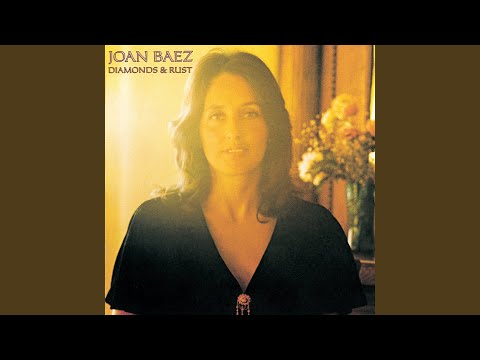



→ More from the 1960s File
View all 1960s hits →




Keep digging