The 1960s File Feature
River Deep-Mountain High
"River Deep-Mountain High" — Ike & Tina Turner and Phil Spector's Grand Ambition The Most Expensive Recording in Pop History (At the Time) Somewhere in Gold …
01 The Story
"River Deep-Mountain High" — Ike & Tina Turner and Phil Spector's Grand Ambition
The Most Expensive Recording in Pop History (At the Time)
Somewhere in Gold Star Studios in Los Angeles in early 1966, Phil Spector assembled what would become one of the most legendary sessions in the history of American popular music. He had the budget, the vision, and an obsessive determination to create something that would surpass every production he had made before. He had Tina Turner's voice, which he had sought specifically because it could cut through the density of his Wall of Sound like nothing else available to him. He had a song co-written with Jeff Barry and Ellie Greenwich. And he had the conviction that he was about to make the greatest record ever produced.
Phil Spector's Most Ambitious Production
Phil Spector produced "River Deep-Mountain High" with a scale and intensity that was extraordinary even by his own standards. The Wall of Sound technique, his signature production method, involved layering multiple performances of the same instrumental parts into a dense, reverberant mass of sound that was specifically designed for the mono AM radio of the era. For this recording, he pushed that approach further than he ever had, using an enormous number of musicians in a single room, recording in mono to compress all of that sonic mass into a single channel, and driving the arrangement toward a kind of emotional enormousness that matched what he wanted from Tina's vocal.
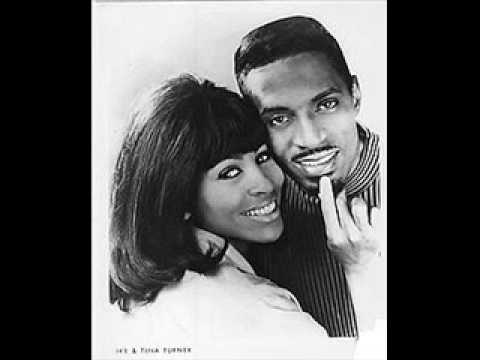
Ike Turner was paid to stay away from the session. Spector wanted full creative control and recognized that Ike's presence would complicate the dynamic. What remained was Tina's performance, recorded over multiple sessions as Spector pushed her to deliver the kind of sustained power that the production demanded. Tina Turner's vocal performance on the finished record is considered one of the greatest in pop history by many who have studied the recording closely, a tour de force of control, range, and raw emotional force.
The American Failure
The single debuted on the Billboard Hot 100 on May 28, 1966, entering at position 98 before climbing to 94 on June 4, then to 93 on June 11, and reaching its peak of 88 on June 18, 1966, spending four weeks on the chart. That performance was, by any reasonable measure, a commercial disappointment in the American market. Spector had invested heavily in the recording, both financially and emotionally, and watched it stall well below the top 40 on the chart he cared most about.
The reasons for the American failure have been debated by music historians for decades. Some have suggested that the song arrived at an awkward commercial moment, that radio programmers were uncertain how to position it between the soul and pop categories. Others have pointed to a possible backlash against Spector's style at a moment when the music press was turning its attention toward rock music and the British Invasion's aftermath. Some have even suggested racial dynamics in radio programming affected the record's placement. Whatever the cause, the American result devastated Spector.
The British Triumph
In the United Kingdom, however, the record became a significant hit, reaching the top five on the charts there. The British rock community, particularly The Beatles and The Rolling Stones, received it as an astounding achievement. Mick Jagger cited it as one of his favorite records, a tribute that carried genuine weight from someone who understood production at the highest level. The song's UK success provided some consolation, but the American market was where Spector had wanted to make his statement, and the statement largely went unheard domestically.
Rediscovery and Permanent Reputation
The record's reputation grew substantially in the decades after its release as the music press and the broader public recalibrated their understanding of what had been accomplished. Rolling Stone magazine placed it among the greatest recordings ever made. It became a standard reference point in discussions of studio production, an example of what was possible when ambition and craft and the right voice were assembled without compromise.
Tina Turner's solo career resurrection in the 1980s brought new listeners to the catalog, and many of them encountered "River Deep-Mountain High" as the document of what she had always been capable of. The combination of the wall of sound and that unstoppable vocal has rarely been equaled. Press play and understand why Spector considered it his masterpiece.
"River Deep-Mountain High" — Ike & Tina Turner Featuring Tina's singular moment on the 1960s charts.
02 Song Meaning
"River Deep-Mountain High" — Love as Elemental Force and the Grammar of Devotion
The Language of Total Surrender
Some love songs negotiate. They balance desire against self-preservation, allow for doubt, acknowledge the possibility of loss. "River Deep-Mountain High" belongs to a different tradition entirely: the song of absolute surrender, in which love is treated not as something chosen or maintained but as something as fundamental and irresistible as geography. The river goes deep. The mountain stands high. These are not metaphors that admit of moderation, and the love described in the song does not either.
The imagery draws on the oldest available comparisons for something that exceeds ordinary measurement. Writers and songwriters across centuries have turned to natural features, rivers, mountains, oceans, fire, when trying to articulate the scale of overwhelming emotional states. Jeff Barry and Ellie Greenwich understood this tradition and used it with complete confidence, writing a lyric that earns its grandiosity by never undercutting it with irony or ambivalence.
The Voice as Meaning
Any serious discussion of what the song means must confront the question of how much of its meaning is carried by Tina Turner's voice rather than by the written lyric. A recording like this one collapses the distinction between the song as composition and the song as performance. Turner does not merely interpret the material; she becomes it. Her vocal range, the sheer physical force she brings to the high passages, the tenderness she finds in the quieter moments, embeds an emotional authenticity that transforms what might otherwise be hyperbole into lived experience.
This is one of the reasons the record continues to affect listeners who encounter it for the first time. The arrangements are extraordinary, and Phil Spector's production is a landmark of studio art. But the emotional content of the recording lives in Tina's voice, in the places where her performance exceeds what any technical description can fully capture.
The Paradox of the American Reception
The song's modest American chart performance in 1966 carries its own cultural significance. A recording this ambitious and this emotionally overwhelming reaching only number 88 on the Hot 100 raises genuine questions about the mechanisms by which music gets heard and recognized in any given moment. Commercial success and artistic achievement diverge regularly in popular music history, and this record stands as one of the most stark examples of that divergence.
The gap between the American reception and the British one also speaks to the different musical conversations happening simultaneously in those markets in 1966. British rock musicians were deeply engaged with American soul and R&B traditions, listening with close analytical attention to what was coming out of the studios. American pop radio programmers were working within commercial categories that the record complicated.
Influence Beyond the Chart
The song's influence on subsequent popular music extends well beyond its original commercial footprint. It became a touchstone for producers, engineers, and vocalists who studied it as an example of what studio craft could accomplish. The Wall of Sound technique that Spector refined in recording it influenced production approaches across rock, pop, and soul for years afterward. Artists who never consciously imitated Spector absorbed elements of his approach through the music that he influenced.
For Tina Turner specifically, the recording stands as early documentary evidence of the vocal power that would eventually make her solo career, after her separation from Ike, one of the great comeback stories in pop music. Listeners discovering her through "What's Love Got to Do with It" in 1984 could trace a direct line back to 1966 and hear the same instrument at work, refined but recognizably the same.
The song means love as force of nature, love as something that exceeds the lover's capacity to measure or contain it. That theme is eternal. The production that frames it belongs to a specific moment of studio ambition that has never quite been equaled. The combination makes the record an enduring achievement that the charts of 1966 were ultimately not adequate to contain.
→ More from Ike & Tina Turner Featuring Tina
View all Ike & Tina Turner Featuring Tina hits →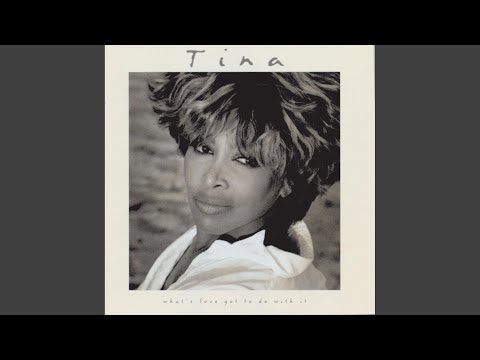



→ More from the 1960s File
View all 1960s hits →




Keep digging