The 1960s File Feature
A Fool In Love
A Fool in Love: The Record That Launched the Ike and Tina Turner Revue The story of "A Fool in Love" is the story of an accident that changed American music.…
01 The Story
A Fool in Love: The Record That Launched the Ike and Tina Turner Revue
The story of "A Fool in Love" is the story of an accident that changed American music. In 1960, a singer named Art Lassiter was booked to record at Technisonic Studios in St. Louis with Ike Turner's band. Lassiter failed to show up for the session. Rather than let the studio time and the musicians go to waste, Ike Turner turned to a young woman named Anna Mae Bullock, who had been singing informally with the band for months, and asked her to lay down a demonstration vocal. What resulted was not a demonstration at all. It was a finished record, and it was unlike anything else being made at the time.
Released in 1960 on Sue Records, "A Fool in Love" introduced the world to what would become one of the most celebrated vocal performances in R&B history. The voice on the record was raw in ways that had no precedent in polished R&B of the period. It was an attack, all forward momentum and contained fury, a sound that seemed to come from some place deeper than mere performance. Anna Mae Bullock had by this point been renamed by Ike Turner, and the label credited the record to Ike and Tina Turner, a pairing that would define both of their public identities for the next decade and a half.
The production was deliberately stripped down. Ike Turner, who had been working as a bandleader, session musician, and talent scout throughout the 1950s, understood that the power in this recording did not need ornamentation. A churning rhythm section, a horn arrangement that punctuated rather than dominated, and that extraordinary vocal were sufficient. The track had the quality of a dispatch from some more urgent emotional territory than popular music typically inhabited, and listeners responded to that urgency in large numbers.
The song reached number two on the Billboard R&B chart in 1960 and crossed over to the pop survey, giving Ike and Tina Turner their first taste of mainstream exposure. For the R&B market of that era, this represented a significant commercial achievement, particularly for a record on an independent label without the distribution muscle of the major companies. Sue Records, run by Henry "Juggy" Murray out of New York, had established itself as a credible home for soul and R&B music, and "A Fool in Love" became the label's most important record.
The follow-up promotional machinery moved quickly. Ike Turner assembled a touring revue around the record, building a full stage show designed to translate the sonic intensity of the recording into a live performance experience. This became the Ike and Tina Turner Revue, a traveling enterprise that would become famous not only for Tina's vocal performances but for the sheer physical theatricality of the shows. The Ikettes, the backing dancers who became an integral part of the revue's visual identity, were assembled during this period. The "Fool in Love" record had, almost inadvertently, created both a recording career and an entire entertainment infrastructure.
The song received extensive airplay on Black radio stations across the country, and it established the sonic template that would define Ike and Tina's early career: a propulsive groove, call-and-response between Tina and the Ikettes, and a vocal intensity from the lead singer that seemed to court emotional extremity rather than avoid it. This was not the smoothed-out R&B of the major labels, designed to be palatable to the widest possible audience. It was something more confrontational and more honest, and it found an audience willing to meet it on its own terms.
By the mid-1960s, the Ike and Tina Turner Revue had become one of the most in-demand live acts on the chitlin' circuit, the network of Black-owned venues that provided touring opportunities for African American artists who were excluded from or unwelcome at mainstream entertainment venues. Their reputation as a live act grew to the point where rock acts including the Rolling Stones, who famously brought the revue on tour as their opening act in 1969, were eager to be associated with their energy. That 1969 tour dramatically expanded the Turner's white audience and led directly to their mainstream breakthrough period of the early 1970s.
None of that would have been possible without the foundation laid by "A Fool in Love." The record established the essential elements of what made Ike and Tina Turner's act compelling, and it demonstrated that Tina Turner possessed a voice capable of carrying enormous commercial and artistic weight. Music historians who have written about the development of soul music consistently identify the record as a pivotal moment, a bridge between the raw R&B of the 1950s and the more fully formed soul sound of the 1960s.
The song has been covered, sampled, and reinterpreted many times in the decades since its release, and it appears on virtually every significant retrospective collection of early soul and R&B. The original 1960 Sue Records pressing has become a sought-after item among collectors of vintage R&B 45s. For students of American music history, it functions as a document of a moment when the shape of a major artistic career was determined by a no-show and an improvised studio session, a reminder that the most significant cultural events sometimes begin with accidents rather than plans.
02 Song Meaning
Emotional Surrender and the Cost of Love: Reading A Fool in Love
"A Fool in Love" is a song about the irrational persistence of romantic attachment in the face of clear evidence that the relationship is harmful. The narrator knows, in the abstract, that she is being treated badly. She acknowledges this knowledge explicitly rather than concealing it beneath romantic idealization. Yet knowing does not produce action, does not produce departure or resistance. The knowledge sits alongside the attachment, unable to dislodge it, and this coexistence of understanding and helplessness is the emotional core of the record.
The vocal performance Tina Turner delivers on the recording brings this paradox to vivid physical life. The urgency and intensity in her voice do not suggest a person who is merely sad about a bad relationship. They suggest someone who is caught in something larger than her own rational faculties, someone whose emotional life is running faster and harder than her capacity to manage it. The rawness of the vocal is not stylistic excess but the accurate sonic representation of the state the song describes. To be a fool in love is to be helplessly, embarrassingly, undeniably compelled by something that you know is not serving your interests.
This theme has deep roots in blues tradition, where the acknowledgment of one's own emotional irrationality is a form of honesty rather than weakness. The blues tradition that informs the song gives the narrator a kind of dignity even in her helplessness. By naming her condition clearly and singing about it with such force and directness, she claims ownership of her experience rather than simply being a victim of it. The foolishness described in the title is worn as a confession rather than a label applied by someone else, and there is agency in that act of self-naming.
The call-and-response dynamic that structures much of the track adds a social dimension to what might otherwise be an entirely private emotional confession. The backing vocalists create the impression of a community of women who recognize the situation being described, who know this story from the inside, and who are participating in the telling of it. This communal framing transforms the narrator's specific experience into something representative, something that speaks for a shared condition rather than an individual case.
In the context of 1960 and the social circumstances of its audience, the song's willingness to describe the experience of loving someone who causes you pain without moralizing or offering a clean resolution was itself a meaningful artistic choice. Popular music of the era frequently resolved emotional conflict through narrative closure or reassuring uplift. "A Fool in Love" refuses both. It ends not with escape or revelation but with the same condition it began with, a testament to the stubborn reality of emotional life that does not bend to tidier narrative expectations.
The song also functions as Tina Turner's first public self-portrait, a fact that takes on considerable resonance in light of the story her life eventually told. She would later speak at length about the difficulties of her relationship with Ike Turner, and those revelations inevitably shape how subsequent listeners hear this early recording. The irony of beginning a career as "Ike and Tina Turner" with a song about staying with someone who treats you badly is not lost on anyone familiar with that history. But the artistic achievement of the performance exists independently of that biographical context and demands to be recognized on its own terms.
The song's meaning for American popular music extends beyond its personal dimensions. It represents a moment when an African American woman stood in a recording studio and delivered a performance of almost overwhelming emotional honesty, without softening or smoothing or making it more comfortable for audiences who might have preferred something easier. That decision, whether fully conscious or not, helped establish a different set of possibilities for what popular music could sound like and what it could be about.
→ More from Ike & Tina Turner
View all Ike & Tina Turner hits →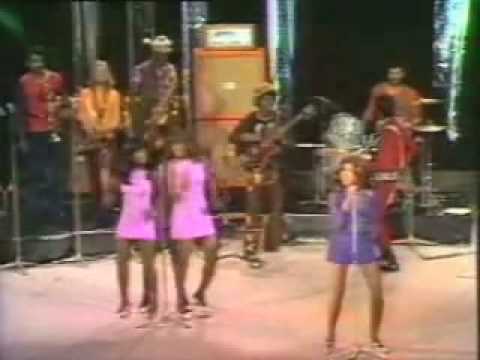

→ More from the 1960s File
View all 1960s hits →




Keep digging