The 1960s File Feature
Theme From "Hatari!"
Theme From Hatari! — Henry Mancini And His Orchestra Picture a safari camp at dusk somewhere in the Tanganyika plains, dust still hanging in the air from the…
01 The Story
Theme From "Hatari!" — Henry Mancini And His Orchestra
Picture a safari camp at dusk somewhere in the Tanganyika plains, dust still hanging in the air from the jeeps, and somewhere a melody cuts through the heat with the urgency of a chase and the grandeur of open horizons. That is the world Henry Mancini conjured when he scored Hatari!, the 1962 Howard Hawks adventure film starring John Wayne. Few composers of that era understood the craft of marrying image to sound as instinctively as Mancini, and the theme he wrote for this African wildlife adventure became one of the more distinctive instrumental entries on the Billboard Hot 100 that summer.
The Architect of the American Film Score
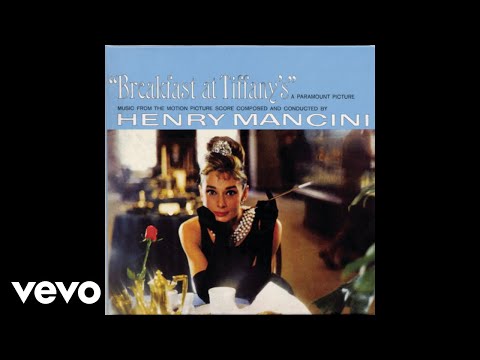
By 1962, Henry Mancini had already transformed what a film score could accomplish in popular culture. His work on Peter Gunn in the late 1950s had shown television audiences that underscore could carry the full weight of a show's personality. Then came Breakfast at Tiffany's in 1961 with the haunting "Moon River," which swept the Academy Awards and landed Mancini in a category of his own. He had proven, in quick succession, that instrumental music built for the screen could resonate far beyond movie theaters and into living rooms, car radios, and jukeboxes across America. Coming to Hatari! from that position of hard-won credibility, Mancini arrived with the full confidence of a craftsman who knew exactly what he was doing.
The Sound of Wide Open Africa
The theme itself is an object lesson in what orchestral color can do for a landscape. Mancini constructed the piece around bold brass figures that evoke the physical scale of the African savanna, with rhythmic momentum underneath that suggests the excitement of the film's central conceit: professional hunters trapping wild animals for zoos. There is nothing tentative about the writing. The orchestra charges forward with the kind of chest-forward confidence that suited John Wayne's persona perfectly, while Mancini's characteristic craft keeps the arrangement clean rather than bombastic. The contrast between driving propulsion and moments of melodic openness gives the theme a range that holds up even divorced from its visuals.
A Brief But Real Chart Moment
The theme made its debut on the Billboard Hot 100 on July 14, 1962, entering at number 98. It climbed modestly, reaching its peak position of number 95 during the week of August 4, 1962, and it spent four weeks on the chart in total. By the commercial standards of that summer, that represents a modest showing. The competition on the Hot 100 in those weeks was fierce: the charts were thick with vocal pop, early Motown, and teen idol records. An orchestral film theme arriving without lyrics and without a pop star's name attached faced a structural disadvantage. The surprise is not that it peaked at 95 but that it made the chart at all, a testament to Mancini's drawing power as a name brand in American popular music.
The Mancini Method in Context
Mancini operated in a particularly fertile window for instrumental pop. The early 1960s still had patience for an orchestra on the radio, a patience that would erode significantly as the decade wore on and rock solidified its dominance. Performers like Percy Faith, Ferrante and Teicher, and Floyd Cramer regularly landed instrumentals in the upper reaches of the Hot 100. Mancini belonged to this tradition while consistently transcending it through the quality of his writing. His melodies were not wallpaper; they were fully realized compositional statements that happened to serve a narrative function. That distinction is why his catalog aged so much better than most of his peers.
A Legacy Built Film by Film
The Hatari! theme did not define Mancini's career the way "Moon River" or his later work on The Pink Panther would, but it sits comfortably within a body of work that made Henry Mancini the most commercially successful film composer of his generation. Each project added another dimension to a catalog that crossed genre lines with apparent ease, from jazz-inflected crime music to lush romantic orchestrations to the playful comedic writing the Pink Panther films required. What connected all of it was a commitment to melodic clarity: Mancini believed the melody should always be audible, always singable in your head, no matter how elaborate the arrangement around it.
Why It Endures
Decades after the film left theaters, the Hatari! theme retains an energy that holds up on its own terms. You do not need the film to appreciate the writing; the music makes its own dramatic argument. There is a joy in the propulsive rhythm, an excitement in the brass work, a sense of physical movement through open space that the orchestra communicates without a single word. For anyone who wants to understand what made Henry Mancini special, this theme offers a compact and rewarding entry point into the craft of a composer who spent his career making the difficult sound effortless.
Put it on and let the orchestra do its work.
"Theme From 'Hatari!'" — Henry Mancini And His Orchestra's singular moment on the 1960s charts.
02 Song Meaning
Adventure in Sound: What the "Hatari!" Theme Is Really About
Instrumental music presents an interpretive challenge that lyric-driven songs sidestep entirely: there are no words to anchor the meaning, only the shape and color of the sound itself. The theme Henry Mancini wrote for Hatari! does not tell a story so much as it evokes a sensation, and that sensation is the physical experience of pursuit across a vast and indifferent landscape.
The Vocabulary of Motion
The theme's primary emotional register is forward momentum. From its opening bars, the music does not linger or reflect; it moves. Mancini builds that sense of motion through a rhythmic architecture that keeps pressing forward, with brass accents punctuating the drive like landmarks passing on a road. This is music that understands pace intuitively, a quality that served the film's action sequences and that gives the standalone recording its restless, kinetic quality. Listening without watching, you still feel something is being chased, or pursued, or discovered just over the next rise.
Grandeur Without Sentimentality
One of the more striking qualities of the Hatari! theme is its refusal to be sentimental. Mancini was entirely capable of writing deeply emotive music; "Moon River" from the previous year proved that conclusively. But the Hatari! theme takes a different emotional stance. It is grand without being elegiac, exciting without being frantic. The orchestration reaches for scale rather than intimacy, and that choice reflects something true about the source material: the African setting demanded music that matched its physical proportions. The emotional tone is unambiguously optimistic, forward-looking, the sound of something large and alive and worth experiencing.
The Cultural Meaning of the Exotic
In 1962, Africa as a setting carried a particular cultural weight for American audiences. The continent was framed in mainstream Western entertainment as a place of adventure, wildness, and spectacle, a framing that reflected the assumptions of its era more than it did African reality. Mancini's score participates in that framing through its orchestral idiom, giving Africa the sound of Hollywood adventure rather than any specific musical culture. Understanding this context matters for an honest reading of the music: the theme is a product of how American popular culture imagined a distant world, and its excitement is inseparable from that projection.
Music as Character
In the context of the film, the theme functioned as an extension of John Wayne's persona. Wayne, by 1962, carried a specific set of associations: physical confidence, moral clarity, mastery of difficult terrain. Mancini's music reinforced those qualities through sound, giving the character's presence on screen an orchestral identity that broadened his larger-than-life quality. The theme, in this sense, is less about Africa and more about a particular American archetype: the capable man operating in a world where competence is what counts.
Why the Melody Lingers
Instrumental themes succeed or fail on the strength of their melodic material, and the Hatari! theme succeeds because its main melodic idea is genuinely memorable. You can hum it after a single hearing, which is no small achievement in orchestral writing. That memorability is the foundation of Mancini's art: no matter the complexity of the arrangement, the tune always survives. It is that combination of a strong melodic idea, confident orchestration, and a clear emotional stance that explains why the theme found its way onto the Billboard Hot 100 and why, more than six decades later, it still communicates something vivid and immediate to anyone willing to listen.
→ More from Henry Mancini And His Orchestra
View all Henry Mancini And His Orchestra hits →
→ More from the 1960s File
View all 1960s hits →




Keep digging