The 1960s File Feature
Love Theme From Romeo & Juliet
"Love Theme From Romeo & Juliet" — Henry Mancini And His Orchestra Shakespeare Meets the Summer of 1969 The summer of 1969 was a season of extremes: Woodstoc…
01 The Story
"Love Theme From Romeo & Juliet" — Henry Mancini And His Orchestra
Shakespeare Meets the Summer of 1969
The summer of 1969 was a season of extremes: Woodstock was coming, the moon landing had just happened, and the airwaves were thick with rock and soul. Against all of that noise, an orchestral piece adapted from a Franco Zeffirelli film climbed steadily to the very top of the Billboard Hot 100. Henry Mancini's arrangement of the "Love Theme From Romeo & Juliet" was one of those unlikely chart triumphs that no focus group would ever have predicted, and yet it made complete, almost inevitable sense once it happened.
The Zeffirelli Film and Its Music
Franco Zeffirelli's 1968 adaptation of Romeo and Juliet was a cultural event. Casting young, unknown actors as Shakespeare's teenagers (Olivia Hussey and Leonard Whiting, both barely past sixteen) gave the film an authenticity that previous adaptations lacked. The original film score was composed by Nino Rota, whose main theme, a sweeping, achingly romantic melody, became inseparable from the film's visual beauty. Rota's theme captured something essential: the giddiness and tragedy of first love, the sense that the world both expands and narrows when you fall for someone that completely.
Mancini, one of the most commercially successful arrangers and composers in Hollywood history, recognized the theme's pop potential. His orchestra version adapted Rota's melody into a radio-friendly instrumental that preserved the emotional grandeur of the original while giving it the production gloss that AM radio required.
Climbing the Hot 100
The single debuted on the Billboard Hot 100 on May 10, 1969, entering at number 71. Its ascent was gradual and steady, not a sudden leap but a persistent climb week after week as audiences kept returning to it. By late June, the track reached number one on June 28, 1969, after 14 weeks on the chart. That kind of slow-building momentum speaks to a record that listeners chose to seek out rather than one that was simply inescapable through radio saturation. Mancini won two Grammy Awards for the recording, adding institutional recognition to its commercial success.
Henry Mancini's Place in Pop History
By 1969, Henry Mancini had already established himself as the premier composer and arranger at the intersection of Hollywood and pop radio. His theme for The Pink Panther had become a cultural touchstone, and his work on Breakfast at Tiffany's, including "Moon River," had earned him the kind of mainstream crossover success that most film composers never achieved. The Romeo & Juliet theme was further confirmation that his sensibility, lush but never overwrought, melodic but never simplistic, translated as well on radio as it did on screen.
His orchestra's recording demonstrated something important about the era: in 1969, the pop audience was genuinely broad. The same chart that housed Credence Clearwater Revival and Sly and the Family Stone also had room for a beautifully arranged Shakespearean love theme played by a full orchestra.
A Theme That Outlasted Its Moment
Nino Rota's melody has since become one of the most recognizable romantic themes in cinema history. Mancini's pop version gave it a chart life that transcended the film's initial run. The recording is a reminder of what orchestral pop could achieve when it trusted the emotional intelligence of the audience: no lyrics, no hook in the conventional sense, just melody and arrangement doing all the work.
Play it now and you can still feel the Verona twilight in the strings, still hear what Zeffirelli was reaching for when he put two teenagers in Renaissance costume and asked an audience to believe in love at first sight all over again.
"Love Theme From Romeo & Juliet" — Henry Mancini And His Orchestra's singular moment on the 1960s charts.
02 Song Meaning
"Love Theme From Romeo & Juliet" — Meaning and Legacy of Mancini's Orchestral Hit
The Language of Pure Melody
There are no lyrics to decode, no verses to parse, no chorus driving home a message in words. The "Love Theme From Romeo & Juliet" communicates entirely through musical gesture, which makes it a fascinating case study in how melody alone can carry meaning. Nino Rota's original theme, as arranged by Henry Mancini, speaks in a musical vocabulary of longing, ascent, and tenderness. The melody rises, seems to reach toward something just out of grasp, and resolves with a kind of bittersweet warmth. That arc is the emotional story of Shakespeare's play compressed into a few minutes of orchestral sound.
Love, Youth, and the Tragic Bargain
The theme serves the Zeffirelli film by capturing the specific quality of adolescent love at its most intense. This is not the settled warmth of long partnership; it is the vertiginous feeling of a world suddenly rearranged around another person. The strings carry that vertigo beautifully, swooping and climbing in ways that feel both inevitable and fragile. The fact that the melody is also shadowed by the knowledge of the story's ending gives even a pop radio listen a certain poignancy. You know, even before the last note, that this particular love story does not end well.
Shakespeare in the Age of Pop Radio
That a Shakespearean film theme reached number one in the summer of 1969 says something genuine about the cultural moment. The late 1960s had an unusual appetite for big romantic emotion expressed through lush, cinematic production. Film soundtracks regularly crossed over to the pop charts; audiences did not yet draw the sharp line between "serious" music and "popular" music that later decades would enforce. Mancini's genius was understanding that the emotional content of great film music and the emotional content of great pop music were drawing from the same well. Both were asking the listener to feel something large.
Why Instrumental Pop Can Resonate
Without words to anchor the listener to a specific situation, an instrumental theme invites projection. Listeners could bring their own romantic memories and longings to the record, and the melody would accommodate all of them. A couple who had seen the film heard the theme as a specific cinematic memory. Someone who had never seen the movie simply heard a beautiful piece of music that stirred something. That flexibility of meaning, possible only in an instrumental, gave the recording a broader emotional reach than any lyric could have achieved.
A Lasting Cultural Imprint
Decades after the Zeffirelli film's premiere, the Romeo and Juliet love theme remains one of the most immediately recognizable romantic melodies in all of cinema. It has appeared in countless advertisements, television programs, and wedding playlists. Mancini's arrangement helped cement its status as a pop artifact rather than simply a film curiosity. The Grammy recognition it received was the industry's acknowledgment of what audiences already knew: that sometimes the most emotionally precise love song needs no words at all.
→ More from Henry Mancini And His Orchestra
View all Henry Mancini And His Orchestra hits →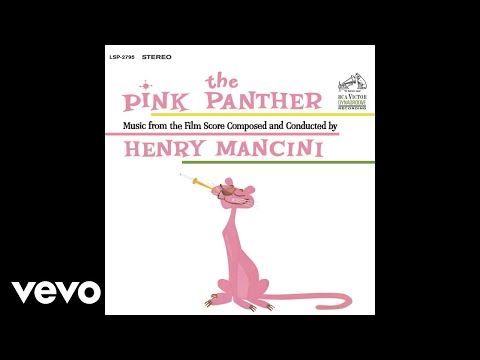
→ More from the 1960s File
View all 1960s hits →




Keep digging