The 1960s File Feature
Walk Away Renee
Walk Away Renee — The Four Tops Bring Baroque Pop to Motown The Left Banke's original "Walk Away Renee," released in 1966 , had been one of the stranger and …
01 The Story
Walk Away Renee — The Four Tops Bring Baroque Pop to Motown
The Left Banke's original "Walk Away Renee," released in 1966, had been one of the stranger and more beautiful records of the mid-1960s pop era, a song built around an unusual harpsichord figure and lyrics of genuine poetic melancholy that did not fit neatly into the era's dominant pop categories. When The Four Tops recorded their cover version for Motown and released it in 1968, they were doing something that at first might seem counterintuitive: taking a white baroque-pop record and running it through the Motown production machine. The result was one of the more interesting cultural translations of the period, and it reached the top fifteen on the Billboard Hot 100, demonstrating that the song's emotional core could survive and even gain power in translation.
The Four Tops at this point in their career were one of Motown's most established acts, having scored a string of major hits beginning with "Baby I Need Your Loving" in 1964 and continuing through the extraordinary "I Can't Help Myself (Sugar Pie Honey Bunch)" and "Reach Out I'll Be There," both of which had reached number one on the Hot 100. Levi Stubbs, whose baritone-to-tenor voice was one of the most immediately recognizable instruments in soul music, led the group alongside Abdul "Duke" Fakir, Renaldo "Obie" Benson, and Lawrence Payton. Together they had a combined vocal range and expressive capacity that Motown's producers had become expert at deploying to maximum effect.
The decision to cover "Walk Away Renee" reflected Motown's strategy during the late 1960s of expanding its artists' repertoire beyond the Motown writing-production stable to include pop material that could broaden crossover appeal. Holland-Dozier-Holland, who had written many of the Four Tops' biggest hits, had departed from Motown in a dispute over royalties in 1967, which created a creative vacuum that Berry Gordy's label addressed in part by looking to outside material. "Walk Away Renee" was the kind of song that could demonstrate the Four Tops' range while still fitting the emotional register of longing and loss that characterized their best work.
The Motown production on the Four Tops' version, handled by Frank Wilson, retained some of the original's chamber-pop atmosphere while grounding it more firmly in the soul tradition. The orchestration was fuller than the Left Banke's recording, with strings and horns adding the kind of lush backdrop that Motown habitually provided its artists. What the arrangement did most effectively was to recenter the song around Levi Stubbs' voice, which brought a rawness and urgency to the material that the original's more delicate production had not attempted. Stubbs did not sing with the pristine pop clarity of The Left Banke's Michael Brown; he sang with the emotional intensity of a man genuinely devastated by the experience the song described.
The original Left Banke version had reached number five on the Hot 100 in 1966, making it one of the more successful baroque-pop records of the era alongside contemporaries like The Association and Harpers Bizarre. The Four Tops' cover reaching the top fifteen two years later represented a meaningful commercial achievement for a song that might have been expected to remain identified with its original performers. It demonstrated the song's structural strength, the fact that its melody and emotional premise could support very different interpretive approaches.
The period in which the Four Tops recorded this cover was one of transition for Motown and for American popular music more broadly. The label was beginning its move from Detroit to Los Angeles, the social upheaval of 1968 was reshaping the cultural landscape, and soul music was in the process of becoming more politically engaged and stylistically diverse. The Four Tops' "Walk Away Renee" belongs to a moment just before those changes fully took hold, when it was still possible to imagine a smooth creative exchange between white baroque-pop and Black soul without the genre boundaries hardening in quite the way they would in the following years.
The song added another dimension to the Four Tops' catalog of loss and longing, a theme they had explored with enormous emotional sophistication throughout their Motown career. "Walk Away Renee" fit naturally into a body of work built around the experience of watching love depart, and Levi Stubbs' vocal performance gave the cover its own distinct emotional authority, ensuring it was remembered not merely as a version of someone else's song but as a Four Tops record with its own identity.
02 Song Meaning
Elegance and Devastation: Reading "Walk Away Renee" Through the Four Tops
"Walk Away Renee" is a song about the particular pain of unrequited love witnessed at close range. The narrator does not describe a relationship that has ended; he describes a relationship that never fully began, the experience of caring deeply for someone who loves another person and must be allowed to leave. This is a more refined form of heartbreak than the straightforward romantic betrayal that populated much of the pop landscape in the mid-1960s, and it may be part of why the song has retained its emotional potency across multiple decades and interpretive approaches.
The Left Banke's original version encoded this emotional complexity in a production that was itself delicate and complex, using the harpsichord to suggest something brittle and precious about the narrator's situation. The Four Tops' cover, recorded for Motown in 1968, translated that emotional content into a different register, one defined by the raw expressive power of Levi Stubbs' voice rather than the studied fragility of the original arrangement. The change in approach illuminated different aspects of the same emotional situation, suggesting how much of a song's apparent meaning is determined by the performance style rather than the words and melody alone.
Stubbs brought to "Walk Away Renee" the same quality that had defined his work throughout the Four Tops' Motown career: an ability to convey that the emotions being described were genuinely felt rather than merely performed. His approach was never clinical or detached; he sounded like a man actually experiencing the situation the song described, which gave the Four Tops' version an immediacy and presence that the original's more aestheticized approach did not attempt. The name "Renee" in this performance carries the weight of a real person being let go, not a poetic device.
The specific scenario the song describes, the narrator watching the woman he loves walk away toward someone else, is rendered in the lyrics with notable restraint. There is no rage, no self-pity, no dramatic confrontation. The narrator accepts the situation as something he cannot change, and this acceptance is itself a form of emotional maturity that the song treats with considerable tenderness. The Four Tops' vocal group arrangement emphasized this restraint, with the harmonies providing a kind of communal support for the lead voice's dignity in difficult circumstances.
The song's recurring central image, the act of walking away, carries more meaning than it might initially appear. Walking away is a choice, a deliberate movement rather than an accidental departure. Renee is not lost or taken; she is leaving of her own volition toward something she prefers. The narrator must find a way to honor that choice even while it causes him pain. This ethical dimension distinguishes "Walk Away Renee" from songs that treat romantic loss as something done to the narrator rather than something the narrator must learn to accept about someone else's freedom.
Within the Four Tops' catalog, the song fits into a body of work about romantic suffering that Levi Stubbs had made his primary expressive territory. Songs like "Reach Out I'll Be There" and "Bernadette" dealt with the desperate desire to protect and be with the beloved; "Walk Away Renee" dealt with the situation after that desire had been definitively refused. Together these recordings mapped the full emotional arc of romantic experience from pursuit through loss, and each benefited from Stubbs' willingness to inhabit the emotional extremes his material required.
The song's baroque-pop origins gave the Four Tops version an unusual quality within Motown's catalog. Most of the label's material came from its own writing stable and bore the specific fingerprints of that collaborative process. "Walk Away Renee" brought a different melodic and harmonic vocabulary into the Motown production context, and the friction between the song's pop-classical tendencies and the soul production approach produced something genuinely distinctive. The record stands as evidence that the Motown machine could absorb and transform material from outside its own tradition while remaining recognizably itself.
→ More from Four Tops
View all Four Tops hits →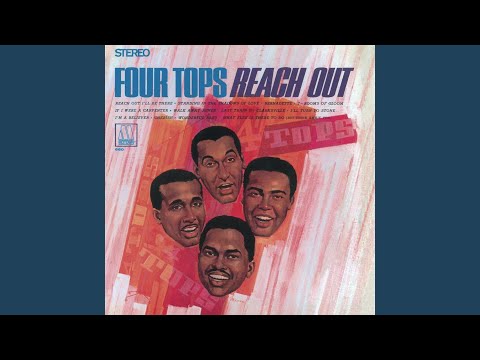



→ More from the 1960s File
View all 1960s hits →




Keep digging