The 1960s File Feature
Baby I Need Your Loving
Baby I Need Your Loving: Holland-Dozier-Holland and the Launch of the Four Tops Note: "Baby I Need Your Loving" is the original Four Tops recording on Motown…
01 The Story
Baby I Need Your Loving: Holland-Dozier-Holland and the Launch of the Four Tops
Note: "Baby I Need Your Loving" is the original Four Tops recording on Motown Records. A later version by Johnny Rivers also charted, but this entry concerns the Four Tops original.
The story of "Baby I Need Your Loving" is inseparable from the story of how Motown Records transformed itself from a promising independent label into a genuine pop institution during the first half of the 1960s. When the Four Tops signed with Motown in 1963, they were a polished vocal quartet from Detroit who had been performing together since the early 1950s but had yet to find a record that connected with mass audiences. Their previous recordings on smaller labels had demonstrated their vocal sophistication without producing the commercial breakthrough their talent deserved.
The songwriting and production team of Holland-Dozier-Holland, comprising brothers Brian and Eddie Holland and Lamont Dozier, had already begun producing hits for Motown by the time they were assigned to work with the Four Tops. The team had written and produced records for Martha and the Vandellas and was developing the approach that would generate an extraordinary run of pop classics over the next several years. "Baby I Need Your Loving" was their first assignment with the Four Tops, and the result announced both the group's potential and the Holland-Dozier-Holland formula in vivid terms.
The song was built around a confession of emotional dependency, with the narrator declaring his need for a partner's presence and love with an urgency that bordered on desperation. Holland-Dozier-Holland structured the melody to give lead vocalist Levi Stubbs maximum opportunity to exploit the full dramatic range of his voice, from pleading vulnerability to near-operatic intensity. Stubbs was one of the most naturally gifted voices in the Motown stable, possessed of a raw, searching quality that could convey longing with an immediacy few of his contemporaries could match.
The production reflected Motown's house approach during this period, featuring the studio musicians known collectively as the Funk Brothers, whose contributions to the label's recordings remain among the most significant in pop music history. The arrangement gave the track both the rhythmic drive that would make it effective on the dance floor and the melodic space that allowed Stubbs's vocal to dominate. The bass line, the drumming, and the piano lines all served the song's emotional architecture without drawing excessive attention to themselves.
"Baby I Need Your Loving" was released in the summer of 1964, entering a commercial landscape that was being dramatically reshaped by the British Invasion. The Beatles had arrived in America in February 1964, and their dominance of the charts represented a genuine challenge for American pop acts. Against that backdrop, the song's success was a demonstration of Motown's particular resilience: the label's combination of sophisticated production and emotionally direct vocal performance occupied a space that the British acts, for all their popularity, could not entirely fill.
The single reached number eleven on the Billboard Hot 100, a strong debut performance for a new act on the label. More significantly, it established the commercial and artistic framework within which the Four Tops would operate for the rest of the decade. The song's success validated Holland-Dozier-Holland's instinct that Levi Stubbs's voice was best showcased in material that demanded emotional urgency, and the team would return repeatedly to that territory in subsequent recordings.
The record's reception at radio was immediate, with its combination of rhythmic drive and melodic memorability making it an easy addition to playlists across the country. The song spent seventeen weeks on the Hot 100, a performance that reflected consistent, sustained audience interest rather than a brief burst of novelty. Black radio stations, which had been the primary commercial ecosystem for R&B acts, embraced the recording enthusiastically, but so did pop-formatted stations that were increasingly receptive to Motown's crossover approach.
The Four Tops would go on to have enormous hits with subsequent Holland-Dozier-Holland productions, including "I Can't Help Myself (Sugar Pie Honey Bunch)," which reached number one in 1965, and "Reach Out I'll Be There," which also topped the charts in 1966. But "Baby I Need Your Loving" deserves recognition as the record that established the template for all of that success, identifying the sonic and emotional territory in which the group would produce their most significant work.
The song's afterlife has been substantial. Johnny Rivers recorded a version that itself reached the top twenty on the Hot 100 in 1967, and subsequent artists have returned to the material across multiple decades. The original Four Tops recording, however, retains its special status as the inaugural statement of one of Motown's most important creative partnerships, a three-minute demonstration of everything the label's approach was capable of producing when the right songwriters, the right producers, and the right vocal group came together at the right historical moment.
Berry Gordy's Motown operation was, by 1964, functioning as a remarkably efficient creative factory, with songwriters, producers, and artists working in close proximity and in ongoing dialogue. "Baby I Need Your Loving" was a product of that system at its most effective, combining the technical resources of Hitsville U.S.A. on West Grand Boulevard in Detroit with the natural gifts of four men who had been honing their ensemble skills for more than a decade. The result was a record that remains a landmark of early 1960s soul and pop.
02 Song Meaning
Longing as Architecture: The Emotional Logic of "Baby I Need Your Loving"
"Baby I Need Your Loving" establishes from its opening moments a stance toward romantic need that would define the Four Tops' artistic identity throughout their most productive years. The song's narrator does not approach the object of his affection from a position of strength or calculated cool. He approaches from a position of open, unguarded vulnerability, declaring his emotional dependency with a directness that the soul tradition celebrated rather than treated with suspicion. This willingness to perform need without irony or protective distance is central to the song's emotional power.
Levi Stubbs's vocal interpretation of the Holland-Dozier-Holland lyric is what transforms the material from a well-crafted pop song into something with lasting emotional authority. Stubbs understood intuitively that the lyric's value lay in its vulnerability, and he performed it accordingly, allowing his voice to strain and reach in ways that communicated genuine urgency rather than theatrical simulation. This quality distinguished the Four Tops' recordings from many of their contemporaries, who often approached similar material with more polish and less rawness.
The Holland-Dozier-Holland lyric positions romantic love not as a pleasant addition to life but as a fundamental necessity. The narrator's language of need is not hyperbole but a sincere expression of how the relationship in question has become essential to his sense of self and stability. This framing was well-established in the tradition of American rhythm and blues, drawing on a long lineage of love songs that treated romantic connection as survival rather than luxury. In that tradition, confessing need was not weakness but honesty, and the authenticity of the confession was what audiences responded to.
The song's structure reinforces its emotional logic by returning repeatedly to the central declaration of need, using it as both an anchor and an escalation point. Each return to the core statement arrives with slightly more urgency than the last, tracking the narrator's emotional state as it intensifies through the course of the song. Holland-Dozier-Holland's compositional intelligence is evident in the way this escalation is managed without becoming melodramatic, remaining within the bounds of recognizable human experience even as it pushes toward its emotional maximum.
For the Four Tops as a group, the song was an act of artistic self-definition. It announced what kind of group they were going to be within the Motown ecosystem and what emotional territory they were prepared to claim as their own. Where the Temptations, for example, developed a more varied group persona that allowed for multiple vocal identities and emotional registers, the Four Tops built their identity around Stubbs's singular vocal presence and the particular kind of emotional intensity he could deliver. "Baby I Need Your Loving" established that identity clearly enough that subsequent recordings could develop and deepen it rather than having to establish it from scratch.
The song also situated the Four Tops within the broader cultural conversation about masculinity and emotional expression that soul music was conducting in the early 1960s. By giving voice to need, vulnerability, and dependency, soul music was offering a model of Black masculine feeling that was complex and human rather than stereotyped. The tradition of which "Baby I Need Your Loving" was a part, running from Ray Charles and Sam Cooke through the emerging Motown sound, was asserting that emotional depth and vocal expressiveness were markers of strength rather than weakness. That assertion carried cultural significance well beyond the pop charts.
In the context of the Four Tops' subsequent catalog, "Baby I Need Your Loving" reads as a foundational statement, the song that established the group's emotional vocabulary and the expressive possibilities of the Stubbs-Holland-Dozier-Holland collaboration. Everything that followed, from the desperation of "Reach Out I'll Be There" to the anguish of "Bernadette," was built on the emotional architecture that this debut hit put in place. Understanding the song is, in significant part, understanding what the Four Tops were for and why the Motown sound at its best was capable of producing records that spoke to something genuinely universal in human experience.
→ More from Four Tops
View all Four Tops hits →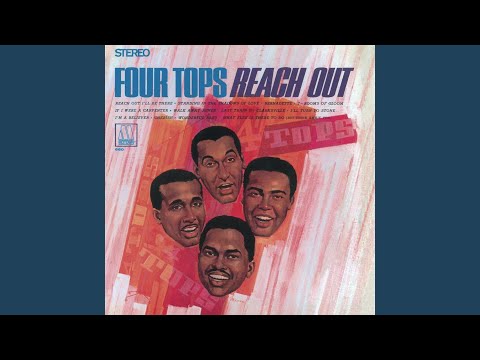



→ More from the 1960s File
View all 1960s hits →




Keep digging