The 1960s File Feature
Standing In The Shadows Of Love
Standing In The Shadows Of Love — Four Tops The Motown Machine at Full Power By the winter of 1966, Motown Records had established a production system so ref…
01 The Story
Standing In The Shadows Of Love — Four Tops
The Motown Machine at Full Power
By the winter of 1966, Motown Records had established a production system so refined it bordered on the miraculous. The label's in-house songwriting and production team, Holland-Dozier-Holland, was operating at peak creative velocity, turning out hit after hit for the Four Tops, the Supremes, and Marvin Gaye with a consistency that the American music industry had never seen before. Into this extraordinary creative moment came "Standing in the Shadows of Love," a record that did not simply ride the Motown formula but expanded it, pushing the emotional register somewhere deeper than radio pop was supposed to go.
Holland-Dozier-Holland and the Architecture of Heartbreak
Written and produced by Brian Holland, Lamont Dozier, and Eddie Holland, "Standing in the Shadows of Love" followed the Four Tops' enormous run of success through 1965 and 1966. The group had scored with "I Can't Help Myself (Sugar Pie Honey Bunch)" and "Reach Out I'll Be There" in preceding months, establishing Levi Stubbs as one of the most powerful lead vocalists in popular music. The production team recognized that Stubbs's voice carried a quality of anguish that most pop singers could not access; it was raw in a way that pop radio rarely demanded. Their songs became vehicles for that quality rather than limitations upon it.
The Sound of the Record
The Motown house band, the celebrated group of studio musicians known informally as the Funk Brothers, provided the instrumental foundation. The track opens with a percussion figure that creates immediate forward momentum, and the chord structure underneath Stubbs's vocal carries a weight that the melody alone cannot account for. The production layered strings against rhythm instruments in a way that was simultaneously lush and urgent, Motown's signature balancing act between pop accessibility and emotional depth. The record captured the grief of watching a relationship end while still being powerless to prevent it, and the performance matched that subject with unstinting conviction.
The Chart Run
The single debuted on the Billboard Hot 100 on December 17, 1966, entering at position 62. Its ascent through the chart was steady and purposeful, climbing week by week through December and into January. The record peaked at number 6 on January 21, 1967, spending a total of 10 weeks on the Hot 100. In the context of the Four Tops' catalog, a number 6 position represented a strong commercial performance, though it fell somewhat short of the band's very highest chart peaks. The timing, arriving at the tail end of 1966 as radio rotations were shifting for the new year, may have limited the ultimate ceiling.
Levi Stubbs and the Power of Vulnerability
What distinguishes this record from the hundreds of other well-crafted Motown singles of the era is Stubbs's performance. His voice does not merely interpret the lyric; it inhabits a state of emotional crisis with a specificity that transcends the production's considerable craft. Stubbs was capable of conveying masculine vulnerability in an era when popular music rarely asked men to sound genuinely broken, and the Holland-Dozier-Holland material gave him the context to make that vulnerability seem not like weakness but like depth. The Four Tops at their best were capable of this quality, and "Standing in the Shadows of Love" remains one of the clearest examples in their catalog.
The Harmony Group as Emotional Architecture
The Four Tops were not simply Levi Stubbs with backing singers. Lawrence Payton, Renaldo "Obie" Benson, and Abdul "Duke" Fakir had been performing together since the early 1950s, and by the time they reached Motown their ensemble coherence was one of the most refined in American music. The backing harmonies on "Standing in the Shadows of Love" created a kind of choral response to Stubbs's lead, framing his anguish within a community of voices that acknowledged and amplified it. This call-and-response structure within the group itself drew directly from the gospel tradition and gave the record a depth that solo vocal performance could not have achieved. Holland-Dozier-Holland wrote for the Four Tops as an ensemble, understanding that the interplay between Stubbs and his partners was a musical resource as valuable as any individual voice. Press play and let Stubbs remind you what full-commitment vocal performance sounds like.
"Standing In The Shadows Of Love" — Four Tops' singular moment on the 1960s charts.
02 Song Meaning
Standing In The Shadows Of Love — Meaning and Cultural Legacy
The Geometry of Romantic Loss
The title alone is a striking piece of poetic architecture. To stand in the shadows of love is to occupy a particular psychological position: present enough to feel warmth, but excluded from the light itself. Holland-Dozier-Holland constructed a lyric that placed the narrator at the moment just after a relationship has ended but before the emotional reality has fully settled, that specific, excruciating interval when you still cannot quite accept what you know to be true. The imagery is spatial, which makes the feeling concrete in a way that purely abstract romantic lamentation never quite achieves.
Masculine Grief on the Radio
American popular music in 1966 had a complicated relationship with masculine emotional expression. Rock and roll valorized toughness, and soul music often channeled pain through aggression or determination. What the Four Tops offered in this record was something more exposed: a man who acknowledges that the relationship is ending and cannot stop it, who is not fighting or asserting power but simply witnessing his own loss. Levi Stubbs's performance made that vulnerability feel powerful rather than weak, which was a cultural statement in itself, delivered at top volume over Motown's impeccable rhythm section.
The Motown Formula and Its Emotional Range
Critics sometimes underestimate the emotional range of the Motown catalog, treating the label's consistent hit-making as evidence of formula rather than artistry. Records like this one complicate that reading. The production values here were as precise as any Motown release, the strings placed exactly where they needed to be, the tempo calibrated to create urgency without panic. But the emotional content operated in a register that pop formulas rarely reach. The song demonstrated that meticulous commercial production and genuine emotional depth were not opposites, a lesson the music industry has had to relearn repeatedly in the decades since.
Legacy in the Four Tops Catalog
The Four Tops recorded dozens of sides for Motown during their time with the label, and a significant number of them charted well. "Standing in the Shadows of Love" occupies an interesting position in that body of work. It followed their most commercially dominant period but retained the full emotional commitment that had made those earlier records so compelling. The track is frequently cited by soul music scholars as an example of the Holland-Dozier-Holland team operating at their most emotionally sophisticated, crafting songs that worked as pop entertainment while reaching toward something more searching underneath.
A Record That Holds Its Ground
Decades of subsequent pop and soul music have only clarified what was distinctive about this record. The production sounds specific to its era in the best possible way: it could not have been made at any other moment in music history. Yet the emotional truth at its center does not require historical context to register. Heartbreak has a grammar that transcends the decade of its expression, and "Standing in the Shadows of Love" speaks that grammar with uncommon fluency. It endures as one of the most emotionally honest records of the entire Motown era.
→ More from Four Tops
View all Four Tops hits →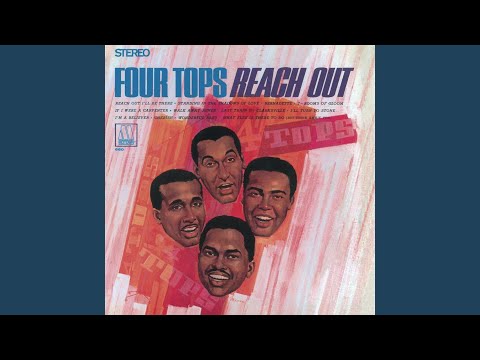


→ More from the 1960s File
View all 1960s hits →




Keep digging