The 1960s File Feature
Theme From The Apartment
Ferrante and Teicher's "Theme From The Apartment" and Its Rise to the Top Ten Ferrante and Teicher were among the most commercially successful piano duos in …
01 The Story
Ferrante and Teicher's "Theme From The Apartment" and Its Rise to the Top Ten
Ferrante and Teicher were among the most commercially successful piano duos in the history of American popular music, and their recording of "Theme From The Apartment" in 1960 stands as one of the defining entries in their catalog. The track reached number 10 on the Billboard Hot 100, spending twenty weeks on the chart and demonstrating the extraordinary popular appetite for instrumental movie themes that characterized the early years of the Hot 100 era.
Arthur Ferrante and Louis Teicher met as students at the Juilliard School of Music in New York City, where both had enrolled as child prodigies during the early 1930s. They began performing together while still students and after graduation developed a touring act that blended classical technique with popular appeal. Both men were pianists of genuine technical accomplishment, and their ability to perform demanding repertoire with precision and flair set them apart from the novelty acts that dominated much of the popular pianoTheir early recordings for Westminster Records and then ABC-Paramount explored a range of material, from classical adaptations to popular song arrangements, and gradually they developed a signature style: lush, full-bodied piano duet arrangements that filled the sonic space that a solo instrument could not, supported by orchestral backing that gave their records a cinematic sweep. They had a particular gift for choosing material that had inherent melodic appeal, and this instinct served them extremely well as the soundtrack market expanded in the late 1950s.n the late 1950s.
Billy Wilder's film "The Apartment," released in 1960, was one of the most critically and commercially successful films of that year. Starring Jack Lemmon and Shirley MacLaine, it won five Academy Awards including Best Picture and Best Director, and its score, composed by Adolph Deutsch, featured a central romantic theme of considerable melodic beauty. The theme captured the bittersweet tone of Wilder's film, a work that balanced sharp workplace comedy with genuine emotional pathos.
Ferrante and Teicher recorded their version of the theme for United Artists Records, the label associated with the studio that distributed the film. The UA connection made commercial sense: the studio was eager to promote the film's musical content and the duo's version could serve both as a standalone commercial product and as an extension of the film's marketing. The recording was produced with the full orchestral treatment that was the duo's trademark, with their twin pianos providing the melodic core and a string-heavy arrangement creating the atmospheric backdrop.
The single entered the Billboard Hot 100 on July 25, 1960, debuting at number 96. Its ascent was rapid, moving to 85, then jumping dramatically to 36, then 23 within the first four weeks. The chart trajectory reflected the combination of film promotion, radio play, and the duo's established following among adult contemporary listeners who appreciated instrumental music of melodic sophistication. The peak of number 10 on September 5, 1960, represented one of the strongest chart performances by an instrumental act during that period.
The success of "Theme From The Apartment" was part of a broader phenomenon in which instrumental movie themes became significant commercial properties in their own right during the late 1950s and early 1960s. Henry Mancini's work for television and film, the Percy Faith recordings of film themes, and the Roger Williams piano recordings all pointed toward a substantial audience for instrumental music with cinematic associations. Ferrante and Teicher positioned themselves perfectly within this market, combining the prestige of classical training with the accessibility of popular arrangement.
The twenty weeks the track spent on the Hot 100 underscored the durability of the market for this kind of material. Unlike many pop singles of the era, which rose quickly and fell just as quickly, instrumental movie themes could sustain chart life for extended periods because they accumulated radio play across multiple formats and benefited from the continued theatrical run of the films they were associated with.
The duo would follow this success with other major hits, most notably "Exodus," recorded the same year, which reached number two on the Hot 100 and became one of the bestselling instrumental singles of 1960. Together, these recordings established Ferrante and Teicher as the dominant figures in the popular instrumental piano market, a position they would maintain throughout the decade and into the 1970s, producing an extraordinary body of work that has been appreciated by subsequent generations of listeners drawn to the sophisticated melodic character of their best recordings.
02 Song Meaning
The Emotional Meaning of Ferrante and Teicher's "Theme From The Apartment"
The emotional power of Ferrante and Teicher's "Theme From The Apartment" derives in large part from the film it accompanied and the way in which their recording both captured and transcended that source material. Billy Wilder's film was a work of unusual tonal complexity, mixing sharp satirical comedy about corporate conformity with a love story whose emotional stakes were entirely genuine. Adolph Deutsch's theme for the film carried both registers simultaneously, and Ferrante and Teicher's arrangement preserved that duality while extending its reach to listeners who might never have seen the movie.
Instrumental music communicates meaning differently from song. Without words to anchor interpretation, an instrumental theme invites listeners to project their own emotional experience onto a melodic and harmonic framework. The theme for "The Apartment" offered a particularly inviting framework because its musical language was accessible and deeply melodic while carrying an underlying complexity that rewarded attention. The bittersweet quality of the melody, its tendency to suggest yearning without fully resolving it, made it a vehicle for a wide range of emotional associations.
Ferrante and Teicher's interpretation added a layer of meaning through the specific qualities of their performance. Twin pianos create a particular kind of sound, one that is fuller and more complex than a single piano while retaining the instrument's fundamental character. The dialogue between the two instruments, even when they are playing in unison, suggests a kind of conversation or collaboration that reinforces the romantic associations of the melody. The two pianos are implicitly a pair, and in a romantic theme, that pairing carries its own symbolic resonance.
The recording also communicated something about the relationship between popular music and art in the early 1960s. The decision of two classically trained pianists to record a popular film theme was not a descent from high art to commerce but an expression of the belief that melodic beauty and emotional directness were values that crossed the supposed boundary between classical and popular culture. Ferrante and Teicher embodied this belief throughout their career, and "Theme From The Apartment" is one of the clearest expressions of it.
For listeners who had seen the film, the recording served as an emotional recall mechanism, reactivating the feelings the movie had generated and allowing them to experience those feelings outside the theatrical context. For listeners who had not seen it, the recording functioned as an independent emotional experience, a piece of music beautiful enough to stand on its own regardless of its cinematic origins. This dual function was one of the defining characteristics of successful movie theme recordings in this era, and the Ferrante and Teicher version achieved both with particular effectiveness.
The theme communicates, finally, the capacity of purely instrumental music to carry the full weight of human emotional experience. No words are needed to convey the longing, the hope, and the bittersweet recognition that Wilder's film explored, because the melody itself contains all of those feelings in concentrated form. Ferrante and Teicher understood this and delivered a performance that honored both the film and the broader possibilities of their instrument, creating a record that has outlasted many more elaborately constructed productions of the same era.
→ More from Ferrante & Teicher
View all Ferrante & Teicher hits →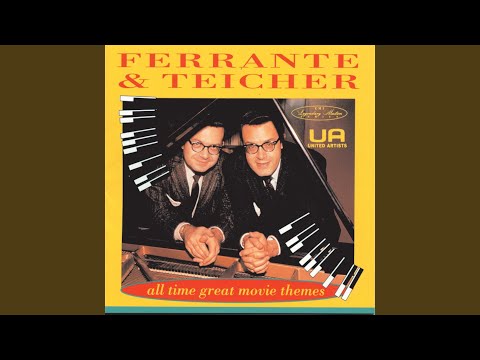

→ More from the 1960s File
View all 1960s hits →




Keep digging