The 1960s File Feature
Midnight Cowboy
Midnight Cowboy — Ferrante & Teicher's 1969 Instrumental Hit Two Pianos and a Film That Shook Hollywood The fall of 1969 was not a gentle season. The United …
01 The Story
Midnight Cowboy — Ferrante & Teicher's 1969 Instrumental Hit
Two Pianos and a Film That Shook Hollywood
The fall of 1969 was not a gentle season. The United States was deep in the Vietnam War, the counterculture had crested and broken at Altamont in December, and the previous year's assassinations of Robert F. Kennedy and Martin Luther King Jr. still cast a long shadow over the national mood. Into this atmosphere came John Schlesinger's film Midnight Cowboy, released that spring to both critical acclaim and genuine controversy. It carried an X rating, the first film to win the Academy Award for Best Picture while bearing that designation, and its story of two desperate men finding fragile companionship on the margins of New York City struck a nerve that Hollywood had rarely exposed so directly.
The film's score, composed by John Barry, included a haunting harmonica-led main theme that became inseparable from the images it accompanied. Arthur Ferrante and Louis Teicher, the piano duo known as Ferrante and Teicher, recognized the commercial potential of that melody almost immediately. They had spent the 1960s proving that two pianos could produce chart hits, recording orchestrated versions of film themes and popular songs that appealed to the adult pop audience that bought albums and followed radio format stations oriented toward easy listening.
A Duo Built for Film Themes
Ferrante and Teicher had met as students at the Juilliard School in New York during the 1940s and formed a performing partnership that would last for decades. By the 1960s, they had achieved considerable commercial success with instrumental recordings that occupied the space between classical polish and pop accessibility. Their ability to take a recognizable melody and transform it into a lush, layered piano arrangement suited the decade's taste for orchestrated popular music.
Their version of the "Midnight Cowboy" theme leaned into the melancholic beauty of Barry's composition. The arrangement preserved the essential loneliness of the original melody while dressing it in the kind of rich piano texture that Ferrante and Teicher had made their signature. The result was a record that worked both as a tribute to a celebrated film and as a piece of music that could stand on its own terms for listeners who had not seen the movie.
A Steady Climb to the Top 15
The commercial timing of their recording was shrewdly chosen. The single debuted at number 99 on the Billboard Hot 100 on November 1, 1969, entering the chart as the film was still generating conversation and awards season discussion. The climb from there was both steady and substantial. By December 27, 1969, the record had reached number 11, spending nine weeks on the chart and representing one of the most successful releases of the duo's later career. Cracking the top 15 on the Hot 100 with an instrumental piano recording in 1969, when rock and soul dominated radio, was a considerable achievement.
The film's cultural resonance did significant promotional work. Midnight Cowboy was the subject of widespread discussion in newspapers, magazines, and television programs throughout 1969 and into 1970, as it accumulated awards nominations and provoked debate about its content and vision. Every mention of the film was, in effect, a mention of the theme music, and Ferrante and Teicher benefited from that association even when their names were not being spoken.
Ferrante and Teicher in Context
The duo's career traced a particular arc through mid-twentieth-century American musical culture. They began as concert pianists, moved into recording as the LP era created new markets for classical-adjacent music, and found their commercial peak in the 1960s and early 1970s with a series of film theme recordings and easy-listening albums. Their version of the "Exodus" theme from the 1960 film had been a major hit, establishing the pattern of connecting their sound to celebrated films that they would follow throughout the decade.
By 1969, they were experienced practitioners of this formula, and "Midnight Cowboy" was its most successful late execution. Their collaboration with United Artists Records gave them the distribution infrastructure to compete on pop radio, and their professionalism in the studio ensured that each release met a consistent standard of quality.
The Theme That Outlasted Its Moment
Few film themes have proven as durable as "Midnight Cowboy." The melody has appeared in commercials, films, television programs, and playlist contexts for more than five decades, maintaining its power to evoke both the specific world of the film and a broader sense of urban longing. Ferrante and Teicher's version accumulated around 553,000 YouTube views, suggesting a sustained audience of listeners who seek out the instrumental version specifically, whether drawn by nostalgia for the duo's era or by the timeless quality of the melody itself. Put it on in a quiet room and understand why this particular piece of music found its way into the cultural bloodstream so completely.
"Midnight Cowboy" — Ferrante & Teicher's singular moment on the 1960s charts.
02 Song Meaning
The Meaning of "Midnight Cowboy" by Ferrante & Teicher
Loneliness Made Audible
The "Midnight Cowboy" theme, as composed by John Barry and subsequently arranged by Ferrante and Teicher, is fundamentally a piece of music about loneliness. The original film from which it derives told the story of two men, each defined by failure and isolation, who find in each other a form of improbable connection. The theme music captures the emotional essence of that story without recourse to words: a melody that rises with hope and falls with the weight of reality, cycling through those two moods with the kind of inevitability that characterizes genuine longing.
In Ferrante and Teicher's piano arrangement, that loneliness takes on a particular quality. The piano, as an instrument, has a specific relationship to solitude in Western musical culture. It is an instrument often associated with private emotion, with music-making that happens in domestic spaces, in moments of personal reflection. Two pianos playing the same melody with different voicings creates an interesting tension: companionship in sound, loneliness in theme. The arrangement unknowingly mirrors the film's own central relationship.
Urban Desolation and American Dreams
The film Midnight Cowboy was, among other things, a critique of the American Dream and its failure to deliver on its promises to the vulnerable and the dispossessed. Its characters were people for whom the mythology of success had proven hollow. The theme music carried that critique in its very sound, a melody too beautiful to be merely sad and too sad to be merely beautiful, suggesting a world where genuine grace existed but remained perpetually out of reach for certain kinds of people.
For listeners encountering Ferrante and Teicher's version on the radio in late 1969, the emotional associations were layered. The film had already established the cultural meaning of the melody, and the piano arrangement filtered that meaning through the more accessible medium of an instrumental pop recording. Listeners who had not seen the film encountered a piece of music with a haunting quality whose source they might not have been able to name; listeners who had seen the film heard a sophisticated tribute to an experience that had unsettled them.
The Instrumental as Emotional Open Space
One of the particular qualities of the instrumental arrangement is that it removes the specificity of the film's narrative and replaces it with a more open emotional invitation. Without lyrics, the melody becomes applicable to any situation that shares its emotional character: departure, longing, the awareness of distance between people, the beauty of what is irretrievably lost. This generalizability is one reason instrumental versions of film themes often outlast their sources in popular consciousness; they carry the emotion without the specific story, making them available to a wider range of personal associations.
Ferrante and Teicher's arrangement served exactly this function. Their version of "Midnight Cowboy" reached listeners who might never have engaged with the film's challenging content but who responded to the melody's emotional honesty. In that way, the piano duo served as a kind of cultural translator, making the film's emotional core available in a form that the pop radio audience could absorb.
Why It Resonated in 1969
The late 1960s were a period of significant emotional upheaval in American society. The optimism of the early part of the decade had been comprehensively dismantled by assassination, war, and social conflict. A melody that acknowledged loss and loneliness without offering false consolation fit the emotional register of that particular cultural moment better than a more triumphant theme might have. The "Midnight Cowboy" theme did not promise resolution; it simply named a feeling with unusual precision, and that honesty was what made it resonate.
"Midnight Cowboy" — Ferrante & Teicher's singular moment on the 1960s charts.
→ More from Ferrante & Teicher
View all Ferrante & Teicher hits →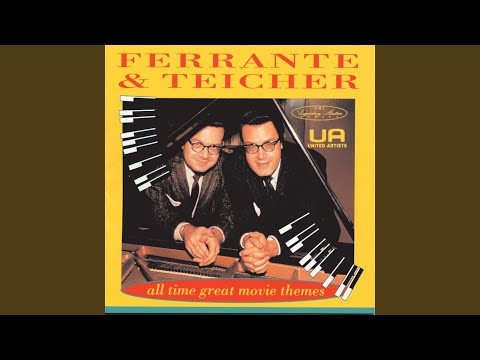

→ More from the 1960s File
View all 1960s hits →




Keep digging