The 1960s File Feature
There Goes My Everything
There Goes My Everything: Engelbert Humperdinck and the Country Standard That Crossed Oceans Before Engelbert Humperdinck transformed "There Goes My Everythi…
01 The Story
There Goes My Everything: Engelbert Humperdinck and the Country Standard That Crossed Oceans
Before Engelbert Humperdinck transformed "There Goes My Everything" into a transatlantic pop phenomenon in 1967, the song had already established itself as a landmark of Nashville songwriting. Dallas Frazier wrote the song, and it was first recorded by Jack Greene, whose country version reached number one on the Billboard Hot Country Singles chart in 1966, earning the Country Music Association Award for Song of the Year. Frazier's composition had a simplicity and emotional directness that made it instantly adaptable, but few could have predicted how far its reach would extend once a British balladeer got hold of it.
Engelbert Humperdinck was born Arnold George Dorsey in Madras, India, in 1936, and raised in Leicester, England. He had spent years in relative obscurity under his given name before his manager Gordon Mills, who also guided Tom Jones to stardom, suggested the more theatrical pseudonym of the nineteenth-century German opera composer. The rebrand proved inspired. In early 1967, Humperdinck released "Release Me," which spent six weeks at number one on the UK Singles Chart and famously blocked Sandie Shaw's Eurovision entry from topping the charts. His profile was suddenly enormous, and Decca's Parrot label in the United States was eager to capitalize.
"There Goes My Everything" was released in the United Kingdom in the summer of 1967 and climbed to number two on the UK Singles Chart, spending weeks in the upper reaches of the chart. In the United States, the recording appeared on the Parrot label, a Decca subsidiary that served as the home for many British artists in the American market. The single reached number twenty on the Billboard Hot 100, a strong showing for a ballad in a year when the pop landscape was being reshaped by psychedelia and countercultural rock. The song also performed strongly on the Easy Listening chart, where Humperdinck found his most devoted American audience.
The production on Humperdinck's version was handled with considerable care, using lush orchestral arrangements that emphasized the song's emotional weight without overwhelming his remarkably controlled tenor voice. The producer framed the track in a full-string setting characteristic of the late 1960s adult pop market, a sound that distinguished it from the original country recording while honoring the song's melodic bones. Humperdinck had a gift for finding the romantic vulnerability inside a lyric, and on "There Goes My Everything" that quality was front and center. His phrasing conveyed loss without melodrama, making the recording feel both intimate and cinematic.
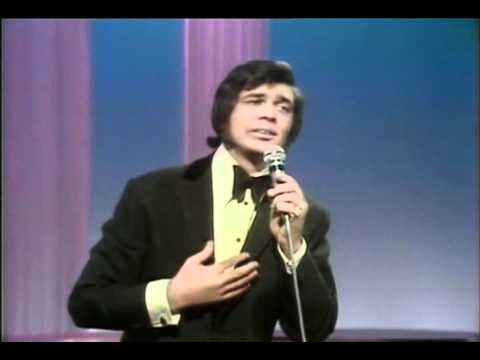
The commercial context in 1967 was unusual for a ballad of this type. The Billboard Hot 100 was in the midst of one of its most turbulent periods, as rock acts competed for space with soul, pop, and country crossover material. Humperdinck occupied an interesting position in this landscape. He was not rock, not country in the Nashville sense, and not soul. He was something older and more continental in spirit, a figure descended from the tradition of the romantic male crooner, yet updated for a television-era audience that had encountered him on variety programs and specials. His reach across multiple formats helped the song find audiences that a more genre-specific act might have missed.
The album Release Me, released in 1967 on the Parrot label in the United States, included "There Goes My Everything" and became one of the stronger-selling debut albums of the year for a British male vocalist outside the rock category. Humperdinck's relationship with the American market grew considerably through 1967 and 1968, with a series of singles and television appearances that cemented his reputation as a major international artist. His albums sold millions of copies globally during this period, and he became one of the biggest concert draws in the United Kingdom.
The cultural footprint of Humperdinck's recording extended well beyond its initial chart run. It became a staple of his live performances, frequently serving as a showcase moment in concert settings where his vocal power could be fully demonstrated. Radio programmers on easy listening and middle-of-the-road stations returned to it repeatedly through the late 1960s and into the 1970s, extending its commercial life well past the normal shelf life of a pop single. The song also contributed to Humperdinck's reputation as a reliable interpreter of outside material, a quality that would define his career across decades.
Dallas Frazier's original composition also continued to be recorded by country artists throughout the late 1960s and early 1970s, generating substantial royalties and keeping the song in the public consciousness across multiple radio formats simultaneously. The coexistence of the Humperdinck pop recording and the various country versions illustrated how a well-constructed song could inhabit multiple commercial worlds at once, reaching listeners who would never have sought out either version on its own terms. The song was named one of the most performed BMI country songs of its era, a testament to its enduring presence on radio playlists in multiple markets.
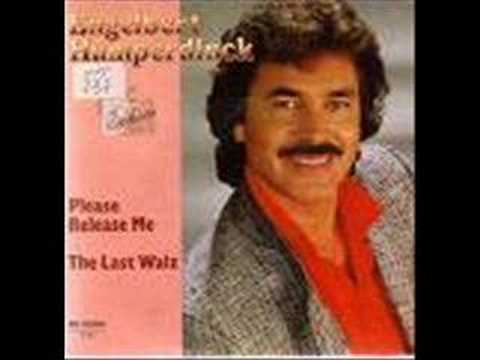
For Humperdinck, "There Goes My Everything" was one of several songs that defined his commercial peak period. Alongside "Release Me," "The Last Waltz," and "Am I That Easy to Forget," it helped establish the sonic and emotional template that his audience came to expect: orchestral grandeur, romantic longing, and a voice capable of finding genuine feeling within conventional pop structures. The song's success in multiple countries underscored the degree to which Humperdinck had achieved something rare for a British vocalist of his era, a genuinely international audience that extended from the United Kingdom across Europe, North America, and beyond. His version of this country standard remains the recording most readily associated with the song outside of Nashville circles.
02 Song Meaning
The Emotional Architecture of Loss: What "There Goes My Everything" Communicates
At its core, "There Goes My Everything" is a meditation on the moment when love physically departs. The narrator watches someone he has built his world around walk out the door, and in that instant recognizes that everything meaningful in his daily life is leaving alongside that person. Dallas Frazier's lyric is deceptively simple: it describes not just heartbreak but the disorienting experience of watching a beloved figure disappear while the world continues on as though nothing has changed. The song identifies that gap between the enormity of personal loss and the indifference of the external world.
What gives the song its particular emotional texture is its refusal of anger. Unlike much of the heartbreak songwriting of the period, the narrator places no blame, launches no accusations, and makes no attempt to forestall the departure. There is only witnessing, and in that witnessing, a kind of devastating acceptance. The subject walks away, and the narrator simply catalogs what is leaving with them: everything. The word functions as both hyperbole and precise emotional truth simultaneously. When the person who organized your emotional world departs, the ordinary components of that world lose their coherence.
Engelbert Humperdinck's interpretation emphasized the song's elegiac quality over any residual country stoicism. Where Jack Greene's original reading carried a certain plainspokenness native to the Nashville tradition, Humperdinck translated the material into a more overtly romantic register, using his voice to draw out every shading of longing and resignation. The orchestral framing reinforced this interpretive choice, surrounding the lyric with music that felt as wide and aching as the loss it described.
The song belongs to a long tradition of romantic balladry that treats romantic loss as a form of existential diminishment rather than merely personal disappointment. This is a richer and more psychologically honest position than simple grief, because it acknowledges that intimate relationships do not merely occupy space in a life but actively constitute the meaning of that life. When the relationship ends, the narrator does not know who he is without it. That is a more vulnerable admission than most popular songs of the era were willing to make, and it helps explain the song's broad appeal across country, pop, and easy listening formats.
For Humperdinck's catalog, the song occupies a revealing position. It demonstrated that he could bring genuine emotional conviction to material he had not written himself, finding in another songwriter's framework the room to express something that felt personally inhabited. His career was built substantially on this skill, the ability to enter a song and make it sound as though the lyric described his own experience rather than someone else's composition. On "There Goes My Everything" that quality is fully apparent, and it helps explain why his recording rather than the original country version became the more widely known in international markets.
The theme of departure without resolution is one that resonates across cultures and eras because it describes an experience nearly universal to adult romantic life: the moment when you understand that something you valued is irretrievably gone. The song makes no promise of recovery, no assertion that things will improve, no consolation beyond the act of articulating the loss. This refusal of false comfort is part of what distinguishes it from much commercial pop songwriting, which often rushes toward reassurance. "There Goes My Everything" stays in the moment of loss and trusts the listener to find their own way through it.
The bilingual ease with which the song moved between country and pop contexts also reflects something meaningful about its construction. A song this emotionally direct, built on such a clear and relatable human situation, does not require genre scaffolding to communicate. The melody carries the emotion, the lyric articulates it precisely, and the rest is interpretation. Humperdinck's interpretation is one of the most successful precisely because he understood that the song needed nothing added, only delivered with full commitment. The result is one of the more affecting recordings of his early career, and one that continues to be revisited whenever his body of work is surveyed.
→ More from Engelbert Humperdinck
View all Engelbert Humperdinck hits →


→ More from the 1960s File
View all 1960s hits →




Keep digging