The 1960s File Feature
The Windmills Of Your Mind
The Windmills of Your Mind: Dusty Springfield and the Thomas Crown Affair Theme Few film themes from the late 1960s achieved the combination of commercial su…
01 The Story
The Windmills of Your Mind: Dusty Springfield and the Thomas Crown Affair Theme
Few film themes from the late 1960s achieved the combination of commercial success, critical recognition, and lasting cultural impact that "The Windmills of Your Mind" accumulated in the period between its film debut in 1968 and its widespread pop chart life in 1969. The song was composed by Michel Legrand, the French film composer whose work across the 1960s and 1970s established him as one of the most sophisticated melodists working in cinema. His collaborators on the lyrics were Alan and Marilyn Bergman, the American songwriting team who specialized in introspective, psychologically nuanced words for film themes and Broadway contexts. The three of them created something that transcended its origins as film music and became an enduring standard of the American song repertoire.
The song was written for Norman Jewison's 1968 film The Thomas Crown Affair, a stylish crime picture starring Steve McQueen and Faye Dunaway. The film was notable for its formal ambition as well as its commercial appeal: Jewison employed split-screen techniques and a highly fragmented visual grammar that was unusual in Hollywood commercial cinema at the time. The music Legrand composed for the film matched this visual sophistication with an equally unconventional approach. "The Windmills of Your Mind" was conceived as a theme song that would capture the film's preoccupation with circularity, concealment, and the complexity of human motivation.
The original film version was performed by Noel Harrison, the British singer and actor whose light, slightly detached vocal style suited the song's meditative quality. Harrison's version received the most exposure during the film's initial theatrical run in 1968, and it was this performance that was submitted for Academy Award consideration. The song won the Academy Award for Best Original Song at the 1969 ceremony, confirming its status as one of the year's most distinguished pieces of screen composition.
Dusty Springfield's recording of "The Windmills of Your Mind" appeared in 1969, released as a single that drew on the enormous visibility the song had gained from the film and the Oscar victory. Springfield was at one of the most productive and artistically ambitious phases of her career. Her landmark album Dusty in Memphis had been recorded in 1968 and would define her artistic legacy, but her commercial instincts remained sharp, and her choice to record a song with this level of cultural momentum was well-calculated. The arrangement she worked with framed the melody in a way that was somewhat warmer and more emotionally direct than Harrison's film version, drawing on the pop production sensibilities of her British recording context.
Springfield's vocal performance on the track demonstrated the qualities that made her one of the most admired voices of her generation. Her ability to handle melodically complex material without making it sound effortful, to find the emotional core of a lyric and illuminate it through tone and phrasing rather than through dramatic over-singing, was fully deployed here. The song's structure is genuinely challenging, with a melody that circles and returns on itself in ways that mirror the circular imagery of the lyrics, and Springfield navigated it with the assurance of a mature singer at the peak of her craft.
The single performed respectably on the charts in the United Kingdom, where Springfield's audience was largest and most devoted. The British pop market of 1969 was highly competitive, with the cultural aftermath of the previous summer's psychedelic experiments giving way to a more diverse landscape, and "The Windmills of Your Mind" held its own against material that was stylistically quite different. The song's jazz-influenced harmonic language and its sophisticated lyrical content set it apart from the dominant pop sounds of the moment without placing it outside the mainstream.
The Bergmans' lyrics were widely discussed from the moment of the song's release. Their approach to the theme of mental complexity and circular thought was considered unusually literary for a pop song, and the images they chose to illustrate the narrator's mental state drew attention in music journalism and cultural commentary. The writing team went on to further Grammy-winning work and maintained their reputation as among the finest lyricists in American popular song across a career that extended for decades.
In the years following its initial release period, "The Windmills of Your Mind" became a jazz and cabaret standard that attracted recordings from a remarkable range of artists. The structural and harmonic openness of the melody made it adaptable to different interpretive approaches, from the deliberately spare to the lushly orchestrated, and the quality of the lyrics sustained interest across multiple decades of performance and recording. Springfield's version remained one of the most-cited recordings of the song, alongside Harrison's original and later interpretations by singers who came to it through its reputation as a standard rather than through direct experience of the film.
The song's cultural footprint extends well beyond its chart performance. It has appeared in numerous film and television contexts as a shorthand for a certain kind of elegant, slightly melancholy intelligence, and its associations with the particular visual and emotional style of The Thomas Crown Affair have only deepened over time as that film's reputation as a design and style landmark of the late 1960s has grown. Michel Legrand's composition and the Bergmans' lyrics together represent a high point in the art of the film theme song, a moment when popular music and cinematic ambition aligned to produce something of lasting artistic substance.
02 Song Meaning
The Meaning of The Windmills of Your Mind: Thought, Circularity, and Emotional Maze
"The Windmills of Your Mind" is built around a single, sustained metaphor: the mind in a state of emotional agitation as a place of endless, self-repeating movement. The imagery that Alan and Marilyn Bergman constructed in their lyrics revolves around circular objects and circular motion, wheels, spirals, rings, and the windmill of the title itself, all working together to describe a mental state that cannot find rest, that returns again and again to the same point without resolution. This is not merely decorative writing but a structural choice that mirrors the song's musical architecture, which itself circles back through its melodic material in ways that create a quality of beautiful restlessness.
The emotional context of the song is a memory or a feeling that the narrator cannot escape. The circular thought pattern being described is one that love or loss or longing has created, a mental groove worn so deep that the mind keeps returning to it regardless of the narrator's attempts to move on or think of other things. The imagery is deliberately abstract, more concerned with capturing the quality of the mental experience than with narrating specific events, and this abstraction is what gives the song its unusual staying power across different contexts and interpretive approaches.
Michel Legrand's melody is inseparable from the meaning the Bergmans' words create. The musical phrase structure, with its characteristic rising and falling arcs that resist easy resolution, creates a sonic analogue for exactly the kind of circular, unresolved thinking the lyrics describe. A listener who does not focus on the words can still feel what the song is about through the melody alone, which is a remarkable achievement in the integration of music and lyric. The harmonic language draws on jazz traditions of sophisticated chord movement, creating a sense of something always shifting, never fully landing on firm ground.
Within the film The Thomas Crown Affair, the song functioned as a thematic statement about the central characters, a wealthy man who commits crimes for the intellectual pleasure of it and the insurance investigator who falls in love with him while trying to catch him. Both figures are people for whom straightforward motivation has been replaced by complex, circular systems of desire and evasion. The song captured that psychological texture in musical form, which is why it worked not only as a film theme but as a standalone piece that made complete emotional sense outside the narrative context.
For Dusty Springfield, the song's meaning connected to themes that ran through her best work. Her recordings consistently explored romantic complexity, the experience of love as something that resists simple categorization or easy resolution. "The Windmills of Your Mind" fit naturally within this artistic preoccupation because its subject is precisely that kind of complexity, the mind caught in a loop it did not choose and cannot easily exit. Her vocal interpretation brought the personal quality of that experience to the foreground, making the abstractions of the Bergmans' imagery feel grounded in genuine emotional experience rather than merely poetic.
The song's meaning has continued to evolve as it has accumulated associations across more than five decades of performance and reception. The Academy Award for Best Original Song in 1969 gave it an initial imprimatur of artistic distinction that separated it from ordinary film themes. Its subsequent life as a jazz and cabaret standard deepened its meaning by separating it from any specific film context and establishing it as a piece of writing about universal experience, the experience of being caught inside one's own thought processes, unable to step outside them, finding them beautiful and imprisoning in equal measure. Few pop songs of any era have captured this territory with such precision and such grace.
→ More from Dusty Springfield
View all Dusty Springfield hits →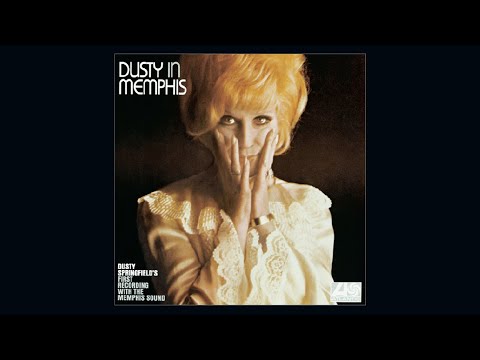

→ More from the 1960s File
View all 1960s hits →




Keep digging