The 1960s File Feature
Mashed Potato Time
Mashed Potato Time: Dee Dee Sharp's Dance-Craze Breakthrough of 1962 The early 1960s in American popular music were defined in part by a succession of dance …
01 The Story
Mashed Potato Time: Dee Dee Sharp's Dance-Craze Breakthrough of 1962
The early 1960s in American popular music were defined in part by a succession of dance crazes, each arriving with its own hit record and its own set of movements, each briefly capturing the attention of the teenage market before giving way to the next. The Twist had opened the decade's dance craze era with Chubby Checker's recording reaching number one in 1960, and the success of that phenomenon had encouraged record labels and artists to develop and market a stream of successors. "Mashed Potato Time" by Dee Dee Sharp arrived in this context in 1962 and immediately established itself as one of the most commercially successful entries in the genre, riding the dance craze formula with exceptional skill and genuine musical energy.
Dee Dee Sharp was born Dione LaRue in Philadelphia in 1945, and she had come to the attention of Cameo Records, the Philadelphia-based label that would release "Mashed Potato Time," while working as a backing vocalist. Her vocal talent was immediately apparent, and Cameo moved quickly to develop her as a solo artist. The label had been founded by Dave Appell and Bernie Lowe and had established itself as one of the most commercially active American pop labels of the late 1950s and early 1960s, with a roster and production approach well-suited to the dance-craze market.
"Mashed Potato Time" reached number two on the Billboard Hot 100 in 1962, an extraordinary debut commercial performance for a sixteen-year-old artist making her first major chart appearance. The song was held from the top spot by another dance-craze record, a circumstance that reflected how thoroughly the genre had come to dominate the pop charts in this period. The single's performance on the R&B chart was equally strong, confirming that Sharp's appeal crossed the format boundaries that were still significant in the early 1960s pop landscape.
The production of "Mashed Potato Time" was handled within the Cameo Records system and drew on the expertise that the label had developed through its work with Chubby Checker and other dance-craze acts. The track featured the kind of driving, rhythm-centered production that the dance format demanded, with a piano-and-horn arrangement that gave the record an R&B authenticity alongside its pop accessibility. Sharp's vocal performance was exceptional for an artist of her age and experience, combining the exuberant energy appropriate to the dance-craze format with genuine soul feeling that set her apart from many of her contemporaries in the genre.
The "Mashed Potato" was the dance that the song was designed to introduce and promote, and like the Twist and its successors, it provided a simple enough movement vocabulary that teenagers could learn it from the television performances and record-hop appearances that were the primary promotional channels for pop acts in the early 1960s. American Bandstand, Dick Clark's nationally broadcast Philadelphia-based dance show, was a crucial vehicle for the dance-craze format, and Sharp's appearances on the program helped drive the single's commercial performance. American Bandstand's Philadelphia connection gave Cameo Records artists a natural promotional platform that labels from other cities could not as easily access.
Following the enormous success of "Mashed Potato Time," Sharp quickly became one of the most commercially active female artists in early 1960s pop, releasing a series of dance-craze follow-ups and establishing herself as a fixture on the touring circuit and television variety shows. She collaborated with Chubby Checker on several recordings, including the popular "Slow Twistin'," which also reached number two on the Hot 100 and confirmed that her appeal was not limited to her debut hit. "Do the Bird" and "Ride" were among the singles Sharp released in quick succession following "Mashed Potato Time", each attempting to sustain the commercial momentum her debut had established.
The dance-craze era in American pop was relatively brief, concentrated primarily in the period between 1960 and 1963, when the arrival of the British Invasion transformed the commercial and cultural landscape of popular music and redirected the market's attention from dance crazes to the album-and-album-oriented approach that the Beatles exemplified. In this context, "Mashed Potato Time" belongs to a specific and historically significant moment in American pop history, a period when the music industry had found a formula for combining dance, television promotion, and pop music into a commercial engine of extraordinary efficiency.
The recording has remained a touchstone of the early 1960s pop era, appearing regularly on compilations of the period and continuing to represent one of the cleaner examples of the dance-craze record as a commercial and musical form. Sharp's vocal performance, which holds up better than many of the genre's more mechanical entries, is the primary reason for its durability. Her genuine musical talent gave the record a quality that transcended the formulaic aspects of the dance-craze format, and that quality is what has kept "Mashed Potato Time" in the cultural memory long after most of its genre-mates have faded.
02 Song Meaning
Move Your Feet: The Meaning of Dee Dee Sharp's "Mashed Potato Time"
"Mashed Potato Time" belongs to the tradition of the dance-instruction song, a genre that dates back to the earliest decades of American popular music and that serves a function both social and commercial: teaching the listener a new dance while simultaneously providing the musical accompaniment for performing it. In the context of early 1960s pop, this tradition had been supercharged by the Twist phenomenon, and "Mashed Potato Time" participates in it with the full awareness that its commercial purpose and its musical purpose are inseparable.
The song's meaning is, at one level, simply its function. It is designed to get people up and moving, to connect the act of listening to music with the act of using one's body in a specific and communal way. In this sense, it belongs to the oldest and most fundamental relationship between music and human beings, the relationship in which sound and movement are not separate experiences but aspects of a single integrated response. The appeal of the dance-craze song format was that it made this relationship explicit, providing both the instruction and the musical context for a specific kind of embodied engagement with popular music.
Dee Dee Sharp's vocal performance gives "Mashed Potato Time" a warmth and energy that elevates it above the purely functional. Her voice communicates genuine enjoyment of the material, a quality that was not always present in more mechanically produced dance-craze entries, and that enjoyment is contagious in the way that the best pop music always is. The listener experiences not just the instruction to dance but the feeling of someone who is already dancing and having an excellent time doing it.
The specific dance the song promotes, the Mashed Potato, was one of many variations on the basic Twist movement vocabulary that characterized the dance-craze era. Its name connected it to the tradition of food-named dances that runs through African American popular culture and dance history, a playful naming convention that combined accessibility with a kind of gentle absurdism. The invitation to perform the Mashed Potato was also an invitation to not take oneself too seriously, to participate in a collective silliness that was itself a form of social bonding.
For Sharp as an artist, the song's meaning was also biographical. At sixteen, born Dione LaRue in Philadelphia in 1945, she was being introduced to a mass audience and establishing the persona that would define her early career. The energy and confidence she projected in "Mashed Potato Time" was striking for someone so young, and it established her as a performer with genuine presence rather than simply a vehicle for a commercially viable concept. The song's success gave her a platform she would use to demonstrate a vocal range and emotional depth that the dance-craze format did not fully require.
The song also participates in the broader cultural meaning of the dance-craze phenomenon of the early 1960s. In a period of significant social tension, particularly around racial integration and civil rights, the dance crazes served a quietly subversive function by crossing the racial divide in both their origins and their audiences. The Mashed Potato, like the Twist before it, was rooted in African American dance culture and was taken up enthusiastically by white teenagers, a form of cultural exchange that proceeded with relatively little of the explicit controversy that surrounded other forms of racial integration in the same period. The meaning of "Mashed Potato Time" is therefore also the meaning of this process of musical and cultural integration, carried out on the dancefloor rather than in the courts or the streets.
→ More from Dee Dee Sharp
View all Dee Dee Sharp hits →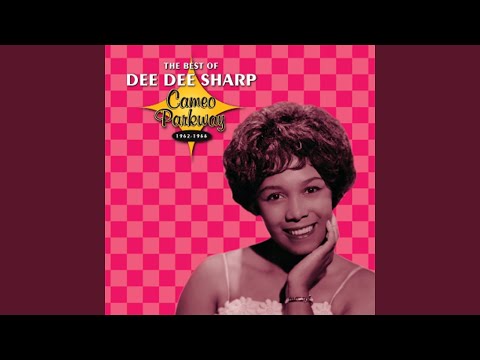


→ More from the 1960s File
View all 1960s hits →




Keep digging