The 1960s File Feature
I Really Love You
I Really Love You — Dee Dee Sharp (1965) Dee Dee Sharp arrived at "I Really Love You" in 1965 carrying the weight of an earlier identity that had both made h…
01 The Story
I Really Love You — Dee Dee Sharp (1965)
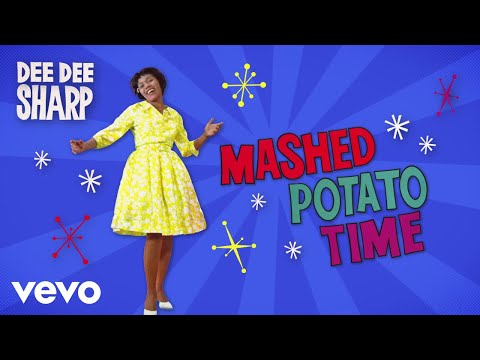
Dee Dee Sharp arrived at "I Really Love You" in 1965 carrying the weight of an earlier identity that had both made her famous and risked defining her permanently in the public imagination as a novelty act. Born Dione LaRue in Philadelphia in 1945, she had scored her first major hit in 1962 with "Mashed Potato Time," a dance-craze record that reached number two on the Billboard Hot 100 and number one on the R&B chart. The success of that record, and the several dance-oriented singles that followed it, established Sharp as a prominent presence on the Philadelphia pop and R&B scene but also created the challenge that many young pop artists faced in the early 1960s: how to evolve beyond a commercial breakthrough that had defined you in a very specific way.
"I Really Love You" was released on Cameo Records in 1965, the Philadelphia-based label that had been home to a remarkable roster of pop and R&B talent since the late 1950s, including Chubby Checker, whose Twist recordings had triggered the dance-craze phenomenon of which "Mashed Potato Time" was a prominent beneficiary. Cameo Records, run by Bernie Lowe, was one of the most commercially important independent labels in American pop at the time, with a track record of producing chart hits that made it a significant player in the market even without the resources of the major labels.
Sharp had maintained a relatively consistent presence on the charts through the early 1960s, releasing a series of singles that traded on her warm, youthful vocal style and her facility with uptempo material. By 1965, the pop market had shifted considerably in the wake of the British Invasion, and American artists who had succeeded in the pre-Beatles pop environment were adapting their approaches with varying degrees of success. Sharp's work at Cameo during this period represented an attempt to maintain commercial relevance in a transformed market.
The song itself is a mid-tempo pop-R&B declaration of romantic feeling, built on a melodic structure that showcases Sharp's voice to advantage. Her vocal delivery on the track has the warmth and directness that characterized her best work, communicating genuine feeling without excess or ornamentation. The production is characteristic of mid-1960s Cameo Records work: clean, melodically focused, with a rhythm section that provides momentum without overwhelming the vocal.
The Cameo Records sound of the period was distinctly Philadelphian in its emphasis on clean production and vocal clarity, qualities that would later be refined and amplified in the Philadelphia International soul sound of the early 1970s. The label's house musicians and producers had developed a consistent approach that was immediately recognizable to the ears of the period, and Sharp's recordings fit within this identifiable sonic framework.
The single charted on the Billboard Hot 100 and the R&B chart, continuing Sharp's run of chart appearances through the mid-1960s even as the overall commercial environment became more challenging for American artists working in the pop-R&B format. Her ability to maintain chart presence through this period of rapid market change was a testament to the loyalty of her audience and the consistency of her vocal performances.
Sharp's career continued beyond the Cameo Records period, and she later became better known as Mrs. Kenny Gamble, wife of the co-founder of Philadelphia International Records, one of the most important soul labels of the 1970s. This personal and professional connection to the next generation of Philadelphia soul gives her earlier recordings a retrospective interest, positioning them as part of the longer story of Philadelphia's contribution to American popular music. Her 1960s work at Cameo represents an important chapter in that story, documenting the sound of a city's pop music scene during a particularly dynamic period in its development.
The broader context of "I Really Love You" within 1965 pop is also worth noting. The year was one of enormous diversity in the American pop market, with British Invasion acts, Motown artists, folk-rock performers, and established American pop and R&B acts all competing for chart positions simultaneously. Sharp's ability to place records in this crowded field reflected both the quality of her work and the enduring strength of the Philadelphia pop infrastructure that supported her.
02 Song Meaning
What "I Really Love You" Is Really About
"I Really Love You" by Dee Dee Sharp, released on Cameo Records in 1965, belongs to a well-defined tradition within early-1960s pop and R&B: the straightforward, first-person romantic declaration. The song's title is also its thesis, an unambiguous statement of feeling that the lyric then elaborates and supports through a series of expressions of devotion and need. This simplicity is not a limitation but a choice, consistent with a pop tradition that valued directness and emotional clarity over lyrical complexity.
The emotional register of the song is warm and unguarded. The narrator expresses romantic feeling without defensive irony, qualification, or the ambivalence that would become more common in pop lyrics as the decade progressed and the conventions of the genre became more self-conscious. This kind of emotional directness was one of the defining characteristics of early-1960s pop-R&B, a genre that operated within a tradition of romantic expression rooted in both the gospel-influenced soul tradition and the Tin Pan Alley song format, both of which valued clarity and emotional sincerity over stylistic sophistication.
Dee Dee Sharp's vocal approach to the material is particularly significant for understanding what the song communicates. She had built her career on dance-oriented records that emphasized energy and rhythm over emotional nuance, and "I Really Love You" represented an opportunity to demonstrate a different aspect of her talent, the capacity for sustained, feeling-centered vocal expression rather than the more extroverted performance style that dance records required. Her delivery on the track is warm and controlled, suggesting genuine investment in the emotional content of the lyric rather than professional performance of a conventional text.
The song participates in the pop tradition of the love declaration as a complete emotional event in itself. Unlike narrative love songs that describe a developing relationship, encounters, complications, and resolutions, "I Really Love You" has no story arc. It exists entirely in the present tense of feeling, a sustained expression of a state of being rather than an account of how that state came to exist. This timeless, present-tense quality is one of the reasons such songs can remain emotionally accessible across decades, because they are not tied to a specific sequence of events that dates them.
The choice to release this kind of material in 1965, when the pop market was being transformed by British Invasion acts and folk-rock, can be read as an assertion of continuity with a tradition that the new wave of music was partly displacing. Sharp's Cameo Records recordings of the mid-1960s represent a commitment to the early-1960s pop-R&B form at a moment when that form was under commercial pressure, and this commitment carries its own significance as a statement about artistic identity and values.
Within Sharp's catalog, the track demonstrates a maturation of her artistic voice beyond the dance-craze context in which she had first found fame. The warmth and emotional directness she brings to a straightforward love declaration show that her vocal talent was not limited to the upbeat, rhythmically focused material that had defined her early chart success. The song represents, in miniature, the ongoing story of an artist working to expand the scope of what she was understood to do and be within the commercial pop world of the mid-1960s.
→ More from Dee Dee Sharp
View all Dee Dee Sharp hits →


→ More from the 1960s File
View all 1960s hits →




Keep digging