The 1960s File Feature
You Were On My Mind
You Were On My Mind — Crispian St. Peters and the Song That Kept Returning A British Singer and a Folk Revival Composition The summer of 1967 was one of the …
01 The Story
You Were On My Mind — Crispian St. Peters and the Song That Kept Returning
A British Singer and a Folk Revival Composition
The summer of 1967 was one of the most crowded moments in the history of the Billboard Hot 100, as the Summer of Love generated an explosion of new recordings and the British Invasion's second wave continued competing for chart space with the American artists who were responding to it. Into this landscape stepped Crispian St. Peters with You Were On My Mind, a recording that already had history behind it before it appeared on the chart.
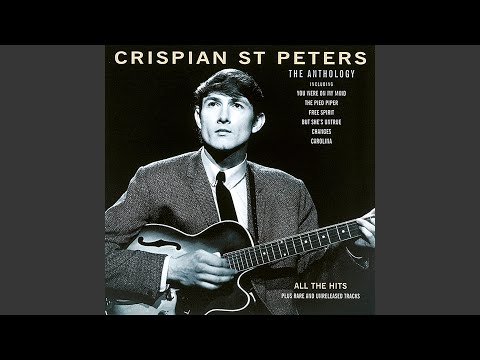
The song itself had been written by Sylvia Fricker of the Canadian folk duo Ian and Sylvia, and had first been widely recorded by the San Francisco folk-rock group We Five, whose version had reached number three on the Billboard Hot 100 in 1965. St. Peters, a British singer whose real name was Robin Peter Smith, was releasing his third attempt to place material on the American chart. His earlier single The Pied Piper had reached number five in 1966, giving him the commercial credibility needed to take a second run at American radio attention.
Chart Entry in a Crowded Summer
St. Peters' recording of You Were On My Mind debuted on the Billboard Hot 100 on July 1, 1967, at position 79. The chart climb was gradual: 67 the following week, then 57, arriving at its peak position of number 36 during the week of July 22, 1967, where it held for two consecutive weeks before beginning its decline. Six total weeks on the chart represented a modest but commercially meaningful showing in a period of exceptional competition for radio airtime and consumer attention.
The summer 1967 Hot 100 included recordings from the Beatles, the Rolling Stones, Aretha Franklin in the first flush of her Atlantic Records breakthrough, and a remarkable range of domestic and international acts all competing for the same limited number of chart positions. A peak of 36 in that specific context required genuine commercial traction; it was not a chart entry that arrived by accident or by the sheer force of a promotional campaign.
The Song's Second Life in 1967
The fact that You Were On My Mind could chart again in 1967, two full years after the We Five version had placed it at number three, said something interesting about the song's underlying quality. Strong songs could support multiple recordings within a relatively short span in the 1960s pop landscape, particularly if a new arrangement brought a different enough sonic character to justify its existence alongside the original. St. Peters' version carried the British beat-group inflections of his recorded style, distinguishing it from the American folk-rock sensibility of the We Five recording even while working from the same melodic and lyrical material.
Sylvia Fricker's composition was built for this kind of interpretive durability. Its narrative of persistent thoughts about a former lover, the way someone continues to occupy the mind after the relationship has ended, was emotionally universal enough to work in multiple musical contexts without losing its essential character. The melody was memorable and the lyrical structure clear, the combination that makes a song worth returning to.
St. Peters' Brief American Moment
Crispian St. Peters occupied an interesting position in the mid-1960s British Invasion hierarchy. He was never among the first tier of British acts in terms of American commercial success, but he placed material on the Hot 100 consistently enough during 1966 and 1967 to constitute a genuine if brief American chart presence. You Were On My Mind extended that presence into 1967's more competitive environment, demonstrating the resilience of his appeal with American radio programmers and listeners who responded to his particular combination of folk-influenced melody and British pop production.
His career did not sustain this level of American attention beyond 1967, as the chart landscape continued shifting and the specific moment of the mid-1960s British Invasion faded. But the recordings he produced during this period, including this cover of Fricker's song, have maintained a presence in the catalogue that nostalgia-driven streaming and compilation interest has kept alive. The song rewards revisiting for anyone curious about the folk-rock crossover moment of the mid-1960s and the various national inflections it took on as it spread from its Canadian origins through American and British popular music.
"You Were On My Mind" — Crispian St. Peters' singular moment on the 1960s charts.
02 Song Meaning
You Were On My Mind — The Persistent Return of Someone Who Left
The Involuntary Nature of Memory
There is a particular kind of romantic experience that You Were On My Mind addresses with considerable precision: the experience of not being able to stop thinking about someone you know you should stop thinking about. The song's lyrical situation is not one of active longing or ongoing relationship; it is the aftermath, the period when a connection has ended but the mind has not yet agreed to release it. Sylvia Fricker's composition captured this involuntary quality by describing the morning-to-night persistence of the person's presence in the narrator's thoughts, the way even ordinary daily life becomes populated by an absent figure.
This theme, the uncontrollable return of someone who has left, was not new to popular music in 1965 when the song was first widely recorded, nor in 1967 when Crispian St. Peters brought it to a new audience. What distinguished the composition was the specificity of its emotional observation: not a general statement of sadness but a detailed catalogue of the moments in which the thought intrudes, the morning waking, the evening's quiet, the stretches of the day when distraction fails and the mind returns to what it cannot release.
Folk Roots and the Translation to Pop
The song's origins in the Canadian folk revival gave it a structural simplicity and melodic memorability that proved highly transportable across genre and national context. Folk songwriting at its best was concerned with clear emotional statement and memorable melodic execution; Fricker's composition achieved both, which is why it crossed so easily from folk duet to American folk-rock single to British beat recording within a period of two years. The song's architecture was strong enough to carry different stylistic treatments without collapsing under the weight of transformation.
That transportability was a defining quality of the best folk-influenced compositions that crossed into pop during the mid-1960s. The folk revival had produced a generation of songwriters who understood how to construct a lyric and a melody that could stand on their own without elaborate production, and those qualities proved to be precisely what the pop-rock hybrid of 1965 and 1966 required as it was establishing its own aesthetic identity.
The International Dimension of a Simple Feeling
The fact that a Canadian composition, first popularized by an American group, then charted again by a British singer on the American Billboard Hot 100, illustrated one of the most interesting dynamics of 1960s popular music: the genuinely international circulation of emotional content through the common currency of English-language pop. The feeling the song described, the persistent recurrence of an absent person in daily consciousness, required no translation and no cultural adjustment. It was immediately legible to listeners in Toronto, San Francisco, London, and anywhere else that teenagers were experiencing love's complicated aftermaths.
This universality gave folk-derived pop compositions a commercial durability that more culturally specific material struggled to achieve. The emotional scenarios they described were universal precisely because they were drawn from the most fundamental human experiences: love, loss, memory, and the stubborn persistence of feeling beyond its intended context.
Why the Mind Cannot Let Go
The song touches, without theorizing, on a psychological reality that everyone who has experienced significant attachment will recognize. The mind replays what it values, and a person who has mattered to the narrator continues to matter to the narrator's mental architecture even after the external relationship has ended. The morning thoughts described in the lyric are involuntary precisely because they are the mind doing what minds do: returning to what has been important, processing what has not been fully resolved, working through emotional material in the only way it knows how.
Pop songs that manage to name this process without over-explaining it serve a genuine emotional function for their listeners: they provide recognition, the small but real comfort of hearing your private experience articulated in a melody you can carry with you through the day in which that experience is occurring. That is what the best love songs have always done, and it is what this one continues to do for anyone who encounters it while carrying someone they cannot quite put down.
→ More from Crispian St. Peters
View all Crispian St. Peters hits →
→ More from the 1960s File
View all 1960s hits →




Keep digging