The 1960s File Feature
The Pied Piper
"The Pied Piper" — Crispian St. Peters British Invasion's Second Wave The summer of 1966 was an extraordinary season for British pop music on the American ch…
01 The Story
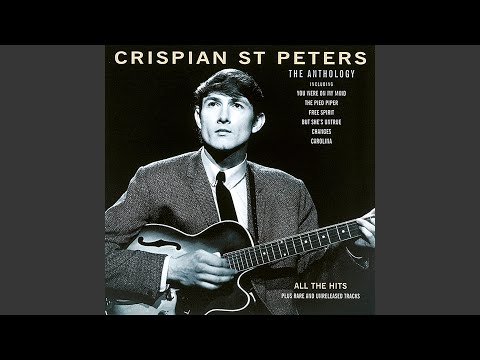
"The Pied Piper" — Crispian St. Peters
British Invasion's Second Wave
The summer of 1966 was an extraordinary season for British pop music on the American charts. The Beatles were releasing Revolver that August, pushing the boundaries of what a rock record could contain. The Rolling Stones were consolidating their position as rock's most potent commercial force. Dozens of other British acts were crowding the Hot 100, products of the talent explosion that the original Invasion of 1964 had set in motion. Into this competitive landscape stepped Crispian St. Peters, a Kent-born singer who had been working the British pop circuit with modest results before finding the right combination of song and timing to make an improbable transatlantic run.
The Song and Its Origins
The Pied Piper was written by Artie Kornfeld and Steve Duboff, American songwriters who had crafted a piece of sunshine pop that suited the optimistic, energetic end of the mid-1960s sound perfectly. The song borrows its central image from the medieval legend of the Pied Piper of Hamelin, the magical figure who led children (and, in the original legend, rats) away from a town through the irresistible power of his music. In the pop context, the metaphor becomes romantic: a suitor presenting himself as an irresistible musical force, claiming the ability to lead the object of his desire away from her current circumstances and toward something better. It is a charming piece of romantic self-mythology, delivered with the breezy confidence that mid-1960s pop wore so naturally.
St. Peters's Performance and Sound
What St. Peters brought to the material was a voice and a presentation that sat comfortably in the British pop mainstream of the period without particularly distinguishing itself from the competition. The production was bright and bouncy, built on the kind of guitar pop arrangement that could move seamlessly from pirate radio to BBC airtime to American Top 40. The tempo and energy were precisely calibrated for the dance-floor end of 1966 pop consumption, the kind of record that fit easily into a DJ set between other mid-tempo singles without demanding particular attention from the listener. That quality of fitting rather than standing out was both a commercial asset and a limitation on longer-term impact.
Racing Up the Hot 100
The single entered the Billboard Hot 100 on June 11, 1966, at number 98, and its subsequent ascent was striking in its speed and momentum. Within three weeks, the track had vaulted from 98 to 42, demonstrating the kind of rapid acceleration that Top 40 radio could generate when a record caught on with programmers across multiple markets simultaneously. The track peaked at number 4 on the week of July 23, 1966, spending 12 weeks on the chart in total. A number four peak on the summer Hot 100 in 1966 was a genuinely significant achievement, placing the record in the top tier of that summer's singles in one of the most competitive markets of the decade.
A One-Season Wonder with a Legacy
Crispian St. Peters did not sustain this level of commercial success. Several follow-up singles failed to replicate the Hot 100 performance of "The Pied Piper," and the British pop moment that had propelled the track was itself shifting rapidly, with psychedelic and progressive rock beginning to claim the cultural terrain that bubbly pop had occupied. St. Peters's chart run of 1966 remains the defining achievement of his recording career. That is not the most flattering framing, but it is an honest one, and the achievement itself is real. Reaching number four on the American chart as a solo British pop act in the summer of 1966 required a genuinely good song delivered at exactly the right moment. Press play and let that summer come flooding back.
"The Pied Piper" — Crispian St. Peters's singular moment on the 1960s charts.
02 Song Meaning
The Meaning of "The Pied Piper" — Crispian St. Peters
A Myth Repurposed for Romance
The Pied Piper of Hamelin carries a complicated moral freight in its original form. The medieval legend describes a figure of supernatural musical power who uses his gift, first to rid a town of a rat infestation and then, when payment is withheld, to lead the town's children away into a mountain, never to return. The tale functions as a warning about broken promises and the dangers of charismatic power. Pop songwriters Artie Kornfeld and Steve Duboff extracted the seductive element of the myth and discarded the darker implications entirely, leaving a figure of irresistible charm who uses music to draw a romantic partner rather than a doomed audience. The transformation is complete enough that the original legend's shadows barely register in the song.
Music as Seduction
The central conceit of the song places music itself as the instrument of romantic attraction. The narrator does not promise gifts or stability or conventional romantic virtues; he promises a song that will make everything else fall away. This is a particularly mid-1960s romantic fantasy, rooted in the genuine power that pop music seemed to have in that moment over young audiences. Radio had transformed the sonic environment of daily life, and the idea that the right music could carry you somewhere else, could make you follow without quite knowing why, reflected real experience. Young listeners who had felt that pull from records on the radio understood immediately what the lyric was describing.
Sunshine Pop's Emotional Register
The genre into which "The Pied Piper" fits, sometimes called sunshine pop in retrospect, was characterized by bright production, major-key melodies, and a lyrical orientation toward optimism and romantic possibility. The mid-1960s sunshine pop moment represented a specific cultural mood, one that coexisted with the gathering turbulence of the civil rights struggle and the escalating Vietnam War but chose to inhabit a lighter emotional register. The escapism involved was not naive; it was conscious, a choice to celebrate pleasure and romance in a world that was increasingly complicated. "The Pied Piper" participates in that choice without apology.
The Dance Floor as Destination
Part of what the song communicates is movement. The Pied Piper figure leads; the listener follows. In a literal sense, the record was designed for a physical response, the kind of bouncy, light-footed dancing that 1966 pop fostered at parties and sock hops and on television variety programs. The rhythm of the track carries an invitation to physical participation that complements the lyrical invitation to romantic adventure. The body's response to the groove and the imagination's response to the romantic scenario work together, which is a basic feature of great pop craft: the emotional and the physical become the same experience.
Charm as a Lasting Value
What "The Pied Piper" offers, when stripped of historical context, is simply a well-made piece of cheerful pop with a memorable central image and a performance that delivers what the song promises. Charm is undervalued as an artistic quality, frequently dismissed as lightweight compared to depth or complexity. A song that succeeds purely on charm, that makes you feel good in a completely uncomplicated way, is doing something genuinely difficult. Very few records achieve it cleanly, without the charm curdling into coyness or the lightness tipping into shallowness. Crispian St. Peters and the writers hit that target in the summer of 1966, and the record still delivers what it promised when you play it today.
→ More from Crispian St. Peters
View all Crispian St. Peters hits →
→ More from the 1960s File
View all 1960s hits →




Keep digging