The 1960s File Feature
White Room
Cream and "White Room" — Psychedelic Blues Architecture and the Peak of a Supergroup's Powers In the autumn of 1968, Cream released what would become one of …
01 The Story
Cream and "White Room" — Psychedelic Blues Architecture and the Peak of a Supergroup's Powers
In the autumn of 1968, Cream released what would become one of the most enduring recordings of the psychedelic rock era. "White Room," drawn from their double album Wheels of Fire, arrived at a moment when the trio was already the most commercially successful British rock group in America after the Beatles, and the single's chart performance confirmed that their audience extended well beyond the blues purists and guitar enthusiasts who had formed their initial following. The record reached number 6 on the Billboard Hot 100, their highest chart position on that survey, and spent eleven weeks on the chart before departing in January 1969.
The song was the product of one of the most creatively charged partnerships in rock history. Lyricist Pete Brown, who had collaborated with bassist and vocalist Jack Bruce throughout Cream's existence, brought to "White Room" a poetic sensibility shaped by the British poetry scene and the surrealist literary tradition. His lyrics operated through image accumulation rather than narrative logic, building a dreamscape of black curtains, silver horses, and a white room that functioned simultaneously as literal space and psychological state. Bruce set these words to music that moved through time signatures with uncommon fluidity, constructing a structure that felt both composed and spontaneous.
Eric Clapton, the third member of Cream's legendary lineup alongside Bruce and drummer Ginger Baker, contributed guitar work that remains among the finest recorded examples of late-1960s electric blues-rock. His wah-wah introduction to "White Room" became one of rock guitar's most recognizable opening gestures, a demonstration of how the relatively new foot pedal effect could be used not merely as a sonic novelty but as an expressive device capable of carrying emotional weight. The interplay between Clapton's guitar, Bruce's bass, and Baker's polyrhythmic drumming throughout the track exemplified the kind of instrumental communication that had made Cream's live performances legendary.
The recording sessions for Wheels of Fire took place in early 1968 at Atlantic Recording Studios in New York, where producer Felix Pappalardi worked with the band to capture performances that retained the energy of their live work while achieving the fidelity and detail that studio recording allowed. The double album concept, one disc recorded in studio and one recorded live, reflected the dual nature of Cream's artistic identity: a recording entity capable of studio craft and a live unit that generated power through improvisation and interplay.
"White Room" was released as a single on October 5, 1968, in the United States, entering the Hot 100 at number 58. Its climb was steady and purposeful: by number 22 on October 19, number 15 a week later, and then number 10 by November 2 before reaching its peak of 6 on November 9, 1968. This trajectory, covering the full width of the chart in approximately five weeks, demonstrated the song's broad-based appeal across different radio formats and regional markets.
The irony of this commercial peak was that Cream had already decided to disband by the time "White Room" was ascending the charts. The pressures of constant touring, the interpersonal tensions between three exceptionally strong-willed musicians, and the sense that the band had reached the limits of what it could achieve within its existing format had led to the announcement of a farewell tour in May 1968. By the time American radio audiences were making "White Room" one of the biggest hits of the fall season, the band was preparing to say goodbye.
The farewell concerts at London's Royal Albert Hall in November 1968 represented a ceremonial conclusion to one of rock music's most influential chapters. The concerts were filmed and released as a documentary, providing a visual document of a band in its final days but performing with extraordinary conviction. "White Room" featured prominently in their live performances during this period, and the studio recording continued to generate commercial momentum even as the band wound down its affairs.
The single's success in America was particularly notable given the composition's structural complexity. Pop radio in 1968 was not typically hospitable to tracks built on unusual time signatures and extended instrumental passages, but "White Room" demonstrated that audiences were prepared to accept formal sophistication if it was delivered with sufficient emotional power. The song's opening bars, with Clapton's wah-wah guitar announcing the arrival of something outside ordinary commercial pop, became a signal to listeners that they were in the presence of serious music that nonetheless demanded to be heard.
For music historians, "White Room" stands as a definitive document of the late-1960s British blues-rock movement at its most fully realized, the point at which technique, inspiration, and production values converged to produce something that transcended the sum of its impressive parts. Jack Bruce's vocal performance, simultaneously raw and controlled, carried Pete Brown's surrealist imagery with a conviction that made the song's unusual content feel emotionally urgent rather than merely eccentric. More than five decades after its release, the track retains its capacity to arrest attention from its first notes.
02 Song Meaning
Surrealist Architecture and Emotional Dislocation: The Meaning of "White Room" by Cream
"White Room" by Cream is one of the most lyrically distinctive recordings of the psychedelic era, a song whose meaning operates through accumulation of image rather than development of narrative. Written by Pete Brown, the lyricist whose partnership with Jack Bruce produced some of the period's most striking rock poetry, the song presents a series of vivid, disjunctive images that create an atmosphere of loss and longing without ever specifying its cause with conventional directness. This evasiveness is not a flaw but the song's essential method, the means by which it achieves an emotional resonance that more straightforwardly confessional writing might not have reached.
The white room of the title has been interpreted variously as a literal space, a psychological condition, a metaphor for emotional emptiness, and a hallucinatory image drawn from the psychedelic experiences that shaped so much late-1960s art. Brown himself has spoken about the song's origins in a period of personal difficulty, and the color white in the song functions not as purity or hope but as absence: a room drained of color is a room drained of vitality. The black curtains that appear in the opening image reinforce this reading, suggesting that the spaces through which the narrator moves are simultaneously dazzling in their starkness and oppressive in their blankness.
The silver horses that gallop through the song's imagery connect it to a long tradition of equestrian symbolism in romantic and surrealist poetry, where horses typically represent freedom, energy, and instinctive vitality. Jack Bruce's vocal delivery of these images gave them an urgency that prevented them from settling into mere decorativeness; he sang the surrealist imagery as though it carried immediate emotional stakes, which transformed potentially obscure poetic reference into felt experience for listeners who might have had no prior engagement with the literary traditions Brown was drawing from.
The song's relationship to the blues tradition that Cream had built their reputation upon is complex. On the surface, the surrealist imagery and the song's formal structure represent a significant departure from the twelve-bar conventions of the blues. But the emotional content, the sense of displacement, loss, and longing that the imagery conveys, is deeply continuous with the blues tradition's fundamental concerns. Pete Brown and Jack Bruce had found a way to carry blues feeling into a new formal and linguistic framework, which is a defining gesture of the psychedelic rock movement at its most artistically ambitious.
Eric Clapton's guitar work contributes crucially to the song's meaning. The wah-wah effect he employs throughout the track is often described in purely sonic terms, as an interesting tonal texture, but its expressive function is as important as its sound. The wah-wah introduces an element of voice-like expressiveness into the guitar's usually more fixed timbre, and in the context of "White Room's" imagery of displacement and alienation, this vocal quality reinforces the sense that the instrumental voices in the song are as emotionally implicated as the human voice that carries the lyrics.
The song's structural complexity, its movement through different time signatures and its extended instrumental passages, also carries meaning. The formal instability mirrors the psychological instability that the lyrics describe. A song about a speaker unable to locate himself emotionally is appropriately set in music that resists easy structural categorization, that moves between modes and feels without settling into the comforting predictability of standard pop form.
For listeners in 1968, "White Room" offered something that the dominant commercial pop of the period largely did not: a serious engagement with the experience of emotional and perceptual disorientation that the psychedelic era had made both common and culturally significant. The song said, through its imagery and its music together, that these experiences of displacement and longing were worth treating as subjects for art rather than mere sensations to be described. That ambition, combined with the extraordinary execution Cream brought to the recording, is what has sustained the song's meaning across more than five decades of repeated listening.
→ More from Cream
View all Cream hits →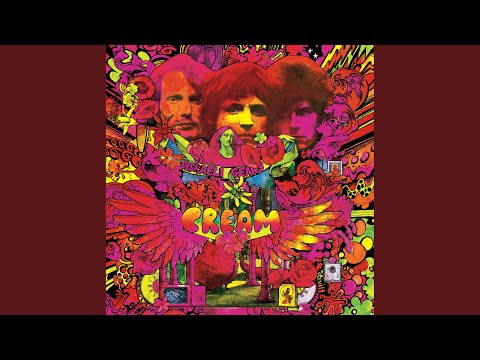


→ More from the 1960s File
View all 1960s hits →




Keep digging