The 1960s File Feature
Anyone For Tennis
Anyone For Tennis — Cream: History "Anyone For Tennis" is a psychedelic pop single recorded by Cream in 1968 that sits apart from the main body of their cata…
01 The Story
Anyone For Tennis — Cream: History
"Anyone For Tennis" is a psychedelic pop single recorded by Cream in 1968 that sits apart from the main body of their catalog in significant ways. While the trio of Eric Clapton, Jack Bruce, and Ginger Baker had built their reputation on extended blues-rock improvisation and hard blues-derived material, "Anyone For Tennis" was a relatively concise, whimsical, and acoustically oriented production that seemed designed for a specific commercial and filmic context rather than for the concert stage or the album format.
The song was written by Eric Clapton and Martin Sharp, the Australian artist and designer who was a significant figure in the British psychedelic cultural scene of the late 1960s. Sharp had been a co-founder of the countercultural magazine "Oz" and had designed iconic psychedelic imagery including the cover of Cream's "Wheels of Fire" album. His collaboration with Clapton on "Anyone For Tennis" produced something that reflected his visual and poetic sensibilities as much as it did the musical priorities of the band, with lyrics that incorporated the kind of oblique, imagery-laden language characteristic of British psychedelic writing.
The recording was created for inclusion in "The Savage Seven," a 1968 American International Pictures film directed by Richard Rush. The movie was a motorcycle gang picture of the type that was commercially viable in the drive-in market of the late 1960s, and the commissioning of a Cream song for its soundtrack reflected the degree to which rock music had become a viable commercial companion to genre film production. The song was released as a single on Polydor Records in the United Kingdom and Atco Records in the United States.
The production of "Anyone For Tennis" was notably different from what Cream's core audience expected. The arrangement was light and acoustic-adjacent, featuring delicate playing and a chamber-pop sensibility that prioritized melodic accessibility over the blues-rock weight of the band's album work. Felix Pappalardi, who had produced Cream's "Disraeli Gears," was involved in the production, but the sonic outcome reflected the specific requirements of the project and the song's content rather than the extended format that Cream favored in their primary artistic output.
The song's chart performance was modest in both the United Kingdom and the United States, reflecting the degree to which it existed outside the expectations of Cream's fanbase without being sufficiently mainstream to attract listeners who might not otherwise seek out the group's work. The Billboard Hot 100 performance was limited, and the single is not counted among the band's commercially significant recordings. In this respect it was an outlier, a film commission that produced an interesting and historically significant artifact without generating the commercial impact of the band's more central work.
Cream were in the midst of their most commercially productive period when "Anyone For Tennis" was released. "Wheels of Fire," the double album that included both studio recordings and live performances, was released in the same year and reached number one on the Billboard 200. "Sunshine of Your Love" and "White Room" were among the singles charting at the time, making the modest commercial outcome of "Anyone For Tennis" particularly stark by comparison.
The band dissolved in late 1968, making the period around "Anyone For Tennis" one of the final chapters in their brief but enormously influential career. Eric Clapton went on to form Blind Faith with Steve Winwood, while Jack Bruce and Ginger Baker pursued separate projects. The dissolution of Cream happened at a moment when they were at or near their commercial peak in America, a decision driven more by internal creative tensions and personal conflicts than by any commercial downturn.
The song has attracted scholarly attention from music historians studying the psychedelic period because of its unusual position within Cream's catalog and because of Martin Sharp's participation. Sharp's lyrics engaged with the imagery of the period in ways that reward close reading, even as the song itself was received as minor work relative to Cream's album recordings. The tennis motif of the title and the various associative images in the lyrics reflected the British cultural moment of the late 1960s, when the language of leisure and sport was being satirized and subverted by countercultural voices.
Eric Clapton's willingness to participate in a project so different from Cream's primary artistic identity is itself interesting in retrospect. It suggests an openness to diversification that his subsequent career would demonstrate repeatedly, as he moved between blues, rock, country, and pop formats with an ease that surprised critics who had defined his identity too narrowly based on his work with Cream and the Bluesbreakers.
02 Song Meaning
Anyone For Tennis — Cream: Meaning
"Anyone For Tennis" is one of the more playfully oblique lyrical statements in Cream's catalog, a song whose meaning resists simple summary in ways consistent with the best British psychedelic writing of its period. The title phrase itself is a classic piece of English social shorthand, the archetypal polite invitation to a leisurely upper-class pastime, and the song uses this phrase as a launching point for a series of associative images that locate the listener simultaneously in the world of English social convention and in the disorienting perceptual landscape of psychedelic experience.
Martin Sharp's lyrical contributions gave the song an artistic ambition that exceeded its commercial format. Sharp was a visual artist and cultural provocateur before he was a lyricist, and his approach to words on this song was closer to that of a poet working with images than a pop songwriter constructing narratives. The effect was a sequence of images that accumulated meaning through juxtaposition rather than through any conventional argumentative or narrative structure. This placed the song squarely within the British psychedelic tradition represented by contemporaneous work by acts including The Beatles on their more experimental recordings and by artists associated with the UFO Club scene.
The tennis motif connects the song to a specifically English class-inflected cultural space. Tennis in the British cultural imagination of the 1960s was a signifier of a certain comfortable, middle-class leisure world, the world of garden parties and village fetes that the counterculture was simultaneously embedded in and critiquing. By opening with this reference, the song positions itself as a kind of gentle subversion of that world, using its imagery and language while undercutting the settled complacency it represents.
For Eric Clapton as an artist, the song represented an exploration of lyrical territory he rarely inhabited. His primary creative identity was as an instrumentalist, and his collaborations with lyricists produced some of his most interesting vocal work precisely because the words came from perspectives other than his own blues-rooted musical instincts. Sharp's surrealist-adjacent imagery pushed Clapton's vocal performance into a register of gentle bemusement that suited both the song's content and its production approach.
The relationship between the song and its film context adds another dimension to its meaning. "The Savage Seven" was a motorcycle gang film, a genre preoccupied with rebellion, freedom, and the margins of American society. The juxtaposition of a polite English tennis reference with this context of American outlaw culture was itself a kind of cultural comment, suggesting that the language of rebellion and the language of conformity were not as distant from each other as either tradition assumed. The song floated above the film's material world with the detachment of something observing from an amused distance.
Within Cream's catalog as a whole, and specifically within the body of work produced during their 1966 to 1968 active period,, "Anyone For Tennis" serves a useful function by demonstrating that the band's creative range extended beyond the extended blues-rock improvisations and hard-rock power that defined their signature recordings. The song showed that the same musicians who produced "Sunshine of Your Love" were also capable of delicacy, whimsy, and lyrical complexity that had nothing to do with their primary commercial identity. This range is worth acknowledging even if the song itself was a commercial minor work, because it complicates any reductive account of what Cream were and what they could do.
The title's continuing cultural resonance as a phrase captures something about the song's lasting meaning. "Anyone for tennis?" retains its ironic charge decades later as a shorthand for a particular kind of cheerful, class-comfortable Englishness. The song appropriated this charge in 1968 and used it to something more interesting, which is itself a small act of artistic judo that repays attention from anyone interested in how popular music engaged with English social identity during the psychedelic era.
→ More from Cream
View all Cream hits →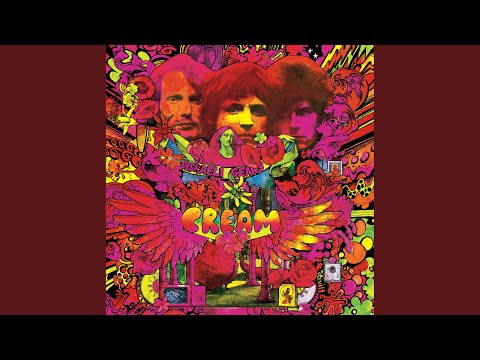



→ More from the 1960s File
View all 1960s hits →




Keep digging