The 1960s File Feature
Call Me Mr. In-Between
Call Me Mr. In-Between and Burl Ives Riding a Country-Pop Wave in 1962 An American Institution Finds a Second Wind Picture the folksy warmth radiating out of…
01 The Story
"Call Me Mr. In-Between" and Burl Ives Riding a Country-Pop Wave in 1962
An American Institution Finds a Second Wind
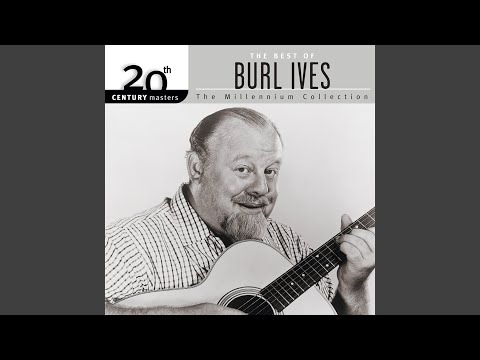
Picture the folksy warmth radiating out of American radios in the summer of 1962. Rock and roll had rattled the establishment, but a gentler, storytelling strain of song still commanded huge affection, and few voices embodied it more fully than Burl Ives. By this point Ives was already a national treasure of sorts, a barrel-chested balladeer and character actor whose rumbling baritone had soundtracked countless childhoods and whose face was familiar from the screen. He had come up through the world of American folk music, collecting and singing the old songs, and he carried that authenticity into everything he touched. When he leaned into the country-pop sound of the early sixties, he did so with the easy confidence of a man who had nothing left to prove and everything to gain from a fresh audience.
A Warm Baritone Meets the Nashville Sound
What makes this record so appealing is the marriage of Ives's unmistakable voice with the polished country production sweeping the charts at the time. Burl Ives enjoyed a remarkable run of crossover country hits in the early 1960s, connecting with both the country faithful and the broad pop audience in a way few artists managed. His delivery here is all avuncular charm, the sound of a wise old friend spinning a tale over the fence. There is a twinkle in it, a self-deprecating humor that suits the subject perfectly. Rather than chasing youth or trend, Ives simply doubled down on what he did best, and the result feels timeless and comfortable, like a favorite chair.
A Steady Climb up the Hot 100
The chart journey of this single was one of encouraging momentum. It debuted on the Billboard Hot 100 on July 21, 1962, at number 93, a humble entry point, but it wasted little time gathering steam. The very next week it jumped to 76, then leapt all the way to 42, then to 28, and on to 22. The record ultimately reached its peak position of number 19 on August 25, 1962, and it enjoyed a healthy nine weeks on the chart in total. For an artist who many might have written off as belonging to an earlier era, cracking the top twenty was a genuine vindication. It proved that his warm, story-driven style still had commercial muscle in a marketplace increasingly obsessed with youth.
The Voice of the American Songbook
To grasp why Ives could pull this off, you have to remember what he represented. He was one of the great custodians of American folk tradition, a singer who had spent decades keeping old ballads alive before the folk revival made them fashionable again. That deep well of authenticity gave his commercial recordings a grounding that flashier acts lacked. Audiences trusted him. When Burl Ives sang about a fellow caught perpetually in the middle of things, listeners heard not a manufactured pop product but a genuine character study delivered by a man who understood people. That trust, built over a lifetime, is what allowed him to keep landing hits well into his career's later chapters.
A Charming Footnote in a Storied Life
Within the sprawling career of Burl Ives, this single is a delightful minor entry rather than a defining monument. It never became the anthem his holiday recordings did, and it lacks the cultural ubiquity of his most beloved work. Yet it captures something essential about him: his gift for inhabiting a character, his easy humor, and his uncanny ability to keep pace with changing tastes without ever abandoning his roots. Its solid top-twenty peak stands as proof that a folk veteran could thrive in the pop era on his own terms. Online it draws a modest but faithful trickle of listens, kept alive by those who still cherish that warm, unhurried baritone.
Press Play and Meet Mr. In-Between
Put this one on and let Burl Ives introduce you to his hapless everyman. You will find yourself grinning at the gentle wit and settling into that rich, rolling voice. It is a small pleasure, but a real one, the kind of song that makes you understand why a whole nation trusted this man to tell them stories.
"Call Me Mr. In-Between" — Burl Ives's singular moment on the 1960s charts.
02 Song Meaning
The Gentle Comedy of Being "Mr. In-Between"
A Portrait of the Perpetual Middle
At its heart, this song is a wry character sketch of a man who never quite lands anywhere. He is not rich and not poor, not a winner and not a loser, forever stuck in the vast gray middle where most of life actually happens. The lyric paints him with affection rather than scorn, turning an ordinary nobody into a figure worth singing about. There is real humanity in that choice, a recognition that the world is full of decent folks who never make the headlines and never hit rock bottom either.
Humor as a Coping Mechanism
What gives the song its charm is its lightness of touch. Rather than mourning his unremarkable station, the narrator seems to shrug at it with good humor, treating his in-between status as a mild joke rather than a tragedy. That comic acceptance is deeply appealing. It offers a kind of everyday wisdom, the notion that you do not need to be extraordinary to be at peace with your lot. Burl Ives, with his twinkling delivery, was the perfect vessel for that message, selling the self-deprecation without a hint of bitterness.
The Dignity of the Ordinary
Beneath the comedy runs a quietly democratic sentiment. The song insists that the average person, the one caught between extremes, deserves a place in song just as much as the hero or the villain. In an era of larger-than-life stars, there is something refreshing about a hit built around such an unassuming figure. It flatters the listener, really, because most of us are far closer to Mr. In-Between than to any glamorous idol, and the song makes that ordinariness feel like nothing to be ashamed of.
A Reflection of Its Time
The early 1960s were a moment of comfortable prosperity for much of middle America, and this gentle portrait of a contented everyman fit that mood neatly. The song speaks to a culture that valued modesty, steadiness, and knowing your place without resentment. It is not a rebel's anthem or a dreamer's cry. It is a warm nod to the vast, stable middle of society, sung by a performer the whole family could gather around. That coziness is a big part of why it connected.
Why the Smile Still Lands
Decades on, the appeal of this modest character study endures because the type never disappears. There will always be people stuck contentedly in the middle, and there is comfort in hearing their unremarkable lives celebrated with humor and warmth. Burl Ives understood that the ordinary is worth a song, and in Mr. In-Between he gave the overlooked majority a charming, chuckling anthem all their own.
→ More from Burl Ives
View all Burl Ives hits →
→ More from the 1960s File
View all 1960s hits →




Keep digging