The 1960s File Feature
That's All You Gotta Do
Brenda Lee's "That's All You Gotta Do": Teen Authority at the Dawn of the Billboard Era In the summer of 1960, Brenda Lee was sixteen years old and already a…
01 The Story
Brenda Lee's "That's All You Gotta Do": Teen Authority at the Dawn of the Billboard Era
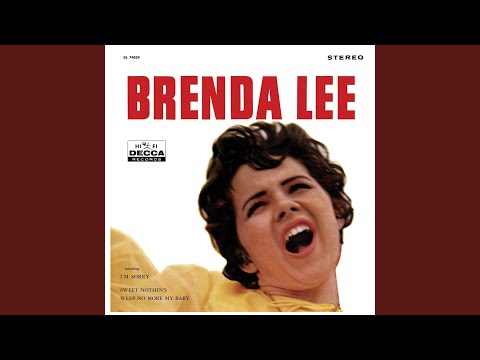
In the summer of 1960, Brenda Lee was sixteen years old and already a seasoned professional. Born Brenda Mae Tarpley in Atlanta, Georgia, in December 1944, she had been performing since childhood, appearing on television and radio programs in the American South from the age of seven. By the time "That's All You Gotta Do" reached number 6 on the Billboard Hot 100 during the week of July 4, 1960, Lee had accumulated years of performance experience that gave her a vocal authority remarkable in a teenager. The song appeared as the B-side to her chart-topping hit "I'm Sorry," and its commercial success simultaneously with its companion release demonstrated a popularity that few artists of any age could claim at that moment.
Lee's early career had been shaped by her association with manager Dub Allbritten, who recognized her exceptional talent from early appearances and worked to develop her profile in the emerging national entertainment landscape. Her signing with Decca Records in 1956, at the age of eleven, was one of the earliest indicators that the music industry was beginning to take seriously the commercial potential of very young performers who could deliver mature material with genuine conviction. Decca's roster at the time included major artists across several genres, and placing Lee within that infrastructure gave her access to professional production resources that complemented her natural gifts.
"That's All You Gotta Do" was written by Jerry Reed, who would later become a significant recording artist and actor in his own right but who in 1960 was establishing himself as a songwriter in Nashville. Reed's gift for combining melodic accessibility with lyrical immediacy suited the material Lee was recording at the time, and the song fit comfortably within the teen-oriented pop that was dominating the charts as rock and roll settled into its early commercial form.
The production of "That's All You Gotta Do" reflected the Nashville Sound aesthetic that was consolidating around 1960, emphasizing clean studio sound, orchestral sweetening, and vocal clarity over the rawer textures of early rock and roll. Owen Bradley, Lee's primary producer at Decca, was among the architects of this aesthetic, and his work with Lee demonstrated how Nashville's studio resources could be deployed to produce records that competed effectively on national pop radio without sacrificing the Southern musical identity that gave those records their character.
The double-sided commercial performance of "I'm Sorry" and "That's All You Gotta Do" was exceptional by any standard. "I'm Sorry" reached number one and remained a commercial landmark in Lee's career, but "That's All You Gotta Do" reaching number 6 simultaneously turned a single release into something closer to a double-sided hit, a phenomenon that was relatively unusual even in an era when B-sides received more radio consideration than they would in later decades. The debut of "That's All You Gotta Do" on June 6, 1960, at number 78, was followed by a rapid ascent through positions 55, 36, and 17 before the July 4 peak at number 6, a climb that spoke to the genuine breadth of Lee's audience and the song's immediate appeal.
Lee's fourteen-week presence on the chart reflected the sustained commercial momentum that characterized her work throughout this period. Between 1960 and 1963, she accumulated a remarkable sequence of chart entries that established her as one of the most commercially consistent artists in American popular music, a record that belied both her youth and the fragmentation of the contemporary music marketplace into competing demographic segments.
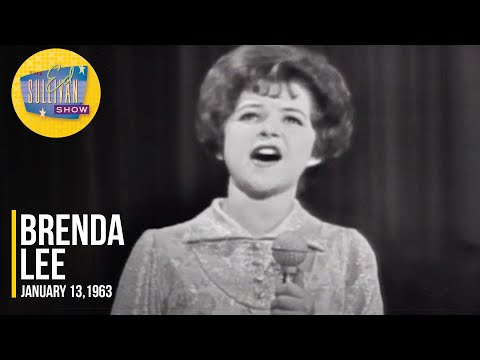
The juxtaposition of Lee's physical youth with her vocal and professional maturity was central to her public identity and a source of genuine fascination for audiences of the era. She performed with the assurance of someone who had been working professionally for most of her life, because she had been. Her voice, already distinctively powerful and emotionally direct, did not sound like an adolescent approximation of adult feeling; it sounded like the real thing, which it was. This authenticity gave "That's All You Gotta Do" and the surrounding catalog a quality that time has preserved. The performances held up not because they were precocious novelties but because they were genuinely accomplished pieces of vocal work by a singer who happened to be a teenager.
The song's place in the broader cultural context of 1960 was shaped by the moment of transition in which it appeared. The first wave of rock and roll had crested and was being absorbed into the mainstream pop infrastructure. Teen-oriented music was commercially central in ways it had not been five years earlier. Lee occupied an unusual position in that landscape: young enough to be claimed by the teen market, accomplished enough to be respected by adult listeners, and professional enough to navigate both without apparent strain.
02 Song Meaning
The Meaning of "That's All You Gotta Do": Simplicity and Teen Romance in Early 1960s Pop
"That's All You Gotta Do" by Brenda Lee operates from a premise of deliberate simplicity that was characteristic of the most effective teen pop of the early 1960s. The song's emotional argument is that romantic fulfillment requires nothing complicated or exceptional from the object of affection — only the most basic acts of attention and presence. This framing addressed the anxieties and aspirations of a teenage audience with unusual directness, offering a vision of romance stripped of impossible demands and made accessible through everyday behavior.
Jerry Reed, who wrote the song, understood how to construct a lyric that communicated efficiently within the three-minute pop format while carrying genuine emotional content. The title phrase functions as both reassurance and instruction: the narrator is not setting impossible conditions but rather identifying the minimum necessary actions that would satisfy her. This rhetorical strategy positioned the narrator as both emotionally needy and emotionally reasonable, a combination that teenage listeners could recognize from their own experience of navigating new romantic relationships.
The song's emotional landscape was shaped by the particular character of teenage romance in the early 1960s. Dating conventions were more formalized than they would become in the later part of the decade, and the rules governing romantic relationships were both more explicit and more constraining. Within those conventions, even small gestures carried significant weight: a phone call, an invitation to dance, the simple act of paying attention to someone who wanted to be seen. The "all you gotta do" framing gave these small gestures the status of sufficient conditions for romantic success, which was both reassuring and quietly aspirational.
Brenda Lee's delivery of the material was central to how its meaning registered. She was sixteen when the song charted, but her vocal approach had none of the tentativeness that might be expected from a performer of that age addressing romantic themes. Her voice conveyed a straightforward emotional authority that made the narrator's position feel secure rather than vulnerable: she was not begging for attention but specifying, with reasonable clarity, what she wanted. This confidence reframed what might have been a plaintive lyric as something more like a friendly directive.
The song also participated in a broader cultural conversation about gender dynamics in early 1960s America. The female narrator instructing a male audience on what was required for romantic success was not an unusual premise in pop of the period, but Lee's delivery of it had a particular quality of self-possession that distinguished it from more passive framings of feminine desire. She knew what she wanted and said so plainly, which was itself a kind of statement within the conventions of the era.
The Nashville Sound production that framed Lee's vocal was carefully calibrated to reinforce rather than undercut the lyric's emotional directness. The clean, bright sound of Owen Bradley's production aesthetic suited the song's character: nothing obscure or complicated in the sonic environment, just as nothing obscure or complicated was being asked of the hypothetical boyfriend in the narrative. The production's clarity mirrored the lyric's clarity, creating a unified aesthetic statement that registered immediately with radio audiences.
The fact that "That's All You Gotta Do" achieved its commercial success as the B-side to "I'm Sorry" illustrated something important about how early 1960s pop radio worked. Songs succeeded on their own merits when radio programmers and listeners found them worth returning to, regardless of their official commercial positioning. "That's All You Gotta Do" evidently had that quality in abundance, reaching audiences through the same mechanisms that drove A-side hits while maintaining its own distinct emotional register. The juxtaposition of the two songs on a single release also demonstrated Lee's range: the longing and regret of "I'm Sorry" alongside the cheerful directness of "That's All You Gotta Do" showed a young artist already capable of inhabiting meaningfully different emotional territories within a single commercial release.
→ More from Brenda Lee
View all Brenda Lee hits →


→ More from the 1960s File
View all 1960s hits →




Keep digging