The 1960s File Feature
I'm Sorry
I'm Sorry — Brenda Lee's Monument to a Summer Little Miss Dynamite at the Top of the World The summer of 1960 belonged to Brenda Lee . She was sixteen years …
01 The Story
I'm Sorry — Brenda Lee's Monument to a Summer
Little Miss Dynamite at the Top of the World
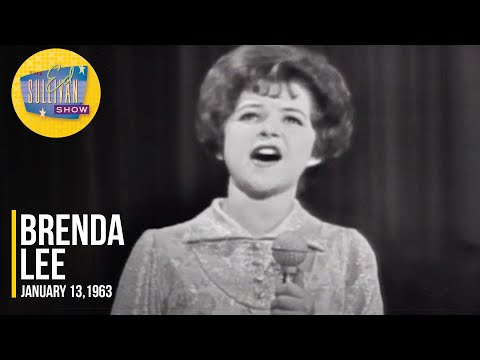
The summer of 1960 belonged to Brenda Lee. She was sixteen years old, already a seasoned recording artist with years of experience on stage and in the studio, and she possessed a voice that seemed physically impossible from a young woman of her stature. Her nickname, "Little Miss Dynamite," captured something essential: the sheer force of talent and presence compressed into an improbable package. In the spring and summer of 1960, while the country was still processing the shock of rock and roll and radio programmers were navigating the transition from the big band era to a new sonic landscape, Lee stepped forward with I'm Sorry and claimed the entire American chart for herself.
The trajectory of her early career was itself remarkable. Born in Atlanta and raised in Georgia, she had been performing professionally from childhood, her talent recognized early and cultivated through extensive live work that gave her a stagecraft far beyond her years. By the time she recorded "I'm Sorry," she carried the experience of someone who had already spent years in front of audiences, which showed in the emotional authority of the performance.
The Recording and Its Emotional Architecture
Recorded and produced in Nashville, "I'm Sorry" featured a lush string arrangement that provided an orchestral backdrop for Lee's voice. The production created a context of formal beauty that amplified the emotional weight of the performance without overwhelming it. The arrangement was calibrated to support rather than compete with the vocal, and Lee's delivery filled every inch of the space it provided.
The song is a ballad of regret and longing, built around the emotional simplicity of an apology. Its lyrical directness gave Lee's voice maximum room to operate, and she exploited that room with the confidence of an artist who understood instinctively how to inhabit a song. The combination of sophisticated production values and raw emotional authenticity in the performance created something that appealed simultaneously to pop, country, and general adult audiences.
The Chart Story
"I'm Sorry" entered the Billboard Hot 100 on May 30, 1960, debuting at position 76. What followed was one of the most impressive sustained chart climbs of its era. By July 18, 1960, the track had reached number one on the Hot 100, where it held for three weeks. The track spent twenty-three weeks total on the chart, one of the longest chart runs of 1960 for any single. The song also crossed to the country charts, demonstrating Lee's crossover appeal across multiple formats.
A twenty-three-week chart run is an extraordinary achievement by any measure. It speaks to the depth and breadth of listener engagement with the song across multiple demographic groups and across an extended period of radio exposure. By the time "I'm Sorry" finished its chart run, it had been a fixture of American radio for more than five months.
Decca Records and the Nashville Machine
Lee recorded for Decca Records, one of the major labels of the era, and benefited from Nashville production resources that were beginning to establish the city as the center of country and pop crossover activity. The Nashville Sound, characterized by smooth string arrangements and sophisticated production approaches, was being developed by producers and session musicians who were finding ways to make country-rooted material accessible to pop radio audiences. "I'm Sorry" was an exemplary product of that approach.
The crossover between country and pop that Nashville was engineering in this period created a commercial logic that benefited artists like Lee, whose voice and style sat comfortably in multiple formats. She was not strictly a country artist or strictly a pop artist; she was simply a great singer whose talent transcended format boundaries, and the industry infrastructure around her knew how to use that quality to maximum commercial effect.
Legacy and Cultural Impact
The achievement of "I'm Sorry" cannot be fully separated from the biographical fact of Lee's age when she recorded it. A sixteen-year-old producing a vocal performance of this authority and emotional depth was remarkable in 1960, and it remains remarkable in retrospect. The song was not just a commercial success; it was evidence that exceptional talent operates independently of conventional developmental timelines.
Lee's career would continue for decades, accumulating a catalog of hits across country and pop formats and earning her a place in the Country Music Hall of Fame. "I'm Sorry" stands as the peak of her pop crossover achievement, the moment when her talent was most perfectly aligned with the commercial and cultural forces of her era.
Let the strings come in, close your eyes, and listen to what a sixteen-year-old voice sounded like when it was carrying the entire American chart on its shoulders.
"I'm Sorry" — Brenda Lee's singular moment on the 1960s charts.
02 Song Meaning
I'm Sorry — Regret, Youth, and the Power of Emotional Simplicity
The Universal Grammar of Apology
Few emotional statements are more universal than the apology. The act of expressing regret, of acknowledging that something has gone wrong in a relationship and taking responsibility for one's part in it, is a human constant that transcends culture and era. "I'm Sorry" draws its remarkable commercial power from exactly this universality. The lyrical subject is as simple as its title promises: a singer expressing sorrow over a relationship damaged or lost, asking for understanding and forgiveness. The directness of the emotional statement allowed an extraordinary range of listeners to locate themselves in the song and find their own experiences reflected there.
Songs that achieve this kind of universal resonance rarely do so through complexity. They succeed by being absolutely precise about a feeling that is absolutely common, expressing it with enough sincerity and craft that listeners feel recognized rather than merely entertained.
Youth and Emotional Authority
There is a particular quality to emotional expression in youth that can be more affecting than the more measured expressions of maturity. Brenda Lee was sixteen when she recorded this song, and her voice carried the particular vulnerability and urgency that characterizes powerful emotional expression before life has given a person's pain its full context. The absence of irony or protective distance in her delivery was not a limitation but a strength. She sang the song as if it were entirely true and entirely present, and that quality of immediacy communicated to listeners across demographic lines.
This created an interesting paradox: a very young performer delivering an adult emotional statement with more apparent conviction than many adult performers could manage. The paradox contributed to the song's impact. Audiences felt the genuineness of the performance even if they could not articulate why it moved them.
The Nashville Sound and Emotional Accessibility
The production style that surrounded Lee's vocal on "I'm Sorry" was itself making an argument about emotion and accessibility. The Nashville Sound of the early 1960s deliberately pursued a kind of emotional palatability, using sophisticated string arrangements and clean production values to make country-rooted emotional content accessible to pop radio audiences who might have resisted more rustic presentations of the same material. This strategy was commercially successful, and "I'm Sorry" was among its most successful products.
The strings are not there to decorate or to add false sophistication; they are there to frame and amplify the emotion in the vocal, to tell the listener that what they are about to hear is worth taking seriously. The arrangement served the emotional purpose of the song, which was to create a context in which regret and longing could be felt at full intensity without embarrassment.
Why It Resonated Across Twenty-Three Weeks
The extraordinary length of the song's chart run, twenty-three weeks on the Hot 100 through the summer and fall of 1960, reflects something beyond initial commercial enthusiasm. Songs that sustain that kind of chart longevity are being played repeatedly by choice, by radio programmers and by listeners who keep requesting them. The song gave people something they wanted to return to, a combination of sonic pleasure and emotional recognition that served a need across an extended period rather than satisfying it once and exhausting it.
In the cultural context of 1960, this meant the song was functioning as a shared emotional experience for an enormous number of Americans across a period of several months, providing a common reference point for a feeling that everyone at some point has had. That capacity to become a cultural commons, a song that everyone knows and that everyone can use as shorthand for a particular feeling, is the highest commercial achievement of popular music, and "I'm Sorry" achieved it fully.
→ More from Brenda Lee
View all Brenda Lee hits →


→ More from the 1960s File
View all 1960s hits →




Keep digging