The 1960s File Feature
You've Made Me So Very Happy
You've Made Me So Very Happy: Brenda Holloway and the Original Soul Declaration Before Blood, Sweat and Tears turned it into a late-1960s rock-soul crossover…
01 The Story
You've Made Me So Very Happy: Brenda Holloway and the Original Soul Declaration
Before Blood, Sweat and Tears turned it into a late-1960s rock-soul crossover phenomenon, "You've Made Me So Very Happy" was a piece of Detroit soul written for and first recorded by Brenda Holloway, one of Motown's most gifted vocalists of the mid-1960s. Holloway co-wrote the song alongside her sister Patrice Holloway, Frank Wilson, and Berry Gordy Jr. himself, a writing collaboration that reflected both the communal nature of Motown's songwriting machinery and the personal investment the label's founder had in Holloway's career. The song was released in 1967 on Tamla Records, the Motown subsidiary that housed many of the label's soul-oriented acts.
Brenda Holloway had arrived at Motown in 1964 as a Los Angeles-based signing, unusual at a time when the label was almost entirely built around Detroit talent. She had come to Berry Gordy's attention at a disc jockeys' convention, and her signing represented Motown's earliest expansion of its geographic base. Her debut single "Every Little Bit Hurts" had reached number 13 on the Billboard Hot 100 in 1964 and performed even better on the R&B chart, establishing her as one of the label's promising young talents. "You've Made Me So Very Happy" arrived as part of a mid-period effort to capitalize on and develop that promise.
The production on the Holloway recording featured the characteristic Motown sound of the era, the tight rhythm section, the prominent string arrangements, and the gospel-inflected vocal delivery that defined the label's approach to soul. The Holland-Dozier-Holland production team was the dominant creative force at Motown during these years, though the diverse writing credit on this particular song indicates it came from a different corner of the label's creative apparatus. Frank Wilson, who would go on to a modest solo career at the label, contributed substantially to the composition, and Patrice Holloway's co-writing credit reflects the family collaboration that ran through much of Brenda's material.
Holloway's vocal performance on "You've Made Me So Very Happy" showcased the full range of her abilities. She possessed a voice of considerable power and suppleness, capable of the controlled precision that Motown's productions demanded while also conveying the raw emotional intensity that distinguished great soul singing. The song gave her ample opportunity to demonstrate both qualities, moving between tender expressions of joy and the larger, more overwhelming peaks that the chorus demanded. This was a performance that clearly demonstrated why her talent warranted significant investment from Berry Gordy personally.
However, Holloway's time at Motown was marked by a tension between her considerable gifts and the label's management of her career. Despite strong early chart showings and genuine critical regard, she never achieved the sustained commercial success of contemporaries like Diana Ross and the Supremes or Marvin Gaye. Her relationship with the label became strained, and by the late 1960s she had stepped back from recording. This pattern of promising talent not fully realized under Motown's corporate framework was not unique to Holloway, but her case is particularly poignant given the quality of recordings like "You've Made Me So Very Happy."
The song's cultural trajectory took a decisive turn in 1969 when Blood, Sweat and Tears recorded their version for the album Blood, Sweat and Tears. Their interpretation, featuring David Clayton-Thomas on lead vocals, transformed the song from a classic soul number into a brass-driven rock-soul hybrid that became one of the defining sounds of its moment. The Blood, Sweat and Tears version reached number 2 on the Billboard Hot 100 and won a Grammy Award, bringing the song to a vast audience who had no awareness of Holloway's original. This is one of the more striking examples in pop history of a cover version so thoroughly eclipsing the original that the songwriter's own recording became a footnote to the song's story.
For students of Motown history and soul music in particular, Holloway's version holds a special place as the emotionally direct original, the version in which the personal stakes feel most immediate. Her recording captures the Tamla sound of 1967 with particular fidelity, a year that also produced landmark work from Marvin Gaye and Tammi Terrell, the Four Tops, and the Temptations. In this context, "You've Made Me So Very Happy" stands as evidence of Motown's extraordinary depth of talent during its commercial and artistic peak.
Holloway later returned to music and found renewed appreciation as collectors and critics revisited the Motown catalog. Her original recording of "You've Made Me So Very Happy" is now regularly cited as an essential piece of mid-1960s soul, valued precisely for the qualities that distinguish it from the Blood, Sweat and Tears version, its intimacy, its gospel roots, and the particular warmth of Holloway's voice at its most expressive.
02 Song Meaning
The Grammar of Gratitude: What "You've Made Me So Very Happy" Articulates
Note: This analysis concerns Brenda Holloway's original 1967 Tamla/Motown recording, not the Blood, Sweat and Tears cover that reached number 2 on the Hot 100 in 1969.
"You've Made Me So Very Happy" occupies a specific emotional register within the tradition of soul music, one that is less common than it might initially appear. Where much of the great soul songwriting of the 1960s trafficked in longing, loss, heartbreak, and the desperate urgency of desire unfulfilled, this song plants itself firmly in the territory of reciprocated love and gratitude. Its subject is not the pursuit of connection but the astonishing fact of its arrival, the near-disbelief that something so overwhelming could be happening to the narrator at all.
The emotional core of the song is joy expressed as vulnerability. The narrator does not simply declare happiness in a triumphant key but rather describes it as something almost too large to contain, a feeling that exceeds the ordinary capacity for feeling. This is happiness articulated as wonder, the lover presented as the agent of a transformation so complete that life before the relationship is implicitly rendered inadequate by comparison. In the hands of a lesser vocalist, this could tip into saccharine excess, but Holloway's delivery grounds the sentiment in something genuine and unguarded.
The gospel roots of Holloway's vocal style are central to what makes the song work on its deepest level. Gospel music is fundamentally concerned with the experience of grace, with being the recipient of something unearned and overwhelming. When Holloway brings that vocal tradition to a secular love song, the effect is to elevate the romantic relationship to a near-spiritual register without making the comparison explicit or heavy-handed. The beloved functions, in the song's emotional grammar, as something like a source of redemption, the person through whom the narrator has been made fully alive.
This is a framework with deep roots in the African American musical tradition, in which the boundary between sacred and secular expression has always been more permeable than in other popular music lineages. The same techniques, the melisma, the dynamic swells, the building emotional intensity, that a gospel singer uses to describe divine grace are deployed here to describe romantic love. Motown's genius was partly its ability to make this sacred-secular fusion commercially viable without stripping away the emotional authenticity that gave it power.
Within Brenda Holloway's catalog, the song represents a high-water mark of emotional commitment and interpretive depth. Her recordings at Motown were uneven in terms of material quality, and the label's management of her career did not always serve her well, but "You've Made Me So Very Happy" is a case where the song, the production, and the vocalist aligned perfectly. The result is a recording that feels inevitable in retrospect, as if no one else could have delivered this particular version of this particular sentiment with this particular combination of power and tenderness.
The song also participates in a mid-1960s Motown tradition of female declarations, songs in which women singers expressed desire, love, and commitment with directness and authority. Holloway joins a lineage that includes the Supremes, Mary Wells, and the Marvelettes in defining what female pop-soul expression sounded like during the label's golden period. "You've Made Me So Very Happy" is among the most emotionally uncomplicated of these songs, a pure statement of feeling untroubled by ambivalence or narrative complication, and its directness is part of what gives it its particular force.
The eventual success of the Blood, Sweat and Tears cover confirmed the song's structural strength, demonstrating that its core emotional statement could survive radical recontextualization. But the Holloway original remains the version in which the song's deepest emotional logic is most fully realized.
→ More from Brenda Holloway
View all Brenda Holloway hits →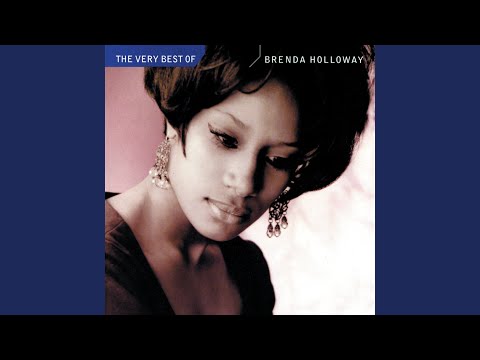

→ More from the 1960s File
View all 1960s hits →




Keep digging