The 1960s File Feature
Every Little Bit Hurts
"Every Little Bit Hurts" — Brenda Holloway Motown's West Coast Discovery The story of "Every Little Bit Hurts" begins in Los Angeles rather than Detroit, whi…
01 The Story
"Every Little Bit Hurts" — Brenda Holloway
Motown's West Coast Discovery
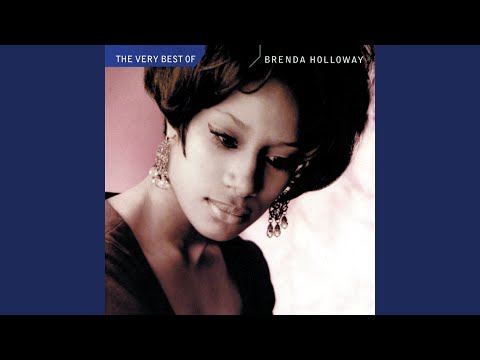
The story of "Every Little Bit Hurts" begins in Los Angeles rather than Detroit, which already makes it unusual within the Motown narrative. Brenda Holloway was a teenage vocalist when she was signed to Motown in 1964, making her one of the very few artists the label signed from its own West Coast operation rather than from its Detroit base. She was 17 years old when "Every Little Bit Hurts" was released, and the performance she delivered on the recording already demonstrated a vocal maturity and emotional depth that belied that age. The song debuted on the Billboard Hot 100 on May 2, 1964, and climbed steadily over 10 weeks to its peak of number 13 on June 6, 1964. The peak of number 13 was a genuine mainstream pop achievement for a debut single from a teenage first-time artist.
The Song Itself: Ed Cobb's Creation
"Every Little Bit Hurts" was written by Ed Cobb, a former member of the Four Preps who had transitioned into songwriting and production work. Cobb's writing gift was for emotionally direct pop material with strong melodic identities, and "Every Little Bit Hurts" is among the best examples of that gift at work. The song describes the accumulation of small emotional wounds in a troubled relationship, the way each little slight and absence adds to an unbearable total. This cumulative pain theme gave Holloway's voice something genuinely demanding to work with, and she rose to the occasion completely.
The production on the original recording is relatively restrained by Motown's standards, built around a piano and rhythm section that keeps the focus on Holloway's vocal performance. This was the right choice: her voice at 17 had a quality that more elaborate production might have obscured rather than enhanced.
Holloway's Vocal Performance
What distinguished Brenda Holloway's performance on this recording from a great deal of early-1960s soul pop was the combination of technical control and raw emotional vulnerability. She had a voice that could produce power when the material demanded it but that also understood the art of restraint, of holding something back to make the moments when she released it more devastating. The pain described in Cobb's lyric comes through not in theatrical excess but in the controlled tension of a voice that sounds as though it is barely containing what it feels.
This quality made the record genuinely moving rather than simply professionally executed, and it connected with listeners in a way that songs with equivalent production values but lesser vocal performances could not match.
The Motown Context of 1964
Spring 1964 was a complicated moment in the music industry: the British Invasion had arrived in February with the Beatles' appearance on the Ed Sullivan Show, and the American pop market was in the early stages of reorganizing itself around this new force. Motown responded with characteristic shrewdness, continuing to release its own excellent material at a high rate and trusting that the quality of the music would carry it through the disruption. Reaching number 13 on the Hot 100 in June 1964 while the Beatles and their British contemporaries were dominating much of the chart's upper regions was a meaningful commercial achievement.
Cover Versions and the Song's Life Beyond Holloway
One measure of a song's quality is the number of other artists who are drawn to record it. "Every Little Bit Hurts" attracted a remarkable catalog of cover versions over the years, including recordings by the Spencer Davis Group, Small Faces, and numerous other artists who found in Cobb's composition a vehicle for their own emotional expression. The Small Faces recording brought the song to a British audience and introduced it to listeners who might not have encountered the original. Each subsequent version confirmed that the song's emotional core was strong enough to survive translation to very different artistic contexts and production styles.
Press play and hear a teenage voice delivering something that sounds like it came from a lifetime of carefully observed emotional experience.
"Every Little Bit Hurts" — Brenda Holloway's singular moment on the 1960s charts.
02 Song Meaning
"Every Little Bit Hurts" — Meaning and Legacy
The Accumulation of Small Wounds
The emotional insight at the heart of "Every Little Bit Hurts" is not about catastrophic romantic rupture but about something quieter and, for many listeners, more recognizable: the way that a relationship in difficulty inflicts its damage through accumulation rather than through single decisive blows. Every small disappointment, every casual neglect, every moment where the other person was not quite present enough, adds to a total that eventually becomes unbearable. The song's title captures this arithmetic of pain with four words that say everything: it is not the big things alone that destroy; the small things do their work too, steadily and relentlessly.
Brenda Holloway and Emotional Articulation
Brenda Holloway's achievement on this recording is the articulation of a form of suffering that is genuinely difficult to make visible. Large dramatic suffering has an obvious narrative shape: the betrayal, the confrontation, the ending. But the quiet accumulation of small hurts is harder to dramatize because each individual instance can be explained away, minimized, or rationalized. Holloway's vocal performance refuses those rationalizations; she makes the listener feel the weight of the accumulated total even as the lyric focuses on individual small instances. This is a sophisticated emotional achievement for any performer, let alone a 17-year-old making her recording debut.
The soul and gospel vocal tradition she drew on gave her a framework for expressing emotional experience with full-body commitment rather than polite surface indication, and she deploys that framework with remarkable maturity.
1964 and the Female Experience in Pop Music
The early 1960s pop market produced an extraordinary number of songs from a female perspective about the difficulty of romantic relationships, the waiting, the uncertainty, the pain of loving someone who does not fully reciprocate. This theme dominated large portions of the girl group sound and solo female pop during this period, reflecting both the actual experience of the listeners who bought these records and the cultural context in which romantic love was treated as a primary aspiration for young women.
"Every Little Bit Hurts" fits within this tradition while also transcending some of its limitations. The song does not position its narrator as simply passive or victimized; she is a witness to her own experience, articulating it with clarity and intelligence. The pain she describes is real, but so is her ability to name it precisely, and that naming carries its own form of power.
The Song's Universality
Ed Cobb's writing gift in this song is partly located in its gender-neutral emotional core. While Holloway's performance gives it a specifically feminine perspective, the experience the lyrics describe, the accumulation of small relational wounds, is one that crosses gender, age, and circumstance. The cover versions that followed over the decades, recorded by male and female artists across different genres, testify to this universality. The Spencer Davis Group's version brought a completely different sonic and gender perspective while finding the same emotional resonance in the same core material. A song that can accommodate that kind of interpretive variation without losing its essential impact is one with genuinely strong bones.
Holloway's Place in the Motown Legacy
Brenda Holloway's career at Motown was, by the label's extraordinary standards, relatively brief and commercially modest beyond this debut success. She left the label in the late 1960s after a period in which her releases did not consistently reach the commercial heights of "Every Little Bit Hurts." But her contribution to the Motown catalog, concentrated in a small number of recordings that demonstrate exceptional vocal talent and genuine emotional intelligence, has been reassessed in subsequent decades as more than footnotes to the label's larger story. "Every Little Bit Hurts" in particular has proven its staying power through its extraordinary cover life and its continued ability to move listeners who encounter it for the first time with no prior knowledge of its history or its artist.
"Every Little Bit Hurts" — Brenda Holloway's singular moment on the 1960s charts.
→ More from Brenda Holloway
View all Brenda Holloway hits →

→ More from the 1960s File
View all 1960s hits →




Keep digging