The 1960s File Feature
Artificial Flowers
Artificial Flowers — Bobby Darin (1960) "Artificial Flowers" stands as one of the most dramatically different recordings in Bobby Darin's catalog, a song tha…
01 The Story
Artificial Flowers — Bobby Darin (1960)
"Artificial Flowers" stands as one of the most dramatically different recordings in Bobby Darin's catalog, a song that revealed unexpected depth in an artist who had built his commercial reputation largely on rock-and-roll energy and swinging pop sophistication. Released in 1960 on Atco Records, the song was drawn from Tenderloin, a Broadway musical with music by Jerry Bock and lyrics by Sheldon Harnick, the songwriting team that would subsequently achieve far greater fame with Fiddler on the Roof. Darin's recording of "Artificial Flowers" gave him a significant hit with material that was structurally and tonally unlike almost anything else in the pop mainstream of the period.
"Artificial Flowers" is a theatrical character piece describing the fate of an impoverished orphaned girl who makes artificial flowers to survive and eventually dies in her cold tenement room, still surrounded by her creations. The subject matter was extraordinarily dark for mainstream pop radio of 1960, drawing on the melodramatic tradition of Victorian sentimental narrative in a way that pop music had largely abandoned decades earlier. Bock and Harnick had written it for the theatrical context of Tenderloin, where its darkness was appropriate to the show's exploration of moral corruption and social poverty in turn-of-the-century New York. In the hands of a pop recording artist, the material required a completely different kind of commitment.
The song reached number 12 on the Billboard Hot 100 following its release, a chart performance that demonstrated the public's appetite for emotionally serious material even in an era when commercial pop was often assumed to require cheerfulness or at least mild romantic drama. The success of "Artificial Flowers" was part of a broader moment in early-1960s pop when narrative songs with theatrical or dramatic premises were finding audiences beyond Broadway devotees; Darin was not alone in making this crossover work, but he brought to it the particular authority of a performer with genuine theatrical ambitions.
Darin's big-band arrangement of the song, which drew on the orchestral sophistication he had developed through his work with Billy May and other arrangers, gave "Artificial Flowers" the production gravitas its subject required. The lush, somewhat Victorian quality of the arrangement matched the song's period setting and its melodramatic emotional content, creating a recording that felt complete and considered rather than simply a dramatic departure from his usual pop material. The brass and string arrangements supported the narrative without overwhelming it, leaving the vocal at the center of the experience.
The performance Darin brought to "Artificial Flowers" is among the most fully committed of his recording career. He did not wink at the melodrama or soften the song's tragic arc; he inhabited the material with a sincerity that suggested genuine engagement with its emotional content. This was the theatrical dimension of his artistry that his more exuberant recordings sometimes obscured: the capacity to disappear into material that required something other than his own personality and to serve the song rather than using it as a vehicle for self-expression.
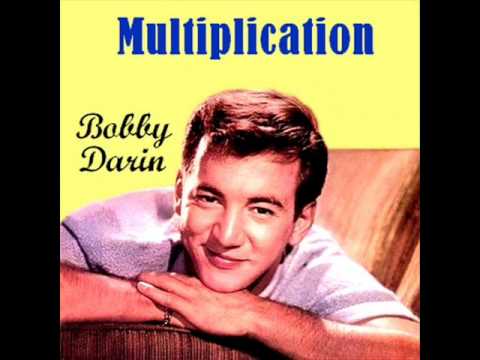
Note: Bobby Darin appears twice in this batch, "Artificial Flowers" from 1960 and "Multiplication" from 1961, and together they demonstrate the extraordinary range he commanded. Where "Multiplication" shows his wit and comic timing, "Artificial Flowers" reveals his capacity for sustained dramatic commitment.
The Broadway source for "Artificial Flowers" was significant for how the song was received. Tenderloin had opened on Broadway in October 1960 and ran for a respectable two hundred and sixteen performances, giving the song a simultaneous theatrical context that pop listeners interested in Broadway were aware of. The Bock-Harnick team was at this point associated with the critically acclaimed Fiorello!, which had won the Pulitzer Prize for Drama the same year, so their material carried a prestige that associated Darin's recording with a tradition of serious theatrical songwriting rather than with the novelty pop that some of his contemporaries were producing.
Darin's willingness to record material this dark, and to commit to it fully in the studio, reflected his long-standing ambition to be recognized as a complete musical artist rather than simply a pop star. He had expressed in interviews throughout this period a desire to transcend genre categories and to demonstrate range that went beyond what pop audiences typically demanded of their favorite recording artists. "Artificial Flowers" was one of his most compelling demonstrations of that range, a recording that holds up as a genuinely powerful piece of musical storytelling decades after its initial release.
02 Song Meaning
What "Artificial Flowers" Means: Poverty, Beauty, and the Victorian Sentimental Tradition
"Artificial Flowers" draws on one of the oldest and most morally serious traditions in Western popular culture: the sentimental narrative of an innocent poor child destroyed by the indifference of a society that cannot see her suffering. The Bock-Harnick song, in its theatrical context and in Bobby Darin's recording, participates in a lineage that runs from Dickens through Victorian melodrama to the sentimental songs of the late nineteenth and early twentieth centuries, a tradition that used extreme pathos to produce moral shock in audiences who had grown comfortable with social inequality.
The central image of the song, the artificial flowers that the girl makes as her only means of survival, carries multiple layers of meaning. Artificial flowers are imitations of natural beauty, things made to look like what they are not. They are also the product of skilled labor performed in conditions of poverty, beautiful objects that come into existence through a process that destroys the person creating them. The metaphor is both specific and resonant: the girl is making something lovely while her own life becomes progressively colder and darker, and there is an implicit critique in this juxtaposition of the economic system that requires this exchange.
The Victorian sentimental tradition that "Artificial Flowers" inhabits was not merely manipulative; at its best, it was a form of moral argument, an attempt to make abstract social conditions viscerally comprehensible by embodying them in a specific individual whose fate the audience could not distance themselves from. Bock and Harnick, working in a mid-twentieth-century Broadway context that was more ironic and sophisticated than the Victorian tradition they were drawing on, were fully aware of the genre they were working in and used it with deliberate craft rather than naive sentimentality.
Bobby Darin's interpretation of the song requires the listener to take the emotional content seriously rather than maintaining the ironic distance that a knowing modern audience might prefer. This is both a demand and a gift: the song works only for listeners who are willing to be moved by the material, and Darin's performance creates the conditions for that emotional openness by committing fully to the material without condescension or self-protection. His decision to record the song at all was itself a statement about what kind of artist he was and what kind of experience he wanted to offer his audience.
The concept of artificial versus natural runs through the song's meaning at multiple levels. The flowers are artificial; the girl's poverty is natural in the sense that it is simply the condition she was born into; the beauty she creates through her labor is real even if the objects themselves are imitations; and the indifference of the world around her is unfortunately authentic. These layered ironies give the song more intellectual content than its surface emotional simplicity suggests, and they reward the kind of attentive listening that Darin's performance invites.
The song also participates in a longer cultural conversation about the relationship between art and suffering. The girl in the song makes beautiful things while dying of cold and poverty; her creative productivity is not rewarded by the social system that consumes her products. This is a familiar structure in narratives about artistic labor, and "Artificial Flowers" gives that structure a particularly stark form. The flowers she makes will survive her; they will be sold and used for purposes she will never know; her labor will persist in the world after she has left it. This is not presented as consolation but as tragedy, and the song earns its emotional power from the clarity with which it refuses to soften that conclusion.
Within Bobby Darin's catalog, "Artificial Flowers" represents his capacity for emotional range that his more upbeat recordings could obscure. He was not simply a song-and-dance man or a rock-and-roll teen idol; he was a performer of genuine dramatic capability who could inhabit dark material with the same conviction he brought to his most exuberant performances. Understanding his full significance as an artist requires engaging with "Artificial Flowers" alongside "Mack the Knife" and "Splish Splash," because only the full range reveals the complete picture of what he was capable of.
→ More from Bobby Darin
View all Bobby Darin hits →

→ More from the 1960s File
View all 1960s hits →




Keep digging