The 1960s File Feature
Ode To Billie Joe
Ode To Billie Joe — Bobbie Gentry's Masterpiece of Southern Mystery A Voice From the Delta, A Story No One Could Decode Picture a August evening in 1967 when…
01 The Story
Ode To Billie Joe — Bobbie Gentry's Masterpiece of Southern Mystery
A Voice From the Delta, A Story No One Could Decode
Picture a August evening in 1967 when American radio encountered something it had almost no frame for. The song that emerged from the speakers was unhurried, conversational, and built over a single repeated guitar figure. A young woman from Mississippi was describing a family dinner on the day of a local boy's death, and the manner in which she described it, the mundane details of dinner conversation, the passing references to farm chores, the almost casual mention that someone named Billie Joe McAllister had jumped off the Tallahassee Bridge, created an atmosphere of unresolved dread unlike anything else on the Hot 100 at that moment.
Bobbie Gentry wrote "Ode to Billie Joe" entirely on her own, which was itself unusual in an era when female artists were rarely expected to provide their own material. The recording was spare by the production standards of 1967: a guitar arrangement supporting Gentry's vocal, with a string section added by producer Kelly Gordon for the commercially released version. That string arrangement thickened the sound without diluting the song's essential strangeness, its commitment to a storytelling mode that refused explanation.
From Debut to Number One in Twenty-Two Days
The commercial trajectory of Ode to Billie Joe was one of the most striking in the chart history of the 1960s. The song debuted on the Billboard Hot 100 on August 5, 1967, at position 71. One week later it was at 21. By August 19 it had reached 7. On August 26, 1967, it stood at number one on the Billboard Hot 100, completing a climb from debut to chart peak in just three weeks, a pace that reflected the explosive power of radio saturation once programmers recognized they had something exceptional on their hands. It held the number one position for four consecutive weeks and spent a total of fourteen weeks on the chart.
The number one displacement it achieved was remarkable in context: it knocked the Beatles' All You Need Is Love from the top position, which gives some sense of the commercial force the record generated. Gentry became the first solo female artist to write and perform a number one single in what was then a male-dominated creative landscape, a fact that would grow in significance as the decades passed and the cultural conversation about women's creative authority in pop music developed.
The Question That Made the Song Immortal
The detail that galvanized listeners, critics, and casual radio audiences alike was what the song never revealed: what had been thrown off the bridge, and why Billie Joe had taken his own life. Gentry was asked in countless interviews to explain these omissions. She offered various partial responses over the years but never provided a definitive answer, which was almost certainly the correct artistic choice. The song's power resided precisely in its refusal to explain. The mystery at its center was not a trick or a marketing strategy; it was the song's actual subject, the way that communities absorb tragedy without fully processing it, the way life continues through grief without making grief coherent.
Radio listeners in 1967 found the unexplained elements impossible to release. The conversation generated around the song, what was thrown off the bridge, who Billie Joe was, what the narrator really felt, constituted a form of audience engagement that predated social media by decades but operated on similar principles. The song became a communal mystery that people carried with them and debated in kitchens and classrooms and barbershops across the country.
A Sound Rooted in Southern Gothic Tradition
Gentry's musical and lyrical sensibility drew on a tradition of Southern Gothic storytelling that found its literary expression in writers like Flannery O'Connor and William Faulkner: a mode in which the grotesque and the mundane coexist without resolution, in which tragedy arrives without the comfort of explanation, and in which the landscape carries moral weight. The Delta setting of the song, with its specific agricultural details and its reference to a named bridge over a named river, grounded the narrative in a particular Southern geography that was itself part of the song's emotional texture.
That rootedness in place was unusual for Top 40 pop in 1967, and it contributed to the song's distinctiveness. This was not a universal love song or a vague expression of romantic feeling; it was a story from a specific place with specific people, told by a narrator who was part of the community she described rather than an outside observer.
Legacy Without Parallel
The critical and commercial success of Ode to Billie Joe established Bobbie Gentry as one of the most original voices in American popular music. The song won four Grammy Awards and launched a career that, while it did not sustain the commercial intensity of this debut single, produced a body of work of considerable artistic distinction. The recording itself has never faded from cultural memory, appearing on best-of-all-time lists, inspiring covers and homages, and retaining the capacity to unsettle new listeners with the same unresolved power it wielded in the summer of 1967. Put it on and feel the Mississippi heat rise from the grooves.
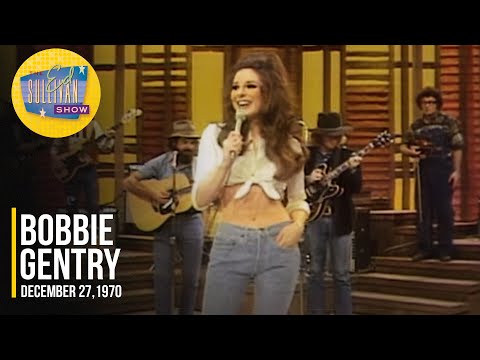
"Ode To Billie Joe" — Bobbie Gentry's singular moment on the 1960s charts.
02 Song Meaning
Ode To Billie Joe — Grief, Silence, and the Story That Refuses to End
The Power of What Is Withheld
American pop music in 1967 was becoming more ambitious, more politically conscious, and more psychedelically expansive, but it had rarely been as genuinely mysterious as Ode to Billie Joe proved to be. The song's lasting power rests not on what it reveals but on what it withholds, and that withholding is not a narrative failure but a deliberate artistic strategy. Bobbie Gentry understood that the questions the song raises are more powerful unanswered than any explanation could be, because the unanswered questions reproduce, in the listener's experience, the actual texture of grief and community silence.
When someone dies in a small community, the full truth of the death is rarely known by everyone. Gossip circulates, theories multiply, and the official story never quite accounts for all the emotional evidence. The family in the song continues eating and talking through the announcement of Billie Joe's death, distributing chores and commenting on the weather, because that is what people do: they persist in ordinary life while extraordinary grief accumulates beneath the surface. The song's structure mirrors that persistence, moving forward narratively while the emotional center remains unresolved.
The South as Moral Landscape
The song's specific geography carried thematic weight. The rural Mississippi Delta setting evoked a literary tradition of Southern storytelling in which place and character were inseparable, where the land itself participated in the stories of those who worked it. The Tallahassee Bridge, the Choctaw Ridge, the local seasonal references were not decorative details but load-bearing elements of the narrative world Gentry constructed. They told the listener that this was a story from a particular somewhere, not a universal nowhere, and that specificity gave the song's emotional claims greater authority.
Southern Gothic as a literary mode had always been interested in the way communities maintained surface normalcy while concealing profound damage, trauma, and unacknowledged truth. Gentry brought that sensibility into the pop song form with a precision that no prior Top 40 recording had achieved. The song's narrator is herself a character operating within this culture of surface and concealment, and the listener gradually realizes that her relationship to Billie Joe, whatever it was, is part of what the song refuses to explain.
Class, Gender, and Community Pressure
The social dynamics embedded in the song's narrative were recognizable to listeners who had grown up in similar communities. The family's response to Billie Joe's death, absorbed and processed within a single mealtime conversation before the talk moves back to ordinary concerns, illustrated the emotional management strategies of rural working-class communities where overt displays of feeling were constrained by a culture of stoicism and forward motion. Grief was real but could not stop the harvest or the meal preparation or the daily routines that kept the household functioning.
The narrator's position as a young woman in this social world also carried specific implications. Her feelings about Billie Joe, whatever they were, remained private within a community context that did not provide her ready language for expressing them. The song gave voice to that silence precisely by refusing to break it.
A Song That Grows With Its Listeners
What distinguishes Ode to Billie Joe from the vast majority of its chart contemporaries is that it rewards repeated listening across different life stages. Heard at fourteen, the mystery is exciting and the unanswered questions feel like a puzzle. Heard at forty, the emotional subtext of unspoken feeling and community silence resonates differently, connecting to experiences of loss and the inadequacy of language in the face of grief that only years of living can supply. The song's complexity deepens as the listener's own experience deepens, which is the defining characteristic of genuinely great songwriting rather than merely excellent commercial craft.
Gentry's achievement in this single recording stands among the most significant in the history of the American pop single: a work that operated simultaneously as a commercial juggernaut and a genuinely literary artifact, asking questions about community, silence, class, and grief that pop music had never previously attempted with such disciplined economy.
→ More from Bobbie Gentry
View all Bobbie Gentry hits →

→ More from the 1960s File
View all 1960s hits →




Keep digging