The 1960s File Feature
Fancy
Fancy: Bobbie Gentry's Unforgettable Narrative of Survival Bobbie Gentry was already established as one of the most distinctive voices in American popular mu…
01 The Story
Fancy: Bobbie Gentry's Unforgettable Narrative of Survival
Bobbie Gentry was already established as one of the most distinctive voices in American popular music when she released "Fancy" in 1969. Her 1967 debut single "Ode to Billie Joe" had been a phenomenon, spending four weeks at number one on the Billboard Hot 100 and generating enormous critical and commercial attention for its elliptical storytelling and atmospheric evocation of the Mississippi Delta. "Fancy" was a very different kind of song, more direct in its narrative arc, more unflinching in its subject matter, but it came from the same storytelling sensibility and the same commitment to depicting Southern life with complexity and without sentimentality.
"Fancy" was released on Capitol Records in 1969 and was written by Gentry herself, as was nearly all of her most significant work. The song told a specific, unflinching story: a desperately poor Southern mother prepares her young daughter for what amounts to survival prostitution, dressing her up and sending her out into the world with the explicit instruction to use whatever means necessary to escape the poverty that has trapped them both. The mother dies shortly after, and the daughter, over the course of years, rises through society on the strength of the opportunity her mother created for her. It was a narrative that dealt with class, gender, survival, and the moral compromises that extreme poverty can force, rendered in language that was specific and earned rather than melodramatic.
The single reached number thirty-one on the Billboard Hot 100 in 1969, a respectable performance that reflected the song's somewhat unconventional subject matter for mainstream pop radio of the period. It performed considerably better on the country chart, where Gentry's established reputation and the song's Southern narrative tradition gave it a more comfortable home. The song's relatively modest initial pop-chart performance belied the enormous cultural longevity it would accumulate over the following decades.
Gentry's production approach on "Fancy" was lush and cinematic, employing orchestral arrangements that suited the song's narrative sweep. She had developed her production instincts partly through her work on her own recordings and partly through the influence of producers she had worked with at Capitol, but by 1969 she was deeply involved in shaping the sonic identity of her recordings. The string arrangements gave "Fancy" a grandeur appropriate to its scope while the specificity of the narrative kept it grounded in the particular rather than the generic. Gentry co-produced and arranged much of her own work during this period, which was unusual for female artists in the late 1960s country and pop mainstream and which contributed significantly to the distinctive character of her recordings.
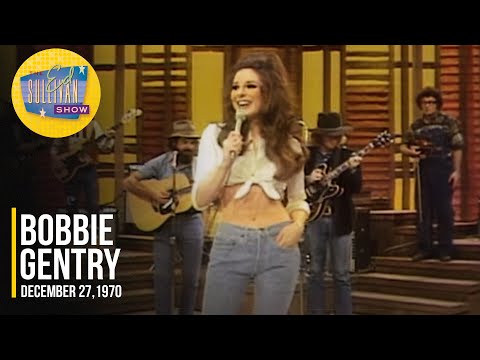
The song appeared on Gentry's album Fancy, also released in 1969, which compiled original material and demonstrated the breadth of her musical interests. By this point in her career she had established herself not only as a recording artist but as a television personality, having hosted several successful variety specials, and her profile in American popular culture was substantial. "Fancy," as both single and album, added another dimension to a persona that was already understood to be more complex than the conventional country-pop archetype.
The song's second and more commercially dramatic life began in 1991, when Reba McEntire recorded it and took it to number eight on the Billboard Hot 100 and number one on the Billboard country chart. McEntire's version introduced "Fancy" to an entirely new generation of listeners and became one of the definitive recordings of her career, leading many listeners to assume the song was originally hers. Gentry's original authorship became a subject of renewed interest as a result, and the song's reputation as a landmark of narrative country and pop songwriting was firmly established. The McEntire version was recorded as a tribute to Gentry's original, and McEntire has consistently acknowledged Gentry as the song's creator and the original version's power.
In subsequent decades, "Fancy" has been recognized as one of the defining examples of the female-survival narrative in American popular music, a song that refuses to moralize about the choices its protagonist makes and instead presents them as logical responses to impossible circumstances. Gentry's refusal to render judgment on her narrator, her insistence on treating the moral complexity of the situation with clarity rather than condemnation, placed the song ahead of its time by the standards of 1969 pop and country radio. Bobbie Gentry effectively retired from public life in the late 1970s, making "Fancy" and the handful of other recordings she left behind all the more precious as documents of a singular artistic vision.
The song has been covered by numerous artists across country, pop, and rock genres, each version finding something slightly different in the narrative but all returning to the same core confrontation with poverty, survival, and the complicated legacy of a mother's sacrifice. Its endurance as a piece of American storytelling confirms Gentry's status as one of the most important songwriters of her era, and "Fancy" as perhaps her most complete and enduring achievement outside of "Ode to Billie Joe."
02 Song Meaning
More Than Survival: The Meaning of Bobbie Gentry's "Fancy"
Note: "Fancy" is Bobbie Gentry's original 1969 composition and recording. Reba McEntire's celebrated 1991 cover introduced it to a new generation, but the song, its authorship, and its core meaning belong entirely to Gentry.
"Fancy" is one of the most morally serious narrative songs in the American popular tradition, a work that forces the listener to hold two contradictory truths simultaneously: that the choices made by the song's protagonist are ethically troubling by conventional standards, and that those same choices are the most rational responses available to a person trapped in conditions of extreme poverty with no other exit. Gentry constructed the narrative in a way that refuses the listener the comfort of easy judgment. The mother who prepares her daughter for a life of using her body as social currency is not a villain; she is a woman doing the most desperate kind of love she can manage under conditions that offer no better option.
The song's emotional architecture is built around two distinct time frames that the narrator moves between: the specific, sensory-rich past of the childhood moment when the mother makes her decision, and the more generalized present of the narrator's achieved escape. This temporal structure is itself a kind of argument, suggesting that the distance between poverty and survival is real and that it can be crossed, but that the crossing leaves marks that cannot be erased. The narrator has made it out, but she carries the knowledge of what it cost.
The class politics embedded in "Fancy" were unusual for country and pop radio in 1969, when the prevailing conventions of both formats tended toward either romanticization of rural poverty or cheerful avoidance of it. Gentry's willingness to look directly at the material conditions that shape her characters' choices, and to treat those characters with dignity rather than pity, placed the song in a different register from most of its contemporaries. It belongs more to the tradition of the Southern literary imagination, with its unflinching attention to social stratification and its refusal of easy resolution, than to the conventions of commercial pop songwriting.
The song's female perspective was also significant. In 1969, when the original single reached number thirty-one on the Billboard Hot 100, the popular-music landscape offered relatively few narratives told from the point of view of women who exercised agency over their own survival, even when that agency took forms that polite society would have preferred not to acknowledge. Gentry's narrator is not a victim awaiting rescue but a person who took the tools she was given, however imperfect and morally compromised, and used them to build a life. The song's refusal to apologize for this trajectory made it genuinely radical in its moment.
The orchestra that surrounds the narrative is not incidental to its meaning. The lush string arrangement gives the song the sweep of a film score, framing the narrator's journey as something worthy of cinematic attention, which is itself a form of honoring a story that the dominant culture would prefer to keep invisible. The grandeur of the production insists that this story matters, that the lives of poor Southern women deserve the kind of attention usually reserved for more socially elevated subjects.
In Gentry's catalog, "Fancy" represents the full realization of the storytelling approach she had been developing since "Ode to Billie Joe." Where that song famously withheld information, leaving the central mystery unresolved, "Fancy" moves in the opposite direction, being almost relentlessly specific about its narrative progression. Both approaches demonstrate the same underlying conviction: that the specific details of specific lives, rendered honestly and without condescension, contain more truth than any generalization could.
The song's meaning has deepened over the decades as it has been adopted by successive generations of listeners who find in its narrative of female survival something that speaks to experiences and conditions far beyond the specific 1969 Southern setting Gentry imagined. Its endurance is the clearest possible evidence that Gentry was writing about something essential rather than merely local.
→ More from Bobbie Gentry
View all Bobbie Gentry hits →

→ More from the 1960s File
View all 1960s hits →




Keep digging