The 1960s File Feature
How Can I Forget
How Can I Forget — Ben E. King and the Soul Landscape of 1963 A Voice That Needed No Introduction By the spring of 1963, Ben E. King had already secured his …
01 The Story
How Can I Forget — Ben E. King and the Soul Landscape of 1963
A Voice That Needed No Introduction
By the spring of 1963, Ben E. King had already secured his place in the annals of American popular music. His years with the Drifters had produced some of the most beloved group harmony records of the late 1950s, and his departure for a solo career had generated Stand By Me, one of the most enduring ballads ever recorded. When How Can I Forget arrived in early 1963, King was not an emerging voice. He was an established presence whose records carried the weight of an already-formidable catalog. That context shaped how radio and audiences received the single: with the respect due to someone who had already proven himself twice over.
The Sound of Atlantic Soul
How Can I Forget belongs to the sound that Atlantic Records had been refining throughout the early 1960s. The label's approach to soul production balanced lush orchestration with the rawness of genuine vocal performance, creating a kind of uptown R&B that could reach pop audiences without diluting the emotional core. King's voice was the instrument that made this formula work: his tenor had an ache and a reach that could fill out the most elaborate arrangement or stand nearly alone against minimal accompaniment. The production on this track reflected the Atlantic house style: controlled, sophisticated, and yet unmistakably soulful at its center.
The Chart Journey of Spring 1963
The single debuted on the Billboard Hot 100 on March 16, 1963, entering at position 96. The chart run was modest in scope, spanning four weeks and peaking at number 85 during the week of April 20, 1963. In the context of the crowded early-1963 pop landscape, that peak placed the single toward the lower reaches of the chart rather than among the season's dominant hits. Modest chart performance was not unusual for album-era soul artists whose catalog strength outpaced any individual single's commercial footprint. For King, the record was one entry in a continuous body of work.
Early 1963: A Pop World in Transition
The pop landscape of early 1963 was living on borrowed time without knowing it. The British Invasion was still a year away, but the American music scene was already beginning to fracture and diversify. Soul music was gaining commercial ground; girl groups were in full flower; the folk revival was pushing from the margins toward the center. Into this complex moment came Atlantic soul records that carried the tradition of gospel feeling and secular storytelling, reaching listeners who responded to emotional directness in an era not yet dominated by the guitar-based rock that was coming. Ben E. King was one of the artists who embodied that tradition with particular grace.
Legacy and Lasting Resonance
Ben E. King's catalog has proven extraordinarily durable. Stand By Me alone has achieved a kind of immortality that few pop recordings reach, appearing in films, commercials, and political rallies across six decades. How Can I Forget occupies a quieter place in that catalog, a single from the productive early years before his chart success would wane and then revive in later decades. But it stands as evidence of a voice and an artistry that operated at a consistently high level, regardless of what the weekly charts said about any particular release. Give it a listen and hear a master at work in the vibrant, complicated spring of 1963.
Atlantic Records and the Architecture of a Sound
Atlantic Records in the early 1960s was operating at the absolute height of its creative powers. The label had spent the preceding decade building a roster and a production philosophy that understood how to translate the emotional directness of gospel and rhythm and blues into records that could reach a mainstream pop audience without compromising the core intensity of the source material. For an artist like Ben E. King, that environment was genuinely enabling. The label's production team understood his voice with precision, knew how to frame it so that its particular qualities, the combination of power and tenderness, of reach and restraint, came through cleanly on a car radio or a kitchen transistor. How Can I Forget arrived from within that system, and it carries all the hallmarks of what Atlantic soul could achieve when every element of the production was working toward the same emotional goal.
“How Can I Forget” — Ben E. King's singular moment on the 1960s charts.
02 Song Meaning
The Meaning Behind “How Can I Forget” by Ben E. King
Memory as an Inescapable Force
The question in the title is not really a question. It is a declaration: the singer cannot forget, and the song is a sustained meditation on that impossibility. This is emotionally rich territory that has generated countless songs across the history of popular music, but what gives a Ben E. King performance of such material its distinctive quality is the way the voice embodies the feeling rather than merely describing it. King's phrasing carries the weight of genuine emotional experience, turning lyrical content that might seem generic into something that feels specific and lived-in.
The Grammar of Heartbreak in Early Soul
Early 1960s soul music had developed a remarkably sophisticated grammar for describing heartbreak. Drawing on gospel traditions of emotional expression and the blues vocabulary of loss, the genre gave performers a framework within which enormous emotional range could be communicated through relatively simple lyrical structures. The song operates within this framework, using the conventions of the form, including the repeated question, the direct address to a lost love, and the assertion of lasting feeling, to create an emotional statement that transcends its individual components. The tradition itself becomes an amplifier, so that listeners who knew their Ray Charles and their Sam Cooke heard the song within a context that deepened its resonance.
Memory, Loss, and the Body of a Song
One of the things soul ballads do particularly well is explore the physical dimension of emotional memory. The way a song, a scent, or a sound can conjure the past without warning is a universal human experience, and the best recordings in this tradition acknowledge that involuntary quality of remembering. This song touches that theme by positioning the narrator not as someone who refuses to move on by choice, but as someone genuinely unable to escape the fact of what was lost. That distinction between refusal and inability is emotionally important: it removes any hint of self-indulgence from the singer's position and replaces it with a kind of helpless honesty.
The Cultural Moment of Early 1963
The emotional landscape of early 1963 America was complex in ways that shaped how audiences received music about loss and longing. The country was still processing the anxieties of the Cuban Missile Crisis from the previous October; the civil rights movement was approaching some of its most dramatic confrontations; and pop music existed alongside these larger tensions as both an escape and, for Black artists, an assertion of creative presence in a racially divided marketplace. Ben E. King's presence on the pop charts in 1963 was itself a statement, even when the songs themselves were not explicitly political. Every Atlantic soul record that crossed over to mainstream audiences was a small demonstration of something.
Why the Song Endures
How Can I Forget may not be among the most famous entries in Ben E. King's catalog, but it represents something genuinely valuable: a craftsman's record made at a moment when he was operating at the height of his powers. The themes it explores, including memory, loss, and the persistence of feeling after the fact that caused it has passed, are as relevant now as they were when the single charted. What changes across eras is not the emotional content but the sonic language, and King's particular language, shaped by Atlantic Records, the gospel tradition, and a voice of uncommon beauty, remains as affecting on first listen now as it was on early-1960s radio. That is the definition of a lasting artistic statement, however modest its chart footprint.
→ More from Ben E. King
View all Ben E. King hits →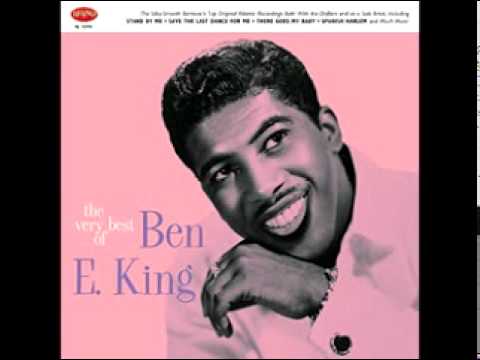


→ More from the 1960s File
View all 1960s hits →




Keep digging