The 1960s File Feature
Stand By Me
"Stand By Me" — Ben E. King's Enduring Monument to 1961 A Voice in the Room Where Soul Was Being Invented Imagine standing outside the Atlantic Records build…
01 The Story
"Stand By Me" — Ben E. King's Enduring Monument to 1961
A Voice in the Room Where Soul Was Being Invented
Imagine standing outside the Atlantic Records building in New York City in early 1961. Inside, something extraordinary was being assembled, not with fanfare, but with the quiet confidence of musicians who knew they were creating something that worked. Ben E. King had recently departed the Drifters, the group that had carried him to early prominence, and he was now establishing himself as a solo vocalist of serious intention. His voice possessed a quality that distinguished it from most of his contemporaries: a warmth that never tipped into sentimentality, a directness that stopped well short of bluntness, a range that moved between intimate and commanding without effort.
"Stand By Me" was co-written by King along with Jerry Leiber and Mike Stoller, the legendary songwriting and production team whose fingerprints were on some of the most significant popular recordings of the era. The song drew from the tradition of gospel music, specifically from the spiritual "Lord, Stand By Me," which had been part of the Black church repertoire for decades. King and his collaborators took that foundation and built something new on top of it: a secular declaration of loyalty, a love song translated from a spiritual language into a human one.
The Recording and Its Architecture
The recording session that produced "Stand By Me" generated one of the most recognizable opening passages in the history of popular music. The bass line that introduces the song, four notes descending in a pattern that establishes both the groove and the emotional key of the entire track, has been studied by musicians and music theorists for decades. It creates a feeling of movement and inevitability simultaneously, pulling the listener forward while also conveying a sense of settled purpose.
The string arrangement that enters alongside King's vocal added texture without crowding the singer. King's voice remained the track's center of gravity throughout, sustained by a rhythm section that maintained precisely the right tempo: slow enough to be intimate, not so slow as to become dirge-like. The production, attributed to Leiber and Stoller, was a masterclass in restraint, giving every element of the recording sufficient space to breathe.
Climbing to Number 4
The single debuted on the Billboard Hot 100 on May 8, 1961, at position 75. The climb that followed was steep and rapid. Within three weeks it had reached number 28; within five weeks it was at number 6. The momentum continued, and on June 12, 1961, "Stand By Me" peaked at number 4 on the Hot 100, a position it held while spending a total of 14 weeks on the chart. It also reached number 1 on the R&B charts during this same period, reflecting its dual commercial impact across both pop and rhythm and blues formats.
The crossover performance was significant for what it revealed about the song's reach. "Stand By Me" did not belong only to R&B radio; it found listeners across demographic categories that were still, in 1961, substantially segregated by format and by the marketing assumptions of radio stations and record labels. The song's gospel underpinning gave it a familiarity that cut across those divisions.
Beyond 1961: A Song That Never Stopped Moving
The story of "Stand By Me" does not end in 1961. The song returned to the charts in 1986, when its use in Rob Reiner's film of the same name (based on a Stephen King novella) introduced it to a new generation of listeners. That re-release pushed the track back into the Hot 100 decades after its original run, an occurrence rare enough to mark the song as something genuinely extraordinary.
Ben E. King's recording has been covered hundreds of times by artists across virtually every genre of popular music, from rock to country to gospel to hip-hop. Each new generation of musicians has found something usable in its architecture, something that speaks directly to their own moment. That kind of durability is not manufactured; it grows from the genuine quality of the original.
Legacy and Endurance
Few songs recorded in the early 1960s have remained as continuously present in popular culture as "Stand By Me." It has appeared in films, television programs, sporting events, and political contexts in ways that have gradually transformed it from a pop recording into something closer to a cultural common text, a piece of music that requires no introduction across a remarkable range of cultural contexts.
The simplicity of its emotional message, the request that someone remain present when the world feels threatening, gives it universal access. There is not a human being alive who has not needed exactly what Ben E. King's voice promises in this song. Press play, close your eyes, and try to remember the first time you heard it.
"Stand By Me" — Ben E. King's singular moment on the 1960s charts.
02 Song Meaning
The Meaning Behind "Stand By Me" by Ben E. King
The Most Universal Request in Popular Music
Strip away the production, silence the famous bass line, and what remains is one of the simplest emotional propositions in the history of popular song: stay with me when things get frightening. The imagery that fills the song draws from elemental forces, mountains falling, skies darkening, the collapse of the natural order itself, to establish the extremity of the situation in which the narrator's request is made. And in the face of all that potential catastrophe, the only thing that matters is whether one other person will remain present.
This is the song's central genius. By scaling the backdrop to cosmic proportions, it paradoxically makes the emotional content more intimate, not less. The narrator is not describing a difficult conversation or a stressful week; they are describing a universe coming apart. And the response to that vision is not prayer or flight or resistance, but the simple desire for company. The song captures something true about human psychology: in extremity, what most people want is not rescue but presence.
Gospel Roots and Secular Translation
The song grew from the soil of African American gospel tradition, drawing on a spiritual that expressed faith in divine accompaniment through difficulty. Ben E. King and his collaborators Jerry Leiber and Mike Stoller translated this spiritual architecture into secular terms without draining it of its emotional power. The call for presence that in the gospel context went to God was redirected toward a human beloved, but the underlying structure, the acknowledgment of vulnerability in the face of overwhelming circumstances, the request to not be left alone, remained intact.
This translation was not unusual in the history of R&B, which emerged from precisely this kind of movement between sacred and secular expression. But "Stand By Me" executed the translation with particular care, preserving enough of the spiritual register to give the song its depth while making it legible and resonant to listeners who had no connection to the specific church tradition from which it came.
Fear, Darkness, and the Human Need for Witness
The emotional landscape the song inhabits is one of fear. Not romantic anxiety or social uncertainty, but something closer to existential dread: the intuition that the world is not stable, that the structures on which ordinary life depends are more fragile than they appear. In 1961, when the song was recorded and released, this intuition was not abstract. The Cold War had brought genuine nuclear anxiety into everyday American life; the threat of annihilation was a background presence in the culture in ways that are difficult to fully reconstruct from the present.
A song that offered companionship in the face of darkness rather than reassurance that the darkness would lift was doing something psychologically honest. It did not promise safety; it promised solidarity. That distinction made the song emotionally real in a way that more optimistic material could not have achieved.
Why Every Generation Finds It New
The longevity of "Stand By Me" across sixty-plus years of popular culture is not an accident of nostalgia or marketing. The song addresses a need that does not become obsolete. Each generation encounters its own version of the darkness the narrator describes, its own reasons to feel that the stable ground underfoot might not hold. Each encounter with the song is therefore fresh, filtered through circumstances the original recording could not have anticipated but somehow speaks to anyway.
This is what separates a great song from a merely popular one: the ability to mean something in contexts its creators never imagined. Ben E. King's voice, delivering a lyric rooted in mid-century American gospel culture, has accompanied people through grief, through celebration, through moments of private fear and public solidarity, in ways that no studio session in 1961 could have predicted. The song arrived complete. It has needed no revision to stay true.
"Stand By Me" — Ben E. King's singular moment on the 1960s charts.
→ More from Ben E. King
View all Ben E. King hits →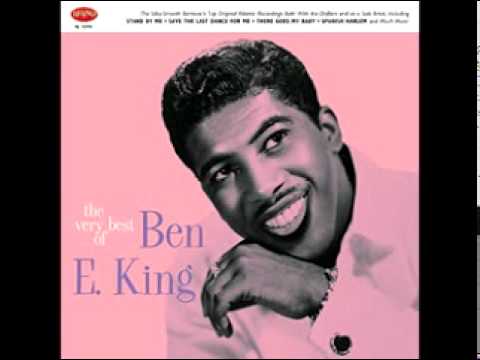



→ More from the 1960s File
View all 1960s hits →




Keep digging