The 1960s File Feature
You'll Lose A Good Thing
"You'll Lose A Good Thing" — Barbara Lynn and the Birth of a Blues-Soul Classic Texas, 1962, and a Voice That Already Knew The early summer of 1962 was still…
01 The Story
"You'll Lose A Good Thing" — Barbara Lynn and the Birth of a Blues-Soul Classic
Texas, 1962, and a Voice That Already Knew
The early summer of 1962 was still a world away from the British Invasion, from psychedelia, from Motown's peak commercial domination. The sound of American pop radio in mid-1962 was a blend of pre-rock balladeers, early surf music, uptown R&B, and a wave of girl-group productions coming out of New York. Into this landscape came a twenty-year-old left-handed guitarist from Beaumont, Texas, who had written her own song, played her own lead guitar, and was about to create one of the most enduring recordings in the R&B canon.
Barbara Lynn was discovered by talent scout Huey Meaux, who recognized in her a combination of qualities that was genuinely rare: a distinctive voice with authority and emotional depth, guitar playing that was original and confident, and the ability to write material that spoke directly from lived experience. You'll Lose A Good Thing was her own composition, and the autobiographical directness of its lyrical stance was immediately apparent to everyone who heard it.
The Sound of the Record
Recorded and released on Jamie Records, the single has a production quality that reflects the regional recording culture of the early 1960s Gulf Coast. The arrangement is relatively spare: rhythm guitar, bass, drums, and a horn section that enters at the right moments to support and punctuate without overwhelming. Barbara Lynn's lead guitar work on the recording is a distinctive element, a reminder that she was not simply a singer who had been given a guitar by a label but a genuine instrumentalist with an original approach.
The vocal performance is the recording's most powerful element. Lynn sings with a control and authority that sounds at odds with her age, combining vulnerability in the lyrical content with a confidence in the delivery that makes the warning at the center of the song feel genuine rather than theatrical. The voice says: this is not a threat, this is a fact.
A Thirteen-Week Chart Climber
The single debuted on the Billboard Hot 100 on June 16, 1962, entering at position 96. The climb that followed was slow, sustained, and ultimately rewarding: 96, 76, 64, 43, 33 in its first five weeks, demonstrating steady radio build before the record found its peak commercial impact. The peak position of number 8 arrived on August 11, 1962, after thirteen weeks on the chart, making it one of the more sustained climbers of its year.
A peak of number 8 on the Hot 100 in 1962 was a genuine mainstream breakthrough. The R&B chart performance was even stronger, confirming that the record had found its core audience while also crossing substantially into pop territory. Thirteen weeks on the chart at a pop peak of 8 represented the kind of commercial success that launched careers.
A Debut That Should Have Changed Everything
The frustrating biographical footnote to You'll Lose A Good Thing is what did not follow from it. The commercial success of the single was not translated into the sustained major-label infrastructure that might have propelled Barbara Lynn into the first tier of 1960s pop stardom. She continued to record throughout the decade and beyond, releasing excellent work that found receptive audiences in soul and blues markets, but the mainstream pop crossover that the debut single seemed to promise did not materialize at scale.
This is a familiar pattern in the history of Black American popular music, where commercial success did not always translate into the institutional support and promotional investment that similar success generated for white artists of comparable talent. Barbara Lynn's career is one of the more striking examples of this imbalance in the early 1960s music industry.
The Song Outlasts the Chart
The enduring life of You'll Lose A Good Thing is a story of influence and admiration. The recording became a touchstone for blues and soul musicians across several generations, covered and referenced by artists who recognized in it something genuinely original. Find it, press play, and hear what a twenty-year-old from Beaumont knew about how to cut right to the heart of a thing.
"You'll Lose A Good Thing" — Barbara Lynn's singular moment on the 1960s charts.
02 Song Meaning
"You'll Lose A Good Thing" — Warning, Self-Worth, and the Truth of a Warning Song
The Lyric as Declaration
The structure of You'll Lose A Good Thing is built on a declaration that was, in the context of early 1960s popular music, quietly audacious. The song does not plead for love to return, does not offer forgiveness in exchange for attention, does not position the singer as someone whose primary desire is to be needed. Instead, it delivers a warning: treat this person badly and you will lose something genuinely valuable. The framing is one of self-knowledge rather than supplication.
This represented a meaningful shift in emotional posture from many of the love songs directed at female audiences in that era. Barbara Lynn's lyrical stance was one of dignified self-assessment, a declaration that her own worth was real and knowable, and that any failure to recognize it would be the listener's loss rather than her defeat.
Self-Worth as Soul Music's Subversive Thread
The soul and R&B tradition of the late 1950s and early 1960s contained a surprising amount of material centered on self-worth and personal dignity, particularly as performed by Black women artists. Alongside songs of romantic longing and devotion, there was a consistent counter-tradition of songs that insisted on the singer's value, songs that turned the emotional calculus of popular romance on its head.
Barbara Lynn was working within and extending this counter-tradition when she wrote You'll Lose A Good Thing. The song's emotional stance drew on the blues tradition's fundamental honesty about experience while giving that honesty a forward-looking quality that distinguished it from pure lament. The blues often mourned what had been lost; this song warned about what would be lost, a subtle but important difference in temporal orientation.
The Guitar as Voice
Part of what gives the recording its particular authority is the fact that Barbara Lynn played lead guitar on it. In 1962, a woman who played her own guitar on a pop recording was unusual enough to constitute a kind of statement, even if that statement was never made explicitly. The instrument was another channel of expression, another voice running parallel to the vocal, making the same argument through a different medium.
The guitar lines on the recording have the quality of someone speaking from certainty, neither aggressive nor uncertain, but direct. That directness matches the emotional posture of the vocal exactly. When the guitar and voice are saying the same thing in different languages simultaneously, the cumulative effect is of someone who absolutely means what they are saying.
The Song's Cultural Moment
In 1962, the civil rights movement was building toward its most dramatic confrontations, and the social structures that governed Black American life were under sustained political challenge. In that context, a song built on the premise of one's own worth and the right to expect decent treatment carried resonances that extended beyond its romantic subject matter.
Music does not need to be explicitly political to participate in political culture. The emotional vocabulary of dignity and self-worth that runs through You'll Lose A Good Thing was continuous with broader assertions of human dignity that were being made in very different contexts in the same historical moment. Listeners who were familiar with both contexts could hear the song in its full register.
A Legacy That Grew With Time
The enduring fascination of serious musicians with You'll Lose A Good Thing reflects recognition of something genuinely original in the recording. The combination of lyrical self-possession and musical authenticity that Barbara Lynn brought to the song created something that rewards repeated attention across the decades. It is a record that knows exactly what it is and communicates that knowledge with complete conviction. That clarity of purpose is rare in any musical era.
→ More from Barbara Lynn
View all Barbara Lynn hits →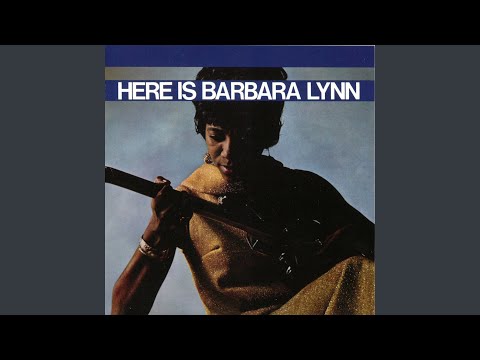

→ More from the 1960s File
View all 1960s hits →




Keep digging