The 1950s File Feature
El Paso
El Paso — Marty Robbins: Chart History and Landmark Achievement Marty Robbins recorded "El Paso" in the spring of 1959 and in doing so created what many musi…
01 The Story
El Paso — Marty Robbins: Chart History and Landmark Achievement
Marty Robbins recorded "El Paso" in the spring of 1959 and in doing so created what many music historians and country music scholars regard as one of the most perfectly constructed narrative songs in the history of American popular music. The track ran to just over four and a half minutes at a time when the standard commercial single was expected to clock in well under three, yet radio embraced it and audiences responded with an enthusiasm that made commercial compromises irrelevant. The song's success was a demonstration of the power of storytelling to transcend format conventions.
"El Paso" was recorded on April 7, 1959, at Columbia Recording Studios in Nashville, with producer Don Law overseeing the session. Marty Robbins wrote the song himself, drawing on his love of Western imagery, the romance of the frontier Southwest, and the long tradition of cowboy balladry that had been part of American popular culture since the nineteenth century. The recording session was remarkably efficient, with Robbins and his band capturing the definitive version of the song with the fluid confidence of musicians who recognized that they were working with exceptional material.
The song was released later in 1959 as part of Robbins's album "Gunfighter Ballads and Trail Songs," which became one of the defining country albums of the era and one of the best-selling records in Columbia Records' Nashville catalog. As a single, "El Paso" reached number one on both the Billboard Hot 100 and the country charts, an achievement that underscored the song's crossover appeal, its ability to connect with pop audiences as well as the country core that formed Robbins's primary fanbase.
The Hot 100 achievement was particularly significant in historical context. The Billboard Hot 100 was launched in August 1958, making "El Paso" one of the earliest country songs to reach the summit of the chart in its relatively brief existence. The song spent multiple weeks at the top of the pop chart, a genuinely remarkable achievement for a country record at a time when the format divisions between country and pop were sharper and more commercially consequential than they would later become.
"El Paso" won the Grammy Award for Best Country and Western Recording at the inaugural Grammy Awards ceremony in 1959, making it one of the first records to receive that recognition. The Grammy recognition placed Robbins and the song at the center of the country music establishment's first experience with the Recording Academy, giving "El Paso" a historical significance that extended beyond its commercial performance to encompass the broader institutional history of American music awards.
The recording featured Grady Martin and other accomplished Nashville studio musicians whose performances contributed significantly to the song's impact. The guitar work that opens and runs through the song became one of the most recognizable instrumental passages in country music, and the overall musical arrangement, with its Spanish-inflected guitar figures and dramatic dynamic shifts, gave the Western narrative an appropriately cinematic quality. The music served the story in ways that simpler arrangements could not have achieved.
Radio response to "El Paso" was extraordinary given the song's length. Program directors were generally resistant to playing records that exceeded three minutes during the late 1950s, when tight programming schedules and commercial considerations favored shorter material. The fact that "El Paso" received substantial radio play despite running well over four minutes testified to the power of its storytelling and its immediate audience appeal. Radio stations that played the song reported strong listener response that made the format risk worthwhile.
"Gunfighter Ballads and Trail Songs" as an album further amplified the song's impact, establishing a context in which "El Paso" was part of a coherent artistic statement about Western mythology and country music's relationship to the American frontier tradition. The album's commercial success, which extended over many years through consistent sales to successive generations of listeners, kept "El Paso" in circulation and in public consciousness long after its initial chart run had ended.
Robbins revisited the characters and setting of "El Paso" in subsequent songs, creating a loose narrative universe that expanded the story of the original song. "El Paso City," recorded in 1976, reached number one on the country charts and introduced the original song to a new generation of listeners, demonstrating the durability of the material and the depth of affection that country audiences had developed for Robbins's Western ballad world. This sequelization was unusual in country music and reflected the exceptional investment listeners had made in the original narrative.
The song's legacy has only grown in the decades since its release. It has been covered by numerous artists across multiple genres, referenced in film and television productions, and consistently named in lists of the greatest country songs ever recorded. For many music historians, "El Paso" represents the apex of the Western ballad tradition and one of the clearest demonstrations that country music's capacity for narrative complexity and emotional depth could achieve genuine crossover success at the highest commercial level.
02 Song Meaning
The Meaning of "El Paso" by Marty Robbins
"El Paso" is a narrative ballad in the tradition of Western storytelling, a form with roots in both the cowboy song tradition and the broader Anglo-American ballad genre that has always used music as a vehicle for tragedy and moral instruction. The song tells a complete story with a beginning, middle, and end, following a narrator from attraction through transgression to violent death in a narrative arc that achieves genuine emotional weight through the specificity and vividness of its telling.
The central dramatic engine of the song is romantic obsession and its consequences. The narrator falls for a woman at a saloon in El Paso with an intensity that overrides his judgment and ultimately his survival instinct. The emotional logic of the song traces this obsession from its initial intoxicating quality to its deadly conclusion, following the narrator through a series of decisions that each make complete psychological sense in the moment while leading inexorably toward catastrophe. The song is a study in how desire can overwhelm reason and self-preservation.
The Western setting is not merely decorative. The El Paso of the song is a specific landscape with its own moral geography, a frontier space where violence is a constant possibility and where the codes of honor that govern men's behavior include the willingness to fight and die for what one values. The narrator's decision to return to El Paso knowing that death likely awaits him is consistent with a frontier masculine code in which retreat from a genuine desire, however dangerous, is a form of cowardice worse than the alternative. The Western setting gives that moral framework its authenticity and its pathos.
Marty Robbins brought to "El Paso" an understanding of the Spanish-inflected Southwest that was genuinely part of his personal history, having grown up in Arizona and absorbed the cultural mixture of the region. The song's musical texture, with its Spanish guitar figures and its dramatic dynamic structure, reflects that regional authenticity, grounding the narrative in a specific cultural and geographical context that gives it depth beyond the generic Western setting that less careful songwriters might have produced.
The song also participates in a tradition of tragic romance that runs through country music's deepest roots and connects to older ballad traditions in which love and death are consistently linked. The beloved woman of the song functions within that tradition as a figure whose beauty has a fatal power, whose attraction is inseparable from the danger she represents to the men who desire her. This is a well-established narrative convention, but Robbins handles it with enough specificity and emotional intelligence to prevent it from feeling merely conventional.
The ending of the song is one of the most emotionally powerful conclusions in country music history. The narrator's death, arriving as he reaches the woman he returned for, is presented with a quality of romantic fulfillment alongside tragedy, the sense that dying in the attempt to reach the beloved is, within the moral framework the song has established, a better outcome than living with the cowardice of staying away. That moral complexity is what distinguishes "El Paso" from simpler Western action narratives, giving it the emotional depth that has sustained its appeal across more than six decades of listeners.
The song's influence on subsequent country music, and on American storytelling music more broadly, has been profound. The combination of cinematic narrative, emotional complexity, and musical sophistication that Robbins achieved in "El Paso" established a template for what the ambitious country narrative song could accomplish, and many subsequent artists across multiple generations have acknowledged its influence on their own understanding of what the form can do. Its Grammy recognition and Hot 100 achievement were commercial confirmations of an artistic achievement that has proven far more durable than a single chart cycle could measure.
→ More from Marty Robbins
View all Marty Robbins hits →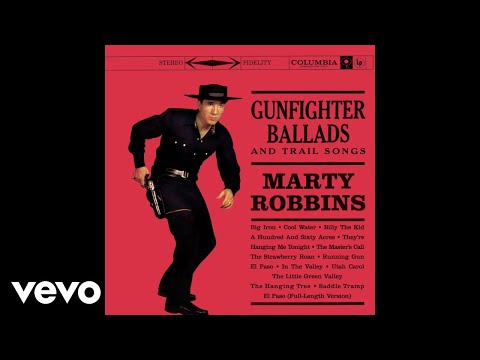


→ More from the 1950s File
View all 1950s hits →

Keep digging