The 1950s File Feature
Where Or When
"Where Or When" — Dion and The Belmonts' Timeless Standard The Bronx and the Sound of Early Rock's Romance The streets of the Bronx in the late 1950s produce…
01 The Story
"Where Or When" — Dion and The Belmonts' Timeless Standard
The Bronx and the Sound of Early Rock's Romance
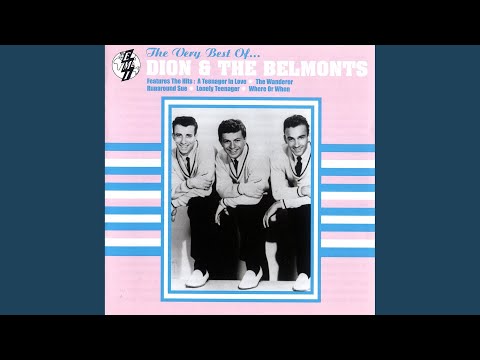
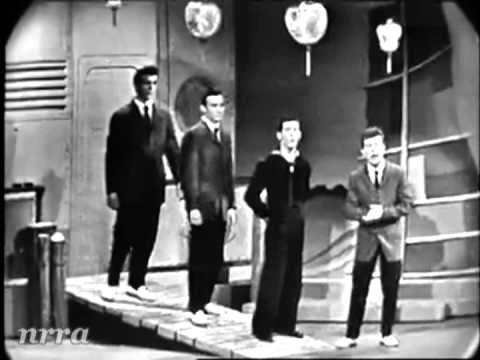
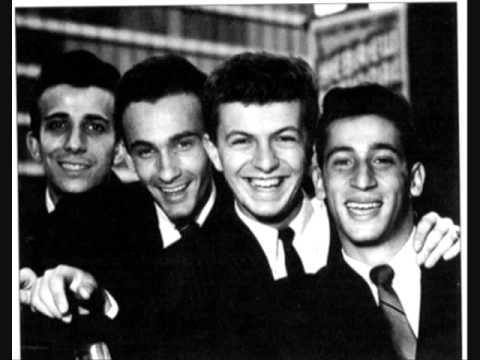
The streets of the Bronx in the late 1950s produced a particular kind of sound, groups of young men harmonizing on stoops and in hallways, their voices carrying a warmth and precision that owed as much to doo-wop tradition as to anything on the radio. Dion DiMucci and The Belmonts, named for Belmont Avenue in their neighborhood, were among the most gifted of these vocal ensembles, with a purity of sound and an emotional directness that translated immediately onto record.
By 1959, the group had already established themselves with "I Wonder Why" and "No One Knows," early singles that announced their ability to blend Dion's confident lead with the group's meticulous harmonies. When they turned to the Rodgers and Hart standard "Where or When" as a recording project, they were reaching into a different tradition entirely, the Broadway songbook, and finding that their voices fit the material with unexpected naturalness.
A Standard Reborn
The original "Where or When" was written by Richard Rodgers and Lorenz Hart for the 1937 musical Babes in Arms. The song explores the uncanny sensation of feeling that you have experienced a present moment before, a kind of romantic deja vu that sits somewhere between mysticism and pure feeling. Rodgers and Hart wrote the song in a sophisticated vein, and it had been recorded by major vocalists and bandleaders across the intervening decades, entering the American songbook as a genuine standard.
What Dion and The Belmonts brought to the song was a youthful earnestness that stripped away any cocktail-lounge sophistication and replaced it with something more direct and emotional. Dion's voice on the track carries none of the studied cool that would define some of his later work; instead, he sounds genuinely moved by the song's central mystery. The Belmonts' harmonies, arriving in precisely arranged waves, create a sound that is simultaneously rooted in their doo-wop tradition and entirely appropriate to the older material.
Chart Performance and Reception
The single entered the Billboard Hot 100 on December 28, 1959, charting at position 72. The chart run was brief, spending a week at that position, but its appearance at the very end of the decade captured the group at a moment of genuine artistic confidence. The single demonstrated their range as interpreters of material beyond the original songs that defined their early output.
The recording appeared on the group's album Presenting Dion and the Belmonts, which introduced them to listeners as more than a novelty act or a vehicle for a single style. The decision to include a Rodgers and Hart standard on a rock and roll vocal group album was unusual for the era, and the success of the interpretation validated the instinct. It pointed toward the broad approach to popular music that Dion would continue to pursue across his long career.
Dion and The Belmonts in the Larger Picture
The group occupied a transitional moment in American popular music, bridging the vocal group tradition of the early 1950s and the more individualized artist model that would come to dominate in the 1960s. Dion in particular was developing the qualities that would eventually make him a solo star. His reading of "Where or When" shows both his connection to the ensemble and the singular quality of his voice, which commands attention even within a tight vocal arrangement.
The song also reflects the moment when rock and roll was still deeply engaged with the broader American songbook, when a group that could be categorized as rock and roll artists could also record a sophisticated theater song from 1937 without any sense of contradiction. That flexibility would diminish as genre lines hardened through the 1960s, making this recording a document of a more open popular music landscape.
An Enduring Performance
"Where or When" remains one of the more affecting entries in the Dion and The Belmonts catalog, a track that demonstrates what vocal groups could accomplish when they trusted the emotional power of well-crafted material and refused to limit themselves by genre expectations. The recording holds up not because it was revolutionary but because it was genuinely felt. Press play and you're transported to the final days of the 1950s, when doo-wop and the Great American Songbook briefly occupied the same space on the pop charts.
"Where or When" — Dion and The Belmonts' singular moment on the 1950s charts.
02 Song Meaning
"Where Or When" — Meaning, Themes, and Legacy
The Mystery at the Heart of the Song
Richard Rodgers and Lorenz Hart wrote "Where or When" around one of the most elusive experiences in human consciousness: the feeling that a present moment has been lived before. The song's narrator encounters someone new and is immediately struck by the conviction that this meeting has happened, somehow, in some unremembered past. The clothes the person wears, the smile on their face, the sound of their voice all carry this weight of false familiarity. The lyrical premise taps into something genuinely strange about human perception, the phenomenon of deja vu transposed into a romantic context where it takes on a feeling of destiny rather than mere neurological quirk.
Hart's lyric navigates this territory with considerable sophistication for a theater song of the 1930s. The narrator doesn't claim to understand the sensation; he simply reports it with wonder. The music that Rodgers composed beneath the words carries a quality of suspended time, as though the melody itself is reaching backward and forward simultaneously.
Timelessness as Theme and Form
The song's genius lies partly in how it enacts its own subject matter. A piece about the feeling of having experienced something before becomes, through repeated performance over decades, genuinely familiar. Each new generation that encounters the song does so with the sense that it has always existed, that its melodic shape and harmonic movement belong to the permanent furniture of American musical life. The song about timelessness has become timeless, which is either a profound coincidence or evidence of Rodgers and Hart's extraordinary craftsmanship.
When Dion and The Belmonts recorded it in 1959, they brought this quality of timelessness into contact with the very immediate, street-level energy of their vocal group tradition. The result is a version that sounds simultaneously ancient and contemporary for its moment, rooted in both a 1937 Broadway stage and a 1959 Bronx street corner.
Doo-Wop and the American Songbook
The choice of a Rodgers and Hart standard by a rock and roll vocal group says something important about how early rock and roll performers understood their musical lineage. The great doo-wop groups of the 1950s did not see themselves as rebels against an established tradition; many of them were deeply trained in close harmony singing and had absorbed the American songbook as part of their vocal education.
Dion's approach to the lyrical content is that of someone genuinely engaged with the song's emotional premise rather than simply covering a recognizable title. His vocal phrasing makes the narrator's wonder feel personal rather than theatrical, converting the song's slightly mystical premise into something that sounds like genuine feeling. That conversion is what the best pop performances accomplish: taking shared material and making it sound discovered rather than remembered.
Why the Song Endures
Songs about inexplicable emotional recognition persist because the experience they describe is genuinely universal. Nearly everyone has encountered the sensation of inexplicable familiarity, whether with a person, a place, or a moment, and popular culture provides few adequate frameworks for understanding it. "Where or When" offers not an explanation but a companionable acknowledgment: you are not alone in feeling this, and the feeling is worth singing about.
In the hands of Dion and The Belmonts, the song acquired an additional layer of meaning, becoming evidence that the barrier between the Broadway songbook and rock and roll was more permeable than the culture often assumed. Their version remains a touchstone for listeners who want to understand what early rock vocal groups were actually capable of at their most ambitious.
→ More from Dion & The Belmonts
View all Dion & The Belmonts hits →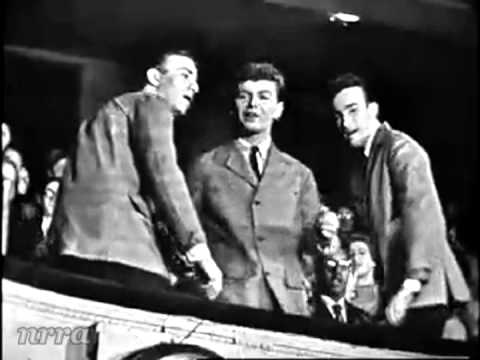

→ More from the 1950s File
View all 1950s hits →

Keep digging