The 1950s File Feature
Anthony Boy
The Story Behind Anthony Boy by Chuck Berry Rock and Roll's Founding Architect By 1959, Chuck Berry was arguably the single most important songwriter in the …
01 The Story
The Story Behind "Anthony Boy" by Chuck Berry
Rock and Roll's Founding Architect
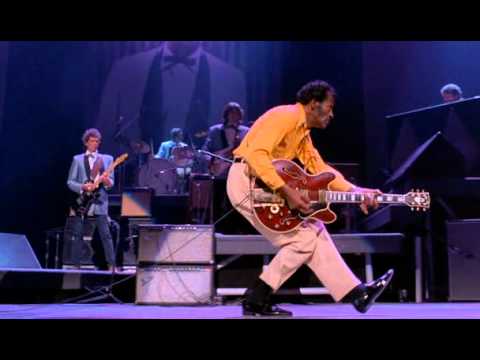
By 1959, Chuck Berry was arguably the single most important songwriter in the young history of rock and roll. In just a few short years he had delivered a run of songs, Maybellene, Roll Over Beethoven, Johnny B. Goode, that essentially wrote the genre's rulebook, fusing rhythm and blues with country storytelling and a guitar style that would influence virtually every rock guitarist who came after him. Berry's genius lay in his ability to write vivid, specific narratives about teenage American life, cars, school, girls, dances, set against instantly memorable guitar riffs. "Anthony Boy" arrived at the tail end of that extraordinary decade, a change of pace that revealed a different side of Berry's songwriting sensibility.
A Playful Departure from the Formula
Unlike the guitar-driven rockers that made his name, "Anthony Boy" leaned into a lighter, more novelty-adjacent sound, drawing on Italian-American vocal pop traditions that were popular on the pop charts at the time. The song's playful cadence and comedic sensibility showed Berry stretching beyond the rock and roll template he had essentially invented, willing to experiment with different textures even as his core sound remained enormously influential. It was a reminder that Berry, despite his reputation as rock's great architect, possessed a genuine sense of humor and range that extended well past the three-chord blueprint most closely associated with his name.
A Modest Chart Run in a Crowded Field
The song debuted on the Billboard chart on February 16, 1959, entering at number 65. It climbed the following week to reach its peak position of number 60 on February 23, 1959, before beginning a slow slide back down the chart. In total, the single spent 5 weeks on the chart, a modest showing compared to Berry's biggest hits but still a testament to his commercial pull even with material that departed from his signature sound. Nineteen fifty-nine was an unusually competitive year for rock and roll and pop crossover hits, and simply charting at all spoke to the strength of Berry's name recognition at that point in his career.
A Year of Turbulence for Berry
Nineteen fifty-nine was a complicated year for Berry personally and professionally, as he navigated both his continued creative output and the beginning of legal troubles that would soon disrupt his career trajectory significantly. Against that turbulent backdrop, "Anthony Boy" represents an artist still actively experimenting and producing material even as circumstances around him grew more complicated. It stands as evidence of just how prolific and restless Berry's creative energy was during this period, unwilling to simply repeat his earlier successes even as the industry and his own life grew more difficult to navigate.
An Overlooked Corner of a Towering Catalog
Within the broader context of Berry's catalog, "Anthony Boy" occupies an unusual, often overlooked position, a song that rarely appears on greatest-hits compilations dominated by his guitar-driven classics. Yet it offers valuable insight into the full range of his songwriting instincts during rock and roll's formative years, a reminder that the genre's founding figures were absorbing influences from multiple pop traditions simultaneously rather than working in a narrow lane. That willingness to experiment, even briefly, adds texture to the standard narrative of Berry as a singular guitar-rock visionary.
Its Place in Chuck Berry's Legacy
Today, "Anthony Boy" is remembered mostly by dedicated collectors and scholars of early rock and roll, a footnote compared to the songs that changed the trajectory of American popular music. Still, for anyone interested in understanding the full breadth of Berry's artistry during this pivotal decade, it is worth a spin, a glimpse of an icon willing to have a little fun outside the sound that made him legendary.
"Anthony Boy" — Chuck Berry's singular moment on the 1950s charts.
02 Song Meaning
What "Anthony Boy" by Chuck Berry Is Really About
A Lighthearted Tale of Neighborhood Romance
At its core, "Anthony Boy" tells a playful, gently comic story centered on young romance within an Italian-American neighborhood setting, using character and community detail the way Berry so often did in his more famous narrative songs. Rather than centering the story on Berry's own usual protagonists, cars and guitars and teenage rebellion, the song shifts its focus toward a specific, almost theatrical cast of characters, giving it a storytelling texture closer to a comic vignette than a straightforward rock and roll anthem.
Berry's Gift for Character-Driven Songwriting
Even in this lighter, more novelty-inflected mode, the song reveals the same narrative instincts that made Berry's biggest hits so enduring: an eye for specific, vivid detail and a knack for building a small, self-contained world within just a few verses. That storytelling skill, treating a pop song as a miniature short story with recognizable characters and a clear setting, was one of Berry's most significant contributions to rock and roll songwriting, influencing everyone from Bob Dylan to Bruce Springsteen in the decades that followed.
Borrowing from Adjacent Pop Traditions
The song's melodic and vocal style draws noticeably from the Italian-American vocal pop tradition that was thriving on American radio in the late 1950s, a genre popularized by singers whose romantic, theatrical delivery contrasted sharply with rock and roll's rawer energy. Berry's decision to work within that tradition, even briefly, shows an artist paying close attention to the broader pop landscape around him rather than working in creative isolation, absorbing influences and reshaping them through his own distinctive musical sensibility.
A Snapshot of Late-1950s American Diversity
The late 1950s pop charts reflected an increasingly diverse America, with vocal groups, novelty acts, doo-wop harmonies, and rock and roll all competing for the same young audience's attention and allowance money. "Anthony Boy" captures a moment when those different traditions were actively cross-pollinating, with an artist as significant as Berry willing to borrow freely from ethnic pop traditions outside his own immediate musical lane. That openness reflects the genuinely eclectic, rapidly evolving nature of American popular music during this transformative decade.
Why It Found an Audience
Listeners responded to the song's charm and its departure from expectation, curious to hear one of rock and roll's most important architects trying something different. Its comic sensibility and vivid character sketch gave it appeal beyond Berry's usual rock and roll audience, reaching listeners drawn to novelty pop and vocal harmony traditions as well. That crossover curiosity helped the song find a modest but real place on the charts even without matching the impact of his signature hits.
A Small but Telling Piece of the Puzzle
Ultimately, "Anthony Boy" endures as a minor but genuinely interesting piece of Chuck Berry's vast catalog, evidence of a songwriter with far more range and curiosity than the narrow guitar-hero narrative sometimes allows. It rewards listeners willing to look past the greatest hits and appreciate the fuller picture of an artist still exploring what rock and roll, and popular music more broadly, could become.
→ More from Chuck Berry
View all Chuck Berry hits →



→ More from the 1950s File
View all 1950s hits →


Keep digging