The 1960s File Feature
No Particular Place To Go
"No Particular Place To Go" — Chuck Berry's 1964 Comeback Ride The King Returns, Unbothered Picture the spring of 1964. The British Invasion had just arrived…
01 The Story
"No Particular Place To Go" — Chuck Berry's 1964 Comeback Ride
The King Returns, Unbothered
Picture the spring of 1964. The British Invasion had just arrived with seismic force. The Beatles had appeared on The Ed Sullivan Show in February, and within weeks every young American band was scrambling to keep pace. Record labels were nervous. Veteran rock and roll artists from the previous decade suddenly found themselves classified as relics. And then Chuck Berry, one of the inventors of the entire genre, strolled back onto the Hot 100 with a single so effortlessly cool it almost seemed like a rebuke to the whole panic.
"No Particular Place To Go" debuted on the Billboard Hot 100 on May 23, 1964, entering at number 100. What followed was a confident, unhurried climb that reflected the track's own laid-back attitude. Week by week it ascended: 78, 43, 30, 25, and continuing upward until it reached its peak position of number 10 on July 11, 1964, after 11 weeks on the chart. For an artist who had spent two years largely absent from American radio, it was a significant and satisfying return.
Music Built from the Blueprint
Berry had a genius for recycling his own melodic vocabulary in ways that never felt cynical. "No Particular Place To Go" borrows its musical structure directly from his earlier hit "School Day," a connection so obvious that Berry acknowledged it freely. The guitar riff, the 12-bar blues framework, and the tempo all share roots with that earlier track. What changed was the lyrical premise: instead of classroom drudgery, the new song offered a comic scenario about a young man and his date stuck in a car after the safety belt on her side refuses to unlatch. The frustration is played entirely for laughs, the joke clean and wry in the tradition of Berry's best storytelling.
The production, lean and punchy as always, was a Chess Records house sound. Chess, operating out of Chicago, had been Berry's label since 1955, and the studio approach remained consistent: electric guitar sharp in the mix, the rhythm section tight, no unnecessary ornamentation. Berry's voice carried a particular kind of sly authority that made even mundane scenarios feel like adventures worth hearing about.
Context: A Rock and Roll Pioneer in the Beatle Era
Berry's career trajectory by 1964 was complicated. His initial run of hits from the mid-to-late 1950s had established the template for rock and roll guitar playing and the teenage lyric. Songs about cars, school, dancing, and freedom on the open road had made him one of the most influential musicians in American popular music. However, a conviction under the Mann Act in 1962 resulted in a prison sentence that effectively sidelined him during a pivotal stretch of years.
His return coincided, somewhat ironically, with the very British musicians who had spent years citing him as their primary influence now dominating the charts he once ruled. The Beatles covered his songs. Keith Richards of the Rolling Stones described Berry's guitar work as the foundation of everything the Stones tried to do. Berry's own 1964 comeback, then, arrived with the peculiar distinction of succeeding in an era his own music had helped create. "No Particular Place To Go" reached the top ten in both the United States and the United Kingdom, demonstrating that audiences on both sides of the Atlantic still responded to the source material.
The Sound of Confident Simplicity
What made the track durable was its economy. Rock and roll, in the hands of its greatest practitioners, never needed to be complicated. Berry understood that a memorable guitar introduction, a rhythm you could clap to, and a story with a clear beginning, middle, and punchline were sufficient conditions for a great single. The song runs through its narrative with the same easy momentum as a Sunday afternoon drive, which is precisely the point. Nothing dramatic happens. The couple is stuck, they cannot get out of the car, and they are going nowhere in particular. That was the joke, and it was enough.
Radio in 1964 was a medium of three-minute windows, and Berry had spent a decade mastering those three minutes more thoroughly than almost anyone else on the Billboard chart. The track fit naturally into an era when even the hottest new acts from Britain were playing similar-length singles with similar guitar-driven arrangements. It sounded contemporary precisely because it had already taught contemporary what to sound like.
Legacy of a Defining Artist
For Chuck Berry, "No Particular Place To Go" served as a demonstration that imprisonment and changing musical fashions could not diminish his core gift. He continued recording and performing for decades, his influence spreading across every subsequent generation of rock and roll musicians. His catalog was inducted into the Library of Congress National Recording Registry. Rolling Stone magazine ranked him among the top five greatest guitarists of all time. The Rock and Roll Hall of Fame listed him as one of its inaugural inductees in 1986. And through it all, songs like this one remained proof that the original could still compete with its descendants.
Put the needle on this track and you hear a man who built the house entertaining guests who moved in while he was away, doing so with complete and unflappable confidence. Press play and you are in 1964, riding shotgun with no particular place to go.
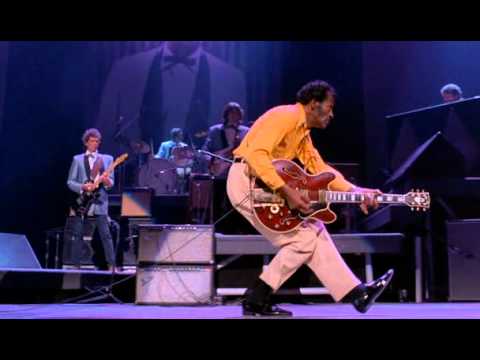
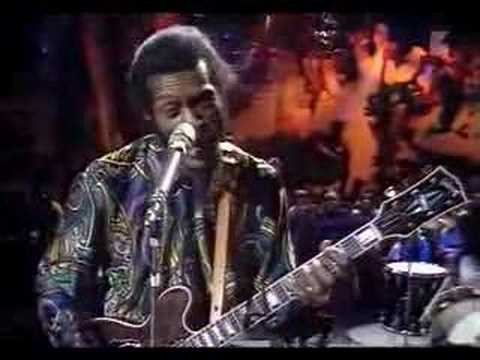
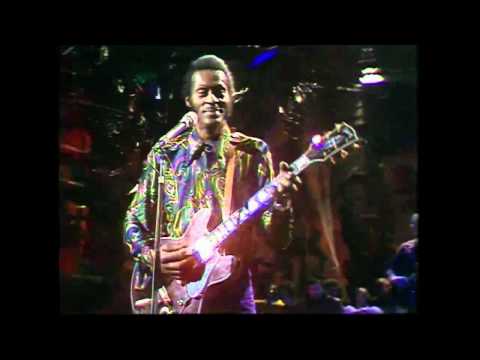
"No Particular Place To Go" — Chuck Berry's singular moment on the 1960s charts.
02 Song Meaning
"No Particular Place To Go" — Comic Relief in the Rock and Roll Tradition
The Art of the Teenage Predicament
Chuck Berry built much of his catalog on a simple but inexhaustible subject: the rituals and frustrations of being young in postwar America. Cars, schools, jukeboxes, and girls populated his lyrical universe with the fidelity of a sociologist who happened to also be a virtuoso guitarist. "No Particular Place To Go" fits squarely in that tradition, turning a minor mechanical failure into a comic meditation on desire, restraint, and the particular indignity of being defeated by a seatbelt.
The scenario is precise and situational. A young man takes a girl for a drive, the evening goes well, and then the seatbelt on her side of the car jams shut. The technological convenience meant to keep them safe becomes the obstacle that keeps them apart. The humor is gentle and clean, the frustration recognizable to anyone who has ever been defeated by the gap between expectation and reality.
Comedy as Cultural Language
Rock and roll in the late 1950s and early 1960s was not exclusively a music of rebellion. Alongside the more charged material about dancing and teenage freedom, there existed a substantial tradition of comic singles, novelty songs, and lighthearted storytelling. Berry occupied a particular and sophisticated position in that tradition. His humor was never slapstick. It observed the social codes of teenage life with the precision of a satirist, finding the small absurdities that his audience recognized immediately because they lived them daily.
By 1964, that sensibility read as both classic and timeless. The car as a site of teen romance was already a cultural cliche by the time Berry turned it into a punchline, which is precisely what gave the song its charm. He was not lamenting the situation; he was laughing at it, and inviting the listener to laugh along. That lightness was a deliberate artistic choice, and it aged far better than more earnest treatments of the same subject matter.
Freedom, Movement, and Frustration
Beneath the comedy, the track engages with themes that run through Berry's entire catalog. The open road represented freedom in his songs, and the car was its instrument. "Maybellene," "No Money Down," "You Can't Catch Me," and others all connected automobiles to the larger American mythology of escape and self-determination. "No Particular Place To Go" inverts that mythology gently. The car is present, the road is available, but the characters are going nowhere. The freedom promised by the open highway is suspended by a jammed safety mechanism.
That inversion carries a gentle irony that rewards attention. The very device installed for safety becomes the source of confinement. The road trip that should represent liberation becomes a kind of mild captivity. Berry never presses the point philosophically; the song works as pure entertainment. But the structural contrast between expectation and outcome gives it a texture richer than a simple novelty track.
Why It Resonated in the British Invasion Era
The spring and summer of 1964 were months of considerable musical turbulence in America. British acts were dominating the charts, and many American rock and roll veterans from the previous decade were struggling to find an audience. Berry's success with this single reflected something important: the authenticity of the original source is not easily displaced. Young listeners drawn in by the Beatles and the Stones were simultaneously discovering, or rediscovering, the American artists those British musicians held up as their foundational influences.
Berry's humor, his guitar tone, and his storytelling precision felt different from anything the British Invasion was offering, because they had predated it and in many ways enabled it. The track resonated as something genuine in a period when genuine was harder to find than it seemed.
"No Particular Place To Go" — Chuck Berry's singular moment on the 1960s charts.
→ More from Chuck Berry
View all Chuck Berry hits →

→ More from the 1960s File
View all 1960s hits →




Keep digging