The 1950s File Feature
Almost Grown
Almost Grown by Chuck Berry It is 1959, and rock and roll is still young, still being invented week by week on jukeboxes and radio dials across America. At t…
01 The Story
"Almost Grown" by Chuck Berry
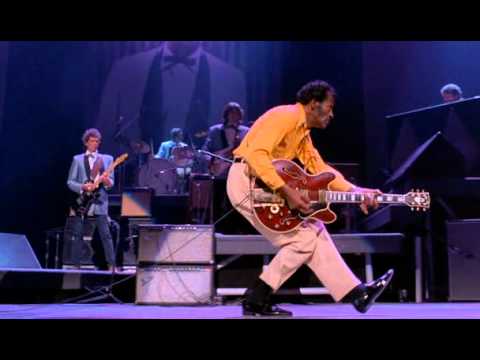
It is 1959, and rock and roll is still young, still being invented week by week on jukeboxes and radio dials across America. At the center of that invention stands a guitarist and songwriter from St. Louis whose riffs and rhymes are quite literally writing the rulebook for the music to come. When Chuck Berry releases a song about the restlessness of youth, he is speaking directly to the generation that made rock and roll its own.
An Architect Of Rock And Roll
By 1959, Chuck Berry was already one of the foundational figures of rock and roll. His string of hits in the 1950s had established the guitar licks, the storytelling, and the teenage perspective that would define the genre for decades. He recorded for the legendary Chess Records in Chicago, the label that was home to so much groundbreaking blues and early rock. Berry's genius lay in his ability to capture the everyday lives and dreams of young Americans, turning ordinary experiences into electrifying anthems with universal appeal.
A Song About Coming Of Age
The track captures the impatience of a teenager on the verge of adulthood, eager for independence and the freedoms that come with it. It is classic Berry territory, the perspective of restless youth rendered with wit and rhythmic drive. The song features his unmistakable guitar work and the propulsive, swinging beat that made his records irresistible on the dance floor. The arrangement is lean and energetic, built around the storytelling that was Berry's signature, every line delivered with the conversational clarity that made his lyrics so quotable.
The Chart Run
The single debuted on the Billboard Hot 100 on March 30, 1959, entering at number 96. It climbed rapidly, leaping into the 70s and then the 40s within a few weeks as audiences embraced it. The record peaked at number 32 on May 4, 1959, and spent 13 weeks on the chart. Those numbers reflect a solid hit during a period when Berry was a consistent presence on the charts, one of the few Black artists of the era to achieve such crossover success with white teenage audiences.
Part Of A Lasting Legacy
The song belongs to a catalog that shaped the entire course of popular music. Berry's influence on the generations of rock musicians who followed is nearly impossible to overstate, with everyone from the Beatles to the Rolling Stones citing him as a primary inspiration. This track is a representative piece of his foundational body of work, capturing the youthful spirit and rhythmic genius that made him an architect of rock and roll. To hear it is to hear the genre at its source, vibrant and full of possibility.
The Chess Records Workshop
The story of Chuck Berry is inseparable from the story of Chess Records, the Chicago label that served as a laboratory for some of the most important music of the twentieth century. The label was home to blues giants, and that environment shaped Berry's sound, grounding his rock and roll in deep blues roots while pushing it toward something new and youthful. The records made there had a raw, immediate energy that captured the excitement of a music being invented in real time. Berry's recordings from this period carry that electricity, the sense of an artist at the height of his powers working in a studio that knew exactly how to capture lightning. The label gave him the freedom and the musicians to realize his vision, and the results changed popular music forever.
A Voice For A New Generation
What made Berry revolutionary was not only his guitar playing but his perspective. He wrote about and for teenagers at the exact moment that American youth was emerging as a distinct cultural and economic force. His lyrics spoke directly to young people about cars, school, romance, and the dream of freedom, capturing their world with a precision no songwriter had managed before. This song fits squarely within that achievement, voicing the restlessness of a teenager on the cusp of adulthood. As one of the few Black artists to achieve broad crossover success in a deeply segregated era, Berry also helped break down barriers, his music reaching across racial lines to a vast and hungry young audience.
Press Play
Drop the needle on this one to hear rock and roll in its formative years, delivered by one of its true founders. The energy, the wit, and the irresistible groove are all there, a reminder of just how thrilling this music was when it was brand new.
"Almost Grown" — Chuck Berry's singular moment on the 1950s charts.
02 Song Meaning
What "Almost Grown" Is Really About
This is a song about the threshold between adolescence and adulthood, the restless eagerness of a young person ready to claim their independence. It captures the feeling of being on the verge of grown-up life, impatient for the freedoms and responsibilities that wait just ahead. It is a coming-of-age anthem told from the inside.
The Impatience Of Youth
The central theme is the desire for independence. The narrator is nearly an adult and eager to live by his own rules, to make his own choices and embrace his own future. The song voices a universal teenage longing, the urge to break free from childhood constraints and step fully into adulthood. That impatience is rendered with energy and optimism, the sound of someone confident that the best is just about to begin.
Everyday Life As Anthem
One of Chuck Berry's great gifts was turning ordinary teenage experiences into something thrilling and worthy of song. The lyric deals in the everyday hopes of a young person, work, romance, and the dream of getting ahead. Berry elevated the mundane into the celebratory, giving voice to the aspirations of a whole generation. That ability to find the universal in the ordinary is a key reason his songs connected so widely.
The Birth Of Teenage Identity
The song arrived during the late 1950s, a moment when the concept of the teenager as a distinct cultural force was crystallizing. Rock and roll was the soundtrack of that emerging identity, and Berry was one of its chief authors. The song spoke directly to young listeners who saw their own restlessness and ambition reflected in its lyrics, helping to define what the new youth culture sounded like.
Optimism In The Eisenhower Era
The song carries the particular optimism of late-1950s America, a period of economic growth and rising expectations for the young. The narrator's confidence that the future will be bright reflects a broader cultural mood, the sense that hard work and ambition would be rewarded. That hopeful outlook permeates the lyric, giving it an upbeat energy that matches the music. For the teenagers of the era, the song affirmed their dreams and their growing sense of themselves as a distinct generation with its own music, its own style, and its own future to claim. It was a soundtrack for ambition, delivered to an audience eager to believe in what lay ahead.
Why It Endures
The song lasts because the feeling it describes never goes out of date. Every generation knows the impatience of standing on the edge of adulthood, ready to take on the world. By capturing that universal moment with humor and irresistible rhythm, Berry created something timeless. The song remains a vivid document of youth itself, as alive today as it was when rock and roll was still being born.
→ More from Chuck Berry
View all Chuck Berry hits →



→ More from the 1950s File
View all 1950s hits →



Keep digging