The 1950s File Feature
With All Of My Heart
With All Of My Heart: Brook Benton's 1959 Billboard Debut The summer of 1959 was one of the more fertile moments in the history of American rhythm and blues …
01 The Story
With All Of My Heart: Brook Benton's 1959 Billboard Debut
The summer of 1959 was one of the more fertile moments in the history of American rhythm and blues crossing into the mainstream pop market. The payola scandal had not yet broken; radio was still operating on the basis of relatively free chart movement; and a singer with genuine commercial appeal and the right record could find audiences across demographic lines with comparative ease. Brook Benton was precisely that kind of singer, a voice that combined the warmth and weight of the R&B tradition with the melodic accessibility that pop radio required.
Brook Benton's Rise
Brook Benton (born Benjamin Franklin Peay) had been developing his career through the mid-1950s before achieving his commercial breakthrough with Mercury Records in the late 1950s. His voice was a remarkable instrument: a warm baritone with the kind of natural authority that communicated emotional sincerity without effort or apparent technique. By 1959, he was producing a string of hits that placed him firmly in the commercial mainstream while keeping him connected to the R&B tradition from which he had emerged. His commercial peak would come with “It's Just a Matter of Time” and “Endlessly”, two major hits that flanked his release of “With All Of My Heart.”
A Single Week on the Chart
“With All Of My Heart” debuted on the Billboard Hot 100 on July 20, 1959, at number 82, its peak and only chart position. One week on the chart was modest, and the track functioned primarily as an album cut rather than a commercial centerpiece of Benton's recording activity at that moment. But that single week on the chart captures something real about the commercial environment in which Benton was operating: an artist who could place material on the chart almost routinely, with a fan base broad and engaged enough to respond to whatever he released.
The Sound of 1959 R&B Pop
The production approach on Benton's Mercury recordings of this period was characteristic of the late-1950s pop-R&B synthesis: lush string arrangements supporting a prominently placed vocal, with a rhythm section that provided momentum without overwhelming the melodic content. Mercury's house production style gave Benton's recordings a specific sonic signature that was simultaneously warm and polished, designed to work on both the R&B jukeboxes that served his core audience and the pop radio stations that were the gateway to crossover success. The production philosophy prioritized the voice above all, and Benton's voice was more than equal to that trust.
Benton Among His Contemporaries
Brook Benton in 1959 was operating in excellent company. Sam Cooke, Jackie Wilson, and Ray Charles were all producing major commercial work that was reshaping the relationship between R&B and mainstream pop, and Benton was part of that same movement without quite achieving the iconic status that those contemporaries would eventually reach. His contribution to the late-1950s pop-R&B crossover was real and commercially significant, even if it has been somewhat overshadowed in historical memory by the larger legends of the period. “With All Of My Heart” is a small piece of that contribution, a track that shows the Benton approach working in its most characteristic form.
A Voice for the Ages
What Benton brought to every recording, including this brief chart entry, was a quality of vocal assurance that made even modest material sound substantial. His baritone carried the accumulated authority of a singer who had spent years learning his instrument and trusted it completely. Press play and hear one of the great voices of the late 1950s doing what he did best.
Benton Among the Late-1950s Greats
The competitive environment in which Brook Benton was operating in 1959 was extraordinarily rich. Sam Cooke had just released “You Send Me” and was building toward his Atlantic period; Ray Charles was developing the synthesis that would produce “Georgia on My Mind”; Jackie Wilson was at his commercial peak. Benton's Mercury recordings existed alongside this remarkable body of work, and the fact that he sustained genuine commercial presence throughout this period speaks to the distinctive quality of his voice and his approach. “With All Of My Heart” belongs to this rich competitive context, a small piece of evidence for Benton's ability to hold his own in one of the most productive periods in the history of American popular vocal music.
“With All Of My Heart” - Brook Benton's singular moment on the 1950s charts.
02 Song Meaning
Total Devotion: The Emotional World of Brook Benton's “With All Of My Heart”
The phrase “with all of my heart” is one of the oldest in the vocabulary of romantic commitment, and its very familiarity is part of what makes it interesting as a title and a subject. Familiar phrases in popular song function differently from fresh imagery: they signal participation in a long tradition of romantic expression, they invoke the accumulated weight of every previous use, and they challenge the singer to make the well-worn phrase feel genuinely felt rather than merely conventional.
Brook Benton and the Art of Sincerity
Brook Benton's particular gift was his ability to make exactly this kind of challenge look effortless. His voice carried a quality of natural sincerity that transformed even the most familiar romantic language into something that felt freshly meant. When Benton sang “with all of my heart,” the phrase did not sound like a formula; it sounded like the most precise available description of what was actually being communicated. That quality of inhabited sincerity was the central achievement of his vocal style, and it was what made his recordings effective across the full range of romantic material he covered.
The R&B Devotion Song Tradition
The devotion song occupied a central place in the late-1950s R&B and pop-crossover repertoire. The tradition of making grand romantic commitments in song had deep roots in the gospel tradition from which many R&B artists drew, and the emotional intensity of gospel singing translated naturally into romantic contexts that were similarly invested in the totality of feeling. Benton brought this gospel-rooted emotional intensity to his secular recordings without making them feel religious, channeling the full-voiced commitment of devotional singing into the romantic register with a naturalness that came from years of absorbing both traditions.
The Completeness of the Claim
The specific language of “all of my heart” makes a claim about completeness that is worth examining. Not most of, not a significant portion of, but all: the entire organ of feeling, undivided and fully committed. This is a maximalist romantic claim, one that leaves no reservation and acknowledges no competing commitment. The rhetorical effect of such maximalism in romantic song is to create a sense of absolute safety for the beloved: there is no corner of the singer's heart where doubt or competing feeling exists. For listeners who have experienced the incomplete commitments of real romantic life, this claim of totality has a particular resonance, offering in imagination what reality often withholds.
The Late 1950s Romantic Landscape
In 1959, the romantic landscape being navigated in popular song was shaped by the particular social expectations of the period. The baby boom generation was coming of age in a culture that placed enormous emphasis on romantic and familial commitment; the ideal of total devotion, of giving everything to one person, was both a cultural norm and a romantic aspiration. Songs that affirmed this ideal, that articulated the totality of romantic commitment with conviction, served a social function beyond their purely aesthetic value. They were cultural instruments for affirming and reproducing romantic values that the society at large considered important.
What Endures
Brook Benton's recordings from this period continue to be heard and appreciated because the emotional content they communicate has not become dated in the way that the production has. The production of 1959 pop-R&B is unmistakably of its era; the feeling of total romantic commitment that Benton communicated is entirely timeless. Great vocal performances transcend their production contexts and speak directly to the emotional realities that make us human across any historical period. With All Of My Heart is one such performance: small in its commercial footprint but genuine in its emotional reach.
→ More from Brook Benton
View all Brook Benton hits →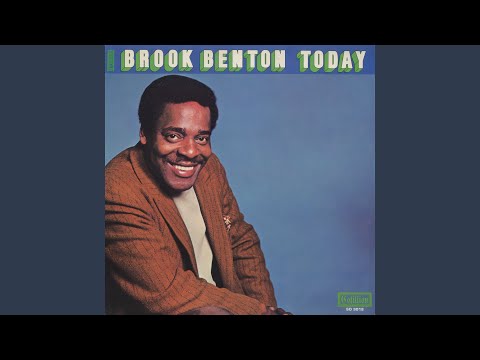


→ More from the 1950s File
View all 1950s hits →


Keep digging