The 1970s File Feature
Rainy Night In Georgia/Rubberneckin'
Rainy Night In Georgia — Brook Benton's Timeless Masterpiece A Voice That Could Make You Feel the Rain There are songs that describe the weather and songs th…
01 The Story
Rainy Night In Georgia — Brook Benton's Timeless Masterpiece
A Voice That Could Make You Feel the Rain
There are songs that describe the weather and songs that conjure it, and Brook Benton's recording of Rainy Night in Georgia belongs firmly in the second category. When that opening guitar figure settles in and Benton's baritone begins its slow, unhurried meditation, you feel the damp and the loneliness before a single word has fully registered. It is one of the great vocal performances in the history of American popular music, delivered by a man who had been making records since the late 1950s and had learned, through hundreds of sessions and thousands of performances, exactly how to inhabit a lyric without ever seeming to try.
Tony Joe White's Song Finds Its Voice
The song was written by Tony Joe White, the Louisiana swamp-rock songwriter who had already delivered "Polk Salad Annie" to the world. White had a gift for vivid, weathered imagery, and Rainy Night in Georgia was among his finest compositions, a sketch of isolation and longing that felt both highly specific and universally understood. The arrangement that producer Joel Dorn built around Benton's vocal was appropriately spare and atmospheric, keeping the instrumentation restrained to let the voice carry the weight of the song's emotional content. Dorn, working out of New York, understood that too much production would crowd out exactly what made Benton's performance extraordinary.
The Chart Story of a Slow-Building Classic
The single entered the Billboard Hot 100 on January 10, 1970, at a modest number 100. Its climb was steady and deliberate, very much mirroring the patient, unhurried quality of the song itself. From 100 it moved to 70, then to 63, then accelerated to 34, then 26 over successive weeks. By the week of March 7, 1970, the song had reached number 4 on the Hot 100, where it sat as one of the biggest records in the country during the early months of a new decade. It spent fifteen weeks on the chart in total, an impressive run for a track that was entirely dependent on atmosphere and vocal performance rather than rhythmic novelty or trend-surfing.
Benton's Place in the American Music Story
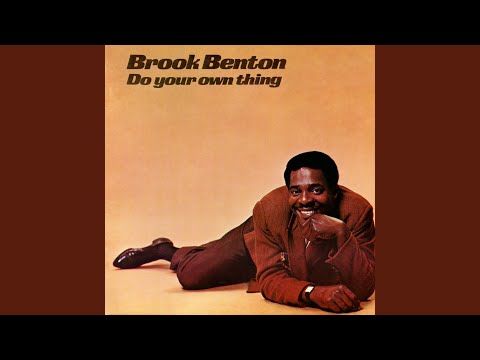
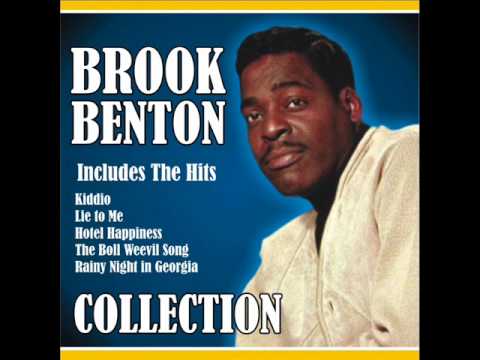
By 1970, Brook Benton had been a presence on American radio for over a decade. His late-1950s and early-1960s recordings for Mercury Records had yielded a string of hits, including the duets with Dinah Washington that are among the finest recordings of that era. As the 1960s progressed and tastes shifted, his commercial profile had softened, and Rainy Night in Georgia arrived as something of a comeback record, reminding listeners that his voice had only deepened and ripened with time. His recording for Cotillion Records, an Atlantic subsidiary, gave the song its definitive form and ensured that both White's composition and Benton's vocal interpretation would reach the audience they deserved.
Legacy: A Standard Born from a Single Recording
The measure of a great record is partly how many other artists feel compelled to cover it, and Rainy Night in Georgia has been interpreted by an extraordinary range of singers in the decades since Benton's recording made it famous. The song has been covered in country, R&B, rock, and jazz settings, each version a testament to the durability of White's composition. None, though, have quite managed to replicate the specific alchemy of Benton's voice against Dorn's production on that original recording. The combination of vocal warmth, emotional restraint, and atmospheric arrangement produced something that subsequent interpreters have rightly honored while acknowledging they cannot quite improve upon it. The song is now a recognized American standard, and Benton's version of it remains the template.
On a grey afternoon, or a literal rainy night, the case for pressing play makes itself.
"Rainy Night In Georgia" — Brook Benton's singular moment on the 1970s charts.
02 Song Meaning
Rainy Night In Georgia — Meaning, Loneliness, and the American Wanderer
The Loneliness of the Road
There is a long tradition in American music of songs about displacement, about men and women far from home who find themselves stranded in unfamiliar places with nothing but their thoughts for company. Rainy Night in Georgia belongs squarely in that tradition. The narrator is somewhere he did not intend to stay, caught by bad weather and worse luck, watching rain fall on a city he does not belong to. The emotional core of the song is pure, uncomplicated loneliness, the kind that arrives not from solitude chosen but from distance imposed, by circumstance, by restlessness, by the particular randomness of a life lived in motion.
Tony Joe White's Gift for Specificity
What separates this song from lesser exercises in the same emotional territory is the quality of its imagery. Tony Joe White was a writer with a Southern eye for detail, and the specific setting of Georgia, with its particular associations of rain, heat, and a certain kind of mournful beauty, gives the lyric an authenticity that a more generic location would have denied it. The song feels geographically real even to listeners who have never been to Georgia, because the emotions it describes are precise enough to be immediately credible. Rain falls everywhere, but White makes you feel this particular rain, in this particular place, on this particular lonely night.
Benton's Interpretation and Its Emotional Register
Brook Benton's vocal performance adds layers of meaning to White's already rich lyric. Benton sang with a quality that is difficult to name precisely: a combination of warmth and resignation, of acceptance and ache, that communicated a man who has been through enough to understand that loneliness passes but also that it always returns. The restraint in his delivery is itself a form of emotional intelligence, suggesting depths of feeling that a more demonstrative performance would have oversimplified. He does not perform the pain; he simply inhabits it, and the listener feels it as a result.
Rain as Symbol and Setting
Rain carries a heavy freight of symbolic meaning in American music and literature, associated variously with sorrow, cleansing, renewal, and the passage of time. In this song, the rain is primarily a mood-setter and an accomplice to isolation. It pins the narrator in place, provides the sound that accompanies his thoughts, and creates a visual backdrop against which his loneliness is made visible. The rain is never romanticized in any easy or false way; it is simply wet and cold and relentless, exactly as loneliness itself tends to be when you are caught in it without company or distraction.
Why the Song Endures Across Generations
More than five decades after its initial release, the song continues to find listeners who encounter it and feel immediately, viscerally understood by it. The fundamental human experience it describes, the experience of being alone in an unfamiliar place, missing someone or something without quite being able to name what is missing, has not changed. The combination of White's lyric and Benton's vocal created something close to a perfect artifact of human feeling, a record that does not try to resolve the loneliness it describes but only to witness it honestly. That honesty is the source of its endurance, and it is why the song remains one of the most covered and beloved recordings in the American popular songbook.
→ More from Brook Benton
View all Brook Benton hits →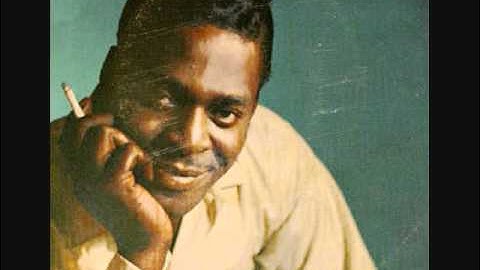


→ More from the 1970s File
View all 1970s hits →




Keep digging