The 1950s File Feature
Sweet Nothin's
Sweet Nothin's — Brenda Lee and the Sound of Rock and Roll Youth A Teenager with a Grown Woman's Voice Consider the peculiar situation of Brenda Lee at the e…
01 The Story
Sweet Nothin's — Brenda Lee and the Sound of Rock and Roll Youth
A Teenager with a Grown Woman's Voice
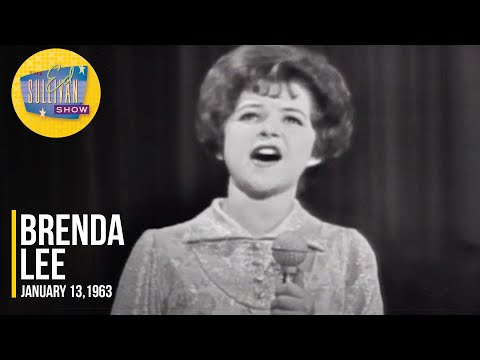
Consider the peculiar situation of Brenda Lee at the end of 1959. She was fifteen years old, had already been performing professionally for years, and possessed a voice so large and emotionally sophisticated that audiences listening on the radio simply assumed she was an adult. That voice, described by contemporaries as a force of nature in a small body, was about to deliver one of the defining recordings of the early rock and roll era. "Sweet Nothin's" arrived in the final weeks of 1959 and would become a major hit in the months that followed, establishing Brenda Lee as one of the most important female voices in American popular music.
Brenda Lee was born Brenda Mae Tarpley in Atlanta, Georgia, in 1944, and had signed to Decca Records as a child after performing on regional television. By the late 1950s, she had accumulated considerable stage experience and was recording in Nashville with some of the city's finest session musicians. Her range was exceptional, her phrasing mature beyond her years, and her ability to communicate raw emotion without ever losing technical control set her apart from the teenage pop acts that were proliferating in the post-Elvis years.
The Recording and the Sound
"Sweet Nothin's" was written by Ronnie Self, a rockabilly artist and songwriter who had a sharp understanding of the rhythmic energy that made rock and roll physically irresistible. The song's subject was the intimate murmuring of young romance, the private language of couples, whispered words that mean everything between two people and nothing to anyone listening from outside. That subject was perfectly calibrated for 1959 audiences: specific enough to feel real, romantic enough to project onto, and energetic enough to feel modern.
The production sessions for Brenda Lee's Decca recordings of this period were overseen in Nashville, where the musicians who populated the city's session scene could deliver tight, swinging arrangements that balanced country sensibility with the rhythmic drive rock and roll demanded. The guitar work on "Sweet Nothin's" has a bounce and looseness that gives the track its immediate energy, and Lee's performance rides that groove with a confidence that sounds nothing like a fifteen-year-old testing her abilities.
The Billboard Debut
The single entered the Billboard Hot 100 on December 21, 1959, debuting at number 99. It climbed to number 90 the following week, December 28, 1959, which marked its peak on the chart during that initial chart run. Those numbers represent only the opening movement of the song's commercial story. As the calendar turned to 1960 and radio continued to spin the record, it would climb significantly higher, ultimately becoming one of Lee's signature songs and a staple of early 1960s pop radio.
The late-1959 debut came at an interesting moment for American pop. Elvis was in the Army. Buddy Holly, Eddie Cochran, and Ritchie Valens were gone or soon would be. The first wave of rock and roll was giving way to something smoother, more polished, and the competition to define what came next was genuinely open. Brenda Lee, with her rockabilly energy and her overwhelming vocal ability, was one of the most compelling contenders.
The Lee Legacy Begins Here
"Sweet Nothin's" was the first of several major hits that would make Brenda Lee one of the biggest-selling female artists of the early 1960s. "I'm Sorry" and "Rockin' Around the Christmas Tree" would follow, each adding to a catalog that demonstrated her versatility across ballads, uptempo numbers, and everything between. The range she showed in this period (tender on slow songs, electrifying on fast ones) was remarkable and earned her the nickname "Little Miss Dynamite," a label that captured both her stature and the outsized energy she brought to every performance.
The Nashville recording infrastructure that supported her work was among the most sophisticated in American popular music at the time, and the combination of that infrastructure with Lee's extraordinary talent produced recordings that have aged far better than most of their contemporaries. Cue up "Sweet Nothin's" and hear what rock and roll sounded like when it still had gravel in its throat and romance in its heart.
"Sweet Nothin's" — Brenda Lee's singular moment on the 1950s charts.
02 Song Meaning
Sweet Nothin's — Themes of Young Romance and Private Intimacy
The Language Only Two People Know
Every couple invents a private language. The gentle, meaningless words exchanged in quiet moments, the nicknames, the murmured reassurances that carry weight entirely because of context rather than content. "Sweet Nothin's" captures that phenomenon with a directness that explains its immediate appeal to young audiences in 1959. The song's central subject is the intimacy of whispered romance, the specific texture of being close to someone and speaking just to be speaking, because the words matter less than the proximity.
Youth and Its Permissions
The emotional world of "Sweet Nothin's" is specifically youthful. The song belongs to a tradition of early rock and roll that treated young romantic experience as entirely serious and worth celebrating on its own terms. Brenda Lee's delivery brought an authenticity to this material that transcended her actual age; she sang about young love from inside the experience rather than from a comfortable adult distance, and audiences felt that immediacy.
In 1959, popular music was beginning to recognize teenagers as a distinct audience with their own emotional landscape, their own concerns, their own cultural tastes. The recording industry had not yet fully developed the apparatus that would later commodify that recognition, and the best records of the period still felt like genuine expressions rather than calculated products. "Sweet Nothin's" was among those genuine expressions, shaped by a real songwriter's understanding of romantic experience rather than a marketing department's assessment of what teenagers wanted to hear.
The Physical Energy of Romance
The musical arrangement of "Sweet Nothin's" is not incidental to its themes. The bounce of the rhythm, the looseness of the guitar work, the forward motion of the groove all mirror the physical experience the lyrics describe. Romance is not merely emotional; it is embodied, and the song's production understood that. The track's energy communicates something that the words alone could not, the particular aliveness of being young and in love and close to someone who makes the world feel manageable.
That connection between rhythm and romantic feeling was one of rock and roll's foundational insights, and "Sweet Nothin's" deployed it with particular economy, squeezing a complete emotional world into a short pop single without losing any of the feeling in the process.
Timeless Because It Is Specific
Paradoxically, the most durable pop songs tend to be the most specific rather than the most general. "Sweet Nothin's" works because it names a precise emotional experience rather than gesturing at romantic feeling in the abstract. Anyone who has been young and in love recognizes exactly what the song is describing, and that recognition is what gives the recording its staying power across generations. The world of 1959 is remote, but the experience the song captures is not.
Brenda Lee's vocal performance carries the meaning further than the words could alone. Her phrasing, her timing, the slight rasp at the edges of her delivery all communicate something that the written lyric does not fully contain. Listening to the recording rather than reading about it is the only way to understand why it worked so well.
"Sweet Nothin's" — Brenda Lee's singular moment on the 1950s charts.
→ More from Brenda Lee
View all Brenda Lee hits →



→ More from the 1950s File
View all 1950s hits →


Keep digging