The 2020s File Feature
Wilshire
Wilshire: Tyler, The Creator and the Art of the Extended Album Track "Wilshire" appeared on Tyler, The Creator's sixth studio album Call Me If You Get Lost ,…
01 The Story
Wilshire: Tyler, The Creator and the Art of the Extended Album Track
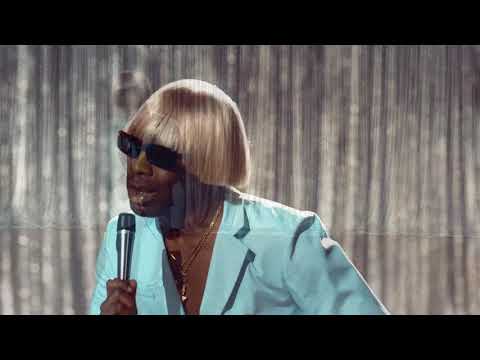
"Wilshire" appeared on Tyler, The Creator's sixth studio album Call Me If You Get Lost, released on June 25, 2021 through Columbia Records. The album debuted at number one on the Billboard 200, becoming Tyler's second consecutive album to achieve that milestone following Igor in 2019. "Wilshire" occupied a distinctive position within the album as one of its most emotionally extended and lyrically direct tracks, running to more than six minutes and departing from the playful, globe-trotting persona of the album's broader conceptual framework to deliver something closer to unguarded personal disclosure.
Call Me If You Get Lost was produced primarily by Tyler himself, whose development as a producer had become one of the most discussed aesthetic evolutions in hip-hop through the preceding decade. The album employed DJ Drama as a hype man presence throughout, applying the convention of classic mixtape DJ drops to what was in fact a fully produced studio album. This structural conceit gave the project a particular energy while also functioning as a tribute to the mixtape culture that had been central to hip-hop's underground distribution ecosystem before streaming transformed the industry's economics.
"Wilshire" takes its name from Wilshire Boulevard in Los Angeles, the long arterial street that runs through some of the city's most iconic neighborhoods. The song uses the geographical reference as an emotional anchor, situating a personal narrative in a specific physical place in the manner that Tyler had developed across his career as a tool for achieving lyrical intimacy and specificity. The street name carries the weight of lived experience in a city that Tyler has called home for his professional adult life, and the song treats Los Angeles not as glamour but as the backdrop for complicated human experience.
The production on "Wilshire" is notably spare compared to the sample-heavy, maximalist arrangements that characterized much of Call Me If You Get Lost. The instrumental leans on a looped piano figure that provides a meditative, repetitive foundation over which Tyler delivers his lyrical content with less structural punctuation than his more performatively energetic material. The choice to let the track breathe and extend without forcing conventional verse-chorus architecture was consistent with Tyler's increasing willingness on Igor and its follow-up to abandon pop song structure when the emotional content required a different container.
Tyler, born Tyler Gregory Okonma in 1991, had built his public persona through the deliberately provocative aesthetics of Odd Future, the Los Angeles collective that generated significant controversy and equally significant devoted fandom through the late 2000s and early 2010s. His solo albums had traced a remarkable artistic evolution from the abrasive nihilism of Goblin through the romantic heartbreak of Cherry Bomb, the orchestral ambition of Flower Boy, and the compressed emotional intensity of Igor. Call Me If You Get Lost and "Wilshire" within it represented a continuation of this evolution toward emotional depth and lyrical vulnerability.
The song attracted substantial critical attention as one of the album's most significant achievements. Critics who assessed Call Me If You Get Lost consistently pointed to "Wilshire" as a demonstration that Tyler's songwriting had matured considerably beyond what his earlier work, however creative and influential, had suggested was available to him. The willingness to sustain a single narrative across more than six minutes without relying on conventional structural devices was noted as evidence of growing compositional confidence.
The commercial context of Call Me If You Get Lost's release in mid-2021 was one in which hip-hop dominated streaming metrics and Tyler occupied an unusual position within the genre as an artist who was commercially dominant and critically celebrated simultaneously. His Grammy Award for Best Rap Album for Igor in 2020, which he accepted with characteristically ambivalent public statements about the rap category itself, had positioned him as one of the genre's most prominent and thoughtful voices. "Wilshire" added to that reputation by demonstrating that his emotional range had expanded to accommodate something genuinely tender and searching.
Columbia Records' support for the album was substantial, and the promotional campaign around Call Me If You Get Lost reflected the label's confidence in Tyler's continued commercial momentum. The album's first-week performance confirmed that confidence, with its number-one debut representing a continuation of the trajectory that Igor had established and making Tyler one of the relatively small number of artists who had managed to sustain both critical credibility and chart-topping commercial success across multiple consecutive album cycles.
02 Song Meaning
The Meaning of "Wilshire": Wanting Someone Who Doesn't Belong to You
"Wilshire" explores one of the most emotionally complex territories in the human experience: sustained, unconsummated feeling for someone who is in another relationship. The narrator describes a persistent emotional attachment to a person who has chosen a partner other than himself, and the song maps the interior landscape of that experience with unusual honesty and detail. There is no villain in the narrative, no betrayal or rejection in the conventional sense, only the difficulty of wanting something that someone else has claimed and that is not available to you.
Tyler's approach to this subject matter is notable for its absence of self-pity or bitterness. The narrator does not blame the object of his feelings for the choice she has made, nor does he construct a narrative in which her current partner is inferior or her decision is wrong. Instead, he sits with the straightforward fact of his feelings and their unavoidable futility, describing the experience from the inside without the consolations of anger or resentment that often accompany such situations in popular song. This emotional honesty is what gives "Wilshire" its particular weight and earns it the attention it received.
The Los Angeles setting contributes to the song's emotional texture in ways that go beyond mere geographical specificity. Wilshire Boulevard is a street that connects wealth and aspiration with ordinary urban life, running through neighborhoods that embody both the glamour and the loneliness of Los Angeles as a place where people come to become something and often find that becoming is a complicated and painful process. The street name invokes a specific kind of city experience that Tyler has inhabited throughout his adult life, giving the song's emotional content a material grounding that abstract declarations of feeling could not achieve.
The song's extended running time serves its thematic purposes directly. The experience of unrequited or unavailable feeling does not resolve on a conventional timeline; it persists and circles and resurfaces rather than reaching the clean conclusions that pop song structure typically requires. "Wilshire" refuses that structural imposition, allowing the emotional content to occupy the time it needs rather than compressing it into a commercially viable format. This is itself a meaningful artistic choice, communicating through form that some feelings are not brief and some experiences cannot be adequately contained in three and a half minutes.
Within Tyler's catalog, "Wilshire" belongs to the emotional territory that Igor opened in 2019, with its exploration of attraction, rejection, and the complications of desire across a narrative album format. Where Igor operated through a somewhat abstracted, character-based framework, "Wilshire" drops the fictional scaffolding and speaks with the directness of personal disclosure. This shift represents a deepening of vulnerability and a willingness to be seen without the protective mediation of persona or concept.
The question of sexuality that has been an ongoing sub-theme of Tyler's artistic evolution since the implications of Flower Boy became a topic of critical discussion is present in "Wilshire" through implication and context rather than explicit statement. The song's emotional architecture is legible to any listener who has experienced unavailable desire, regardless of the specific configuration of the parties involved. This universality of emotional experience coexisting with particular personal specificity is one of the more sophisticated qualities of Tyler's mature songwriting.
Critically, "Wilshire" has been discussed as one of the moments in Tyler's catalog where his development as a writer rather than merely a performer or producer became most clearly visible. His Grammy Award for Best Rap Album for Igor in 2020 had already signaled that institutional recognition was following the critical consensus about his growth, and "Wilshire" confirmed that trajectory. The ability to sustain a single emotional situation across more than six minutes of verse without losing the listener's investment requires genuine craft in the assembly of language, image, and musical pacing. "Wilshire" demonstrates that Tyler possessed that craft at the time of its creation, which is itself part of what the song means for the larger narrative of his artistic development.
→ More from Tyler, The Creator
View all Tyler, The Creator hits →



→ More from the 2020s File
View all 2020s hits →




Keep digging