The 2020s File Feature
Only Thing That's Gone
Only Thing That's Gone: Morgan Wallen and Chris Stapleton on Dangerous When Morgan Wallen released "Dangerous: The Double Album" in January 2021, the scope o…
01 The Story
Only Thing That's Gone: Morgan Wallen and Chris Stapleton on Dangerous
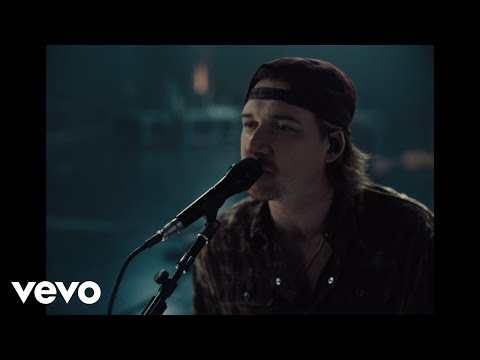
When Morgan Wallen released "Dangerous: The Double Album" in January 2021, the scope of its commercial success was unlike almost anything modern country music had witnessed. The album debuted at number one on the Billboard 200 and spent a historically unprecedented number of weeks atop the country albums chart, reshaping discussions about the commercial ceiling of contemporary country music and the demographic reach of the genre's streaming-era fanbase. Within that sprawling double album, "Only Thing That's Gone" stood out as one of the most artistically ambitious collaborations, pairing Wallen with Chris Stapleton, a figure whose credibility in both mainstream country and the music press was essentially unimpeachable.
Chris Stapleton had spent years as a songwriter in Nashville before his own recording career produced a breakthrough of enormous proportions with his 2015 debut album, which arrived with critical and commercial force that fundamentally altered conversations about what country music could sound like in the streaming era. His voice, a blues-drenched instrument of rare expressive power, had made him a singular figure in a genre that was simultaneously grappling with its pop crossover ambitions and its traditional roots. When Morgan Wallen sought a featured collaborator for one of the more emotionally substantial tracks on "Dangerous," Stapleton was a natural choice, both for what his voice brought sonically and for what his presence signaled about the artistic intentions of the project.
"Only Thing That's Gone" was recorded for Big Loud Records in partnership with Republic Records, the label infrastructure that had supported Wallen's rise from "The Voice" contestant to one of the best-selling country acts of his generation. The production, helmed by collaborators who understood how to balance the organic, live-instrument feel that Stapleton's presence demanded with the more polished production sensibility of mainstream country radio, created a sonic environment that served both artists well. The track featured guitar work and a drum feel that owed more to vintage country and Southern rock than to the bro-country production that had defined country radio for most of the previous decade.
The song appears on the second disc of "Dangerous," in a position that rewards listeners who have made a commitment to the full work rather than the obvious singles. This placement reflected a curatorial decision to distribute the album's more emotionally complex material throughout its runtime rather than front-loading it. Wallen and his team understood that the streaming economy made album sequencing a different kind of art than it had been in the physical era, since listeners could skip and sample freely, but they also understood that the most devoted portion of their fanbase would engage with the full project as a coherent statement.
The track charted on the Billboard Hot 100 as part of the broader streaming wave generated by the album's release. "Dangerous" produced an extraordinary number of simultaneous Hot 100 entries, with tracks from the album occupying multiple positions simultaneously and demonstrating that Wallen's fanbase was not casually streaming but actively and repeatedly engaged with the full body of work. "Only Thing That's Gone" was among the tracks that benefited from this deep engagement, its emotional weight resonating with listeners who were spending sustained time with the album.
The critical response to the collaboration specifically noted the chemistry between the two vocalists. Stapleton's more weathered, blues-inflected delivery created a compelling contrast with Wallen's smoother, more modern country tenor, and the moments when their voices came together produced the kind of harmonies that reminded listeners how much expressive power the genre could generate when its best practitioners worked together. Several reviews of "Dangerous" singled out "Only Thing That's Gone" as evidence that Wallen's artistic ambitions extended beyond the party-country territory with which his name had been most frequently associated.
The album's release was followed within weeks by a significant controversy surrounding Wallen's public conduct, which led to his temporary suspension by his label and removal from radio playlists and award consideration. In a development that confounded expectations, the controversy appeared to accelerate rather than diminish the streaming performance of "Dangerous," with the album's numbers climbing sharply in the period immediately following the incident. This complicated the cultural narrative around the music and created ongoing debates about the relationship between artist behavior and commercial success in the streaming era.
Through all of this turbulence, "Only Thing That's Gone" retained its status as one of the most musically accomplished tracks on the album. The Stapleton collaboration demonstrated that whatever the surrounding noise, Wallen was capable of contributing to genuinely substantial creative work, and that his partnership with one of country music's most respected figures produced something that could be evaluated on purely artistic terms alongside the biographical and cultural questions that complicated the album's public reception.
The song's presence on a landmark album and its association with one of the most commercially significant country releases of the early 2020s ensured that it would be discussed in any serious account of the period, both as a musical artifact and as a document of the complicated relationship between talent, commercial success, and public accountability in the contemporary entertainment landscape.
02 Song Meaning
Absence and Memory: The Emotional Terrain of Only Thing That's Gone
"Only Thing That's Gone" navigates the specific emotional landscape of loss that is not dramatic but gradual, the kind of loss that reveals itself slowly as the realization that what once gave a place or a relationship its warmth has quietly departed. The song operates in the gap between the physical continuation of circumstances and the emotional vacancy that sets in when something essential has left. The title itself frames the experience with precise, understated economy: everything is still there, except the only thing that mattered.
The country and Southern soul influences that shape the production give the song an emotional vocabulary rooted in a long tradition of American music that treats loss and longing as subjects worthy of detailed, unhurried attention. Country music at its best has always understood that the most painful experiences are not those that announce themselves with drama but those that settle in quietly and refuse to leave. "Only Thing That's Gone" belongs to this tradition, drawing on it with enough awareness to honor the lineage while finding something genuinely personal within it.
The dynamic between Morgan Wallen and Chris Stapleton is central to the song's meaning. Stapleton's vocal presence adds a dimension of hard-won wisdom to material that might otherwise risk sentimentality. His is a voice that has earned its authority through years of genuine artistic labor, and when it appears alongside Wallen's, it creates the impression of two people at different stages of the same understanding, one still in the middle of the experience, one further along but no less familiar with its textures. The dialogue between their voices becomes a dialogue between positions rather than simply a harmonic event.
The song's treatment of home and belonging is also worth noting. Country music has consistently used physical place as a carrier of emotional meaning, and the feelings of absence the song describes are anchored to specific sensory memories of a particular location or relationship context. When something meaningful is gone from a place, the place itself becomes strange, familiar in form but altered in feeling. The song captures this disorientation with genuine lyrical sensitivity.
For Morgan Wallen's catalog, the track represents a significant artistic data point. It demonstrates a willingness to work in registers that are less immediately commercial than his party-oriented material, to sit with difficult emotional content without rushing toward resolution or uplift. The ambition visible in the Stapleton collaboration suggests an artist aware of his own commercial power and choosing to use it to pursue creative goals that might not have been available to him at an earlier stage of his career, when proving commercial viability was the primary objective.
The song also operates as a meditation on what success takes away as well as what it provides. The narrator's reflections on what has gone from his life are not easily separated from the displacements and losses that accompany rapid upward mobility, the relationships strained by absence and ambition, the home places that become less familiar as distance accumulates. This subtext, if it is intended, gives the song a self-aware quality that resonates within the context of an artist navigating the specific pressures of rapid, enormous success.
Ultimately, "Only Thing That's Gone" earns its emotional weight through understatement. It does not reach for grandiosity or manufactured feeling but trusts the natural expressiveness of two exceptional voices and a well-constructed song to do the necessary work. That restraint is itself a form of artistic maturity, and it makes the song one of the more durable pieces on an album otherwise notable for its commercial reach rather than its artistic ambition.
→ More from Morgan Wallen Featuring Chris Stapleton
View all Morgan Wallen Featuring Chris Stapleton hits →



→ More from the 2020s File
View all 2020s hits →


Keep digging