The 2020s File Feature
Malibu
"Malibu" — Migos Featuring Polo G Migos in Their Final Commercial Chapter By the summer of 2021, Migos occupied a complicated position in hip-hop's commercia…
01 The Story
"Malibu" — Migos Featuring Polo G
Migos in Their Final Commercial Chapter
By the summer of 2021, Migos occupied a complicated position in hip-hop's commercial landscape. The Atlanta trio had spent the better part of a decade as one of the most influential groups in trap music, their staccato flow and production aesthetic having reshaped the sonic vocabulary of the genre so thoroughly that their influence was audible in hundreds of recordings by other artists. Yet by 2021, questions were beginning to circulate about whether the group's commercial peak had passed. "Malibu," which appeared on their album Culture III, arrived as part of a project meant to answer those questions definitively.
The album's release in June 2021 was one of the most anticipated hip-hop events of that year. The Culture series had produced some of the most important recordings of the late 2010s, and the third installment carried enormous expectations. Polo G's inclusion on "Malibu" represented a pairing of established trap royalty with one of the most compelling younger voices in hip-hop, a Chicago rapper whose emotionally intense, street-narrative style had made him a genuine critical and commercial force in his own right.
The Sound of California Dreams, Made in Atlanta
The song's title invokes the mythology of Malibu, the California coastal enclave that has functioned in American popular imagination as a symbol of aspirational luxury, sun-drenched ease, and distance from the pressures of ordinary life. Migos had spent years building a lyrical world of high-end aspiration, cataloging designer labels, luxury automobiles, and exclusive destinations with a precision that gave their braggadocio a specific, tactile texture. Malibu fits cleanly into that geography.
The production on the track carries the warmth the title promises: melodic elements that suggest open space and ease, combined with the trap drum programming that remained the group's signature sonic foundation. The contrast between the track's aspirational imagery and the underlying trap architecture is a recurring Migos formula, the luxury dream set against the street-level production that grounds it in credibility.
Chart Performance
"Malibu" debuted on the Billboard Hot 100 on June 26, 2021, entering at position 65. That debut was also its peak, as the track spent one week on the chart before exiting. The performance was modest relative to Migos' biggest commercial moments, which had included much higher-charting singles earlier in their career. However, the single-week appearance reflected the album's broader chart dynamics: Culture III debuted at number one on the Billboard 200, generating substantial first-week activity across its tracklist, with different songs peaking at different positions during the initial surge.
Polo G's presence on the track should theoretically have strengthened its chart potential given his own strong streaming numbers at the time. His albums The Goat and Hall of Fame had established him as a reliable commercial performer, and his fanbase showed consistent enthusiasm for his releases. The combined audience of Migos and Polo G was considerable, which explains how the track landed in the top 65 despite its brief chart tenure.
Polo G's Contribution and Voice
Polo G brought a contrasting emotional texture to the collaboration. His style, shaped by the trauma-inflected street narratives of Chicago rap and a vulnerability that distinguished him from more purely bravado-oriented peers, provided a different register than Migos' typically more celebratory framework. On "Malibu," that contrast works: Polo G's verse grounds the track's aspiration in a more reflective tone, acknowledging the distance between where his narrator started and where he now finds himself.
This kind of tonal balance, placing aspiration alongside the awareness of what it cost to achieve it, was central to Polo G's artistic identity. His presence on the track gave it a dimension that purely celebratory material might have lacked.
Culture III and the Question of Legacy
Culture III arrived in a moment of genuine uncertainty about the group's future trajectory. The album demonstrated that Migos could still command a number-one debut and generate significant commercial activity, even if the individual singles did not match the extended chart dominance of their earlier work. Looking back, the album now reads as a document of a group navigating the challenge that faces any long-running act: how to evolve without abandoning the qualities that defined them, how to stay relevant in a format that was rapidly changing around them.
"Malibu" captures Migos at a specific moment of transition, the aspiration and confidence fully intact, the commercial terrain slightly more complex than it had been at their earlier peak. The Polo G collaboration represents one of the album's more successful attempts to energize that framework with a contemporary voice.
The track holds up well as a piece of 2021 trap-meets-aspiration songwriting. Put it on and the California fantasy that the title promises delivers exactly what it should.
"Malibu" — Migos Featuring Polo G's singular moment on the 2020s charts.
02 Song Meaning
"Malibu" — Themes of Escape and Earned Aspiration
Geography as Aspiration
Place names in hip-hop carry enormous cultural and emotional weight, functioning as shorthand for entire constellations of meaning that listeners decode instantly. Malibu is a particularly loaded invocation: it evokes California sunshine, Pacific coastlines, and the kind of wealth that puts beachfront property within reach. For artists whose lyrical identity is rooted in survival narratives and street-level struggle, Malibu represents not just a destination but a measure of how far the journey has taken them.
Migos built their career on this geography of aspiration, mapping a world of luxury goods, exclusive locations, and high-status experiences with a cataloging precision that gave their braggadocio a documentary quality. "Malibu" fits squarely into that tradition, using a place name to establish the track's emotional coordinates before a single word of verse is delivered.
The Atlanta-Chicago Axis
The collaboration between Migos (Atlanta) and Polo G (Chicago) represents a meeting of two cities that had become the dominant poles of American trap and street rap by the early 2020s. Atlanta's influence on the genre was comprehensive and foundational; Chicago had produced its own distinctive strand of emotionally raw, melodically sophisticated street narrative. The combination of these two traditions on a single track illustrates the genre's capacity for productive regional cross-pollination.
Polo G's Chicago perspective, shaped by the particular texture of that city's hip-hop culture, brings a somewhat harder emotional edge to the track's aspirational frame. His verse does not simply celebrate arrival; it acknowledges the weight of the path. This is characteristic of the Chicago trap-melodic tradition, where the celebration and the grief of survival are rarely fully separated.
Culture III and the Burden of Expectation
Any album bearing the Culture name in 2021 carried the weight of what the earlier installments had accomplished. Culture (2017) was a genuine landmark in contemporary hip-hop, and its follow-up maintained the standard. The third album arrived with expectations that no release could fully satisfy, which colored much of its critical and commercial reception. "Malibu" within that context is best understood as a single piece of a larger project rather than a standalone statement, and its themes of arrival and luxury fit naturally into the album's broader world-building.
The aspirational ethos running through the track also speaks to Migos' role as representatives of a specific kind of Atlanta success story, the artists who had built genuine wealth and influence from origins that made those achievements meaningful rather than assumed.
Why This Kind of Song Matters
It is easy to dismiss aspirational hip-hop as shallow or repetitive, particularly when the aspirational vocabulary is as familiar as Malibu beaches and designer fashion. What gets lost in that dismissal is the function this music performs for its core audience. For listeners whose daily reality is far from Malibu, these tracks provide a kind of imaginative transportation, a brief visit to a version of the world where success is total and distance from struggle is complete. That function is not trivial; popular music has served it in various forms across every genre and every era.
The addition of Polo G's voice complicates the purely escapist reading in productive ways, introducing the awareness that the dream is earned rather than simply inhabited. That tension, between the ease of the aspiration and the cost of achieving it, gives the track more emotional dimension than its sun-drenched title might initially suggest.
"Malibu" — Migos Featuring Polo G's singular moment on the 2020s charts.
→ More from Migos Featuring Polo G
View all Migos Featuring Polo G hits →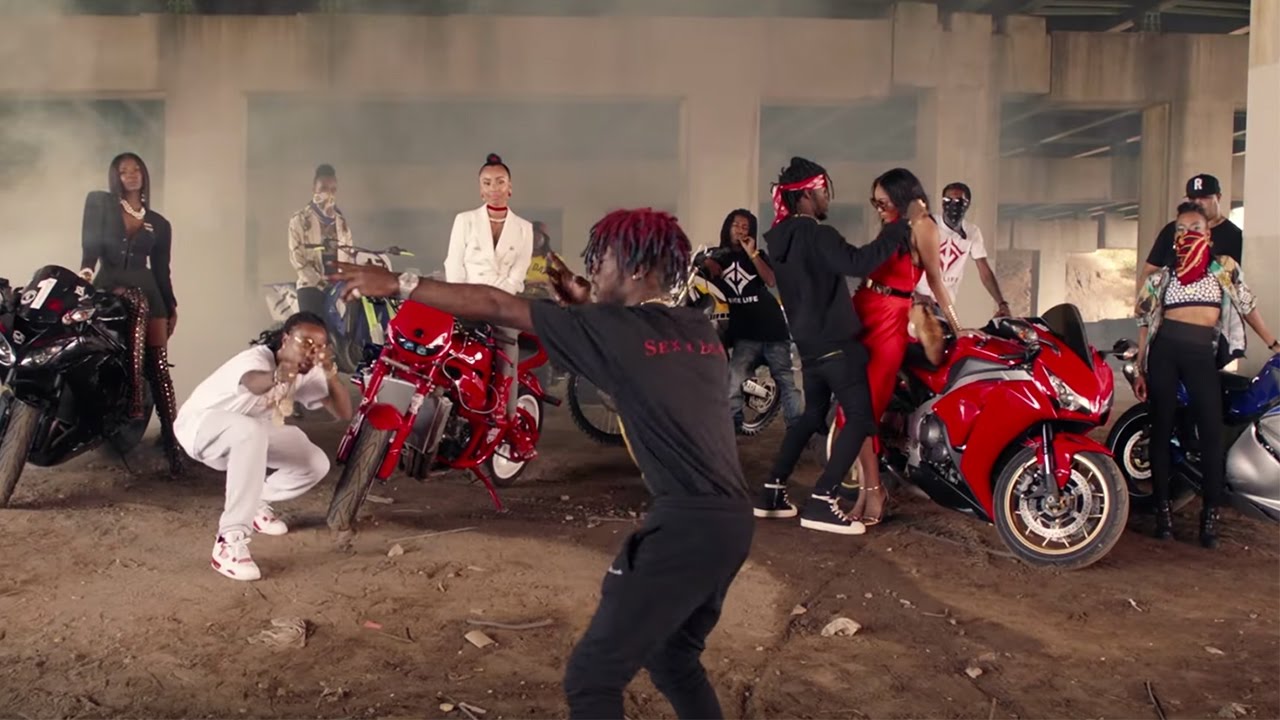



→ More from the 2020s File
View all 2020s hits →



Keep digging