The 2020s File Feature
Letter To Nipsey
Letter to Nipsey — Meek Mill Featuring Roddy Ricch: Chart History and Commercial Reception "Letter to Nipsey" was released by Meek Mill featuring Roddy Ricch…
01 The Story
Letter to Nipsey — Meek Mill Featuring Roddy Ricch: Chart History and Commercial Reception
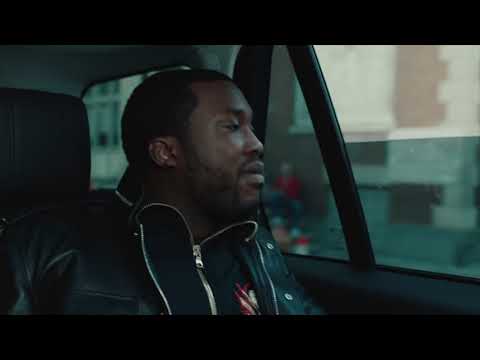
"Letter to Nipsey" was released by Meek Mill featuring Roddy Ricch on Meek Mill's fourth studio album Championships, in an updated edition following the tragic death of rapper Nipsey Hussle on March 31, 2019. The song was recorded and released as an act of public mourning and artistic tribute in the immediate aftermath of Hussle's death, with Meek Mill channeling genuine grief into a musical statement that resonated far beyond his established fanbase. The tribute nature of the track and the extraordinary cultural circumstances of Hussle's death meant that the song attracted an unusual degree of media and public attention from the moment of its release.
Roddy Ricch, who featured on the track, had himself released a tribute to Nipsey Hussle titled "The Box," and his connection to Hussle gave his contribution to "Letter to Nipsey" an additional layer of authenticity and emotional weight. Ricch had been close to Hussle and had publicly mourned his death through multiple channels. His appearance alongside Meek Mill created a tribute that carried the weight of personal loss rather than merely symbolic industry gesture. Ricch was also at the beginning of his own commercial breakthrough in 2019 and 2020, and the connection to this tribute song contributed to the wave of goodwill that surrounded his early career.
The song was produced by Cardiak, a producer with a long history of work with Meek Mill and with artists in the Philadelphia and broader East Coast rap scene. The production takes a notably restrained approach, building the track around a spare, mournful instrumental that gives the vocal performances space to breathe without competing for attention. The choice of a quiet, emotionally subdued production palette was appropriate to the subject matter and contrasted with the more aggressive sonic settings of much of Meek Mill's previous work.
"Letter to Nipsey" entered the Billboard Hot 100, a testament to the cultural weight of the moment in which it was released. Nipsey Hussle's death had sparked an outpouring of public grief that transcended the boundaries of the rap community, drawing responses from political figures, athletes, and entertainers across multiple industries. Within this context, the song's chart performance reflected not only the combined streaming power of Meek Mill and Roddy Ricch but also the broader public engagement with the cultural moment that Hussle's passing had created.
The Grammy Awards recognized the track with a nomination for Best Rap Performance at the 62nd Grammy Awards, held in January 2020. The nomination was broadly seen as appropriate recognition for a piece of work that had made a genuine contribution to public mourning and to the broader conversation about community, legacy, and violence that Hussle's death had provoked. The Grammy recognition brought additional attention to the track and to the careers of both artists associated with it.
Critical reception for the song was uniformly respectful, with critics acknowledging both its emotional sincerity and its artistic quality. The combination of Meek Mill's direct, heartfelt address to his late friend and Ricch's complementary contribution created a track that succeeded both as a piece of music and as a public statement. Major hip-hop publications including Complex and XXL covered the song extensively, situating it within the broader cultural conversation about Hussle's legacy and his impact on the Los Angeles rap community.
The song's release without a traditional promotional campaign, driven entirely by the circumstances of its creation and the public desire to process the grief surrounding Hussle's death, made it a notable example of how streaming-era music distribution allows for the kind of rapid cultural responsiveness that was impossible in previous distribution paradigms. Meek Mill was able to create and release a fully realized tribute within a very short period of Hussle's death, and the infrastructure of streaming platforms allowed it to reach an enormous audience immediately.
"Letter to Nipsey" remains one of the most significant documents of the cultural aftermath of Nipsey Hussle's passing, and it occupies an important place in both Meek Mill's and Roddy Ricch's catalogs as evidence of their capacity to deliver genuine emotion when circumstances demanded it.
02 Song Meaning
Letter to Nipsey — Meek Mill Featuring Roddy Ricch: Themes, Meaning, and Artistic Significance
"Letter to Nipsey" occupies a singular position in contemporary rap: it is a genuine elegy, written and delivered in the immediate aftermath of a devastating loss, that manages to avoid both the pitfalls of sentimental excess and the coldness of purely formulaic tribute. Meek Mill's central conceit, the letter form itself, is a literary device with a long history in both popular music and more formal literary traditions. By framing his tribute as a direct address to a specific person rather than a general statement about loss, he created something with the intimacy and specificity of private grief made public.
The emotional register of the song is one of stunned sincerity. Neither Meek Mill nor Roddy Ricch resorts to bravado or genre conventions that would be tonally incongruent with the subject matter. Instead, both artists inhabit the strange and painful territory of public mourning, acknowledging a loss that feels personal while speaking to the fact that Nipsey Hussle's death was experienced as a collective wound by an entire community. This public-private balance is one of the most difficult things to achieve in tribute music, and the song navigates it with more success than most.
Nipsey Hussle's own artistic identity was built around themes of community uplift, economic self-determination, and perseverance in environments of systemic disadvantage. His death by gun violence in the neighborhood he had explicitly chosen to invest in rather than leave created a particularly painful symbolic resonance. "Letter to Nipsey" engages with this dimension of Hussle's legacy, acknowledging not only the personal loss of a friend but the broader meaning of what Hussle had stood for and what his absence represented to the communities he had served.
Roddy Ricch's contribution adds a generational dimension to the tribute. As a younger artist who had looked to Hussle as both inspiration and mentor, Ricch's verse speaks to the loss not only of a peer but of a guide. This intergenerational dimension gives the song a thematic depth that a tribute from a single perspective would not have achieved. The dialogue between two voices, one established and one emerging, creates a sense of the continuum of the culture that Hussle had been part of and had helped shape.
The spare production by Cardiak is itself a form of thematic statement. Restraint in musical settings for lyrical content of this gravity can be a form of respect, clearing space for the words rather than competing with them. The decision not to dress the tribute in elaborate sonic spectacle communicates something about the seriousness with which both artists approached the task. The music mourns without performing mourning, and that distinction matters enormously.
For Meek Mill's catalog, the song represents a departure from the more combative and assertive dimensions of his public persona. His willingness to be seen in vulnerability, addressing his grief directly and publicly, was consistent with the broader evolution of his public image during the period following his legal battles and his subsequent advocacy work around criminal justice reform. "Letter to Nipsey" is a companion piece to that advocacy in some ways, both being expressions of a public figure who had decided that the most meaningful use of his platform was honest engagement with painful social realities. The cultural significance of the tribute extends well beyond the specifics of the relationship between Meek Mill and Nipsey Hussle, touching on questions of community, mortality, legacy, and the responsibilities that survival and platform create.
→ More from Meek Mill Featuring Roddy Ricch
View all Meek Mill Featuring Roddy Ricch hits →



→ More from the 2020s File
View all 2020s hits →


Keep digging