The 2020s File Feature
Doom
Doom by Juice WRLD: Posthumous Release and Chart Context Juice WRLD, born Jarad Higgins in Chicago, Illinois, died in December 2019 at the age of twenty-one,…
01 The Story
Doom by Juice WRLD: Posthumous Release and Chart Context
Juice WRLD, born Jarad Higgins in Chicago, Illinois, died in December 2019 at the age of twenty-one, leaving behind an enormous archive of recorded material that his estate, in partnership with Interscope Records, has continued to release in the years since his passing. "Doom" was among the posthumous tracks released in 2021 as part of the ongoing effort to bring that archive to his audience. The release arrived in a music landscape that was already processing multiple posthumous Juice WRLD projects, each one drawing substantial commercial attention and demonstrating the depth of loyalty his fanbase maintained long after his death.
The posthumous release strategy for Juice WRLD's catalog was unusual in its scale and consistency. Fighting Demons, his second posthumous studio album, was released in December 2021 and debuted at number one on the Billboard 200, demonstrating that his commercial pull had not diminished in the two years since his death. Individual tracks continued to generate streaming numbers that would have been competitive with living artists at the peak of their commercial cycles. "Doom" entered this ecosystem as one of the vault tracks given a formal release during this period.
The production on "Doom" reflected the aesthetic that defined Juice WRLD's most emotionally direct work: melodic trap production with a tonal darkness that matched the lyrical themes he was known for exploring. His producers during his lifetime had developed a deep familiarity with the sonic environments that drew out his most authentic performances, and the posthumous releases were handled with care to ensure that the production quality matched what audiences expected. The emo-rap tradition that Juice WRLD was a central figure in required a particular balance between sonic aggression and melodic vulnerability, and "Doom" maintained that balance.
Juice WRLD's approach to recording was notably prolific. He was known to freestyle entire songs in the studio, generating an enormous body of recorded material across relatively few years of active work. The archive that resulted from this practice gave his estate substantial resources for posthumous releases, but it also meant that the curation process required real judgment about which recordings most authentically represented his artistic voice. "Doom" was among the tracks determined to meet that threshold, a song whose production and vocal performance reflected the qualities that had made his work so widely resonant.
The themes of the track drew from the emotional territory Juice WRLD had made his signature: anxiety, self-destruction, the tension between knowing something is harmful and being unable to stop. These themes were not performed as shock or provocation but as genuine emotional documentation, which was the quality that separated his work from artists who engaged similar subject matter for effect. His audience understood this distinction and responded to the authentic quality of his emotional output with a loyalty that persisted across the posthumous releases.
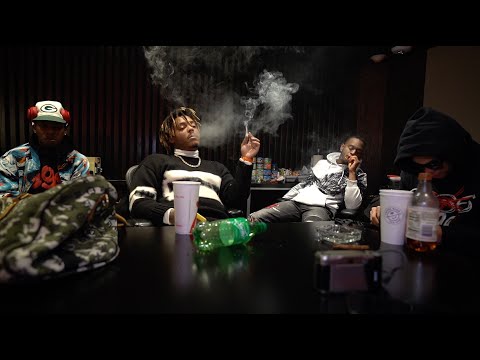
Interscope Records and Grade A Productions, the imprint founded by Juice WRLD's manager Lil Bibby, managed the posthumous release schedule in coordination with his family. The approach reflected a recognition that his catalog was commercially valuable but also emotionally significant to a large audience, and that the releases needed to honor both dimensions. The singles released in 2021 were accompanied by visual content that drew on archival footage, creating viewing experiences that functioned simultaneously as music releases and as memorials.
The critical conversation around posthumous releases generally involves questions about authorial intent and the ethics of releasing material the artist may not have chosen to put out. In Juice WRLD's case, the sheer volume of his recorded output and the consistency of quality across the posthumous material gave those conversations a particular texture. His estate has argued that he intended the vault material to be released, and the emotional authenticity of tracks like "Doom" supports the position that these were not rough sketches but fully realized performances.
His streaming numbers remained extraordinarily high throughout 2020 and 2021, a testament to the breadth of his existing audience and to the ongoing discovery of his work by new listeners who came to his catalog through the posthumous releases. The Billboard Hot 100 tracked Juice WRLD activity consistently across this period, with posthumous singles achieving performances that reflected both active promotion and organic algorithmic placement on streaming platforms where his catalog had become deeply embedded in recommendation systems.
The cultural context of "Doom's" release was shaped by an ongoing reckoning within hip-hop and popular music more broadly about mental health, substance use, and the industry conditions that surrounded young artists who achieved enormous success quickly. Juice WRLD had been public about his struggles, and the posthumous releases kept those conversations alive in ways that had observable effects on how his audience, largely composed of young people, engaged with similar themes in their own lives. The music functioned as both entertainment and as a document of a real human experience that had ended tragically.
In the broader landscape of 2021 rap, "Doom" positioned itself as a continuation of the emotional vocabulary Juice WRLD had established: deeply personal, melodically rich, and honest to a degree that continued to resonate even in the absence of the artist himself. The song added another chapter to a catalog that, two years after his death, remained one of the most actively consumed bodies of work in contemporary music.
Juice WRLD was ranked as the most-streamed artist in the world on Spotify in 2020, the year following his death, an extraordinary demonstration of the scale of his audience and the depth of their engagement with his catalog. This streaming dominance created the commercial environment within which "Doom" was released in 2021, arriving with the algorithmic and audience infrastructure already in place to ensure it found its audience quickly and was sustained through recommendation systems that had learned the preferences of hundreds of millions of listeners who had engaged with his prior releases.
02 Song Meaning
Doom: Themes of Fatalism and Emotional Vulnerability in Juice WRLD's Work
"Doom" by Juice WRLD engages with a cluster of themes that run throughout his catalog: the sense of impending catastrophe, the awareness that one's own patterns are destructive, and the strange comfort that can be found in naming that awareness even when nothing changes as a result. The title word carries its full semantic weight, suggesting not merely difficulty but inevitability, a future that is approaching regardless of what the narrator does or does not do. This fatalistic register was one of Juice WRLD's most consistent emotional signatures, and "Doom" exemplifies it with clarity.
The emotional register of the track is characterized by a particular kind of lucidity, the ability to see clearly what is happening while feeling unable to alter it. This is a more sophisticated emotional state than simple despair, because it contains within it the awareness of alternatives that are somehow not accessible. Juice WRLD's narrators consistently occupy this position, knowing what would be healthier, what would be safer, what a better outcome would require, and finding themselves unable to move toward it. That tension between knowledge and behavior is psychologically realistic in ways that connected deeply with a young audience navigating similar experiences.
Substance use and its relationship to emotional pain is one of the song's underlying subjects, as it was across much of Juice WRLD's catalog. He was transparent about his relationship with prescription drugs and with the way those substances interacted with the emotional distress he was managing. "Doom" approaches this territory not with romanticization but with a kind of rueful honesty, acknowledging both the appeal and the cost of patterns that have become entrenched. The emotional intelligence of this approach, its refusal to glamorize what it is also unable to entirely condemn, was part of what made his work feel genuinely personal rather than performed.
The posthumous context gives the track an additional layer of meaning that would not have been present had it been released during his lifetime. Heard after his death at twenty-one, references to catastrophe and to patterns that lead toward destruction carry a weight that is impossible to entirely separate from biographical knowledge. His estate has navigated this dimension carefully, emphasizing the music's value as art rather than as biographical document, but the two dimensions are genuinely present and in tension for most listeners.
Within the broader emo-rap tradition, "Doom" demonstrates why Juice WRLD was considered its defining figure rather than merely one of its practitioners. The emotional directness, the willingness to be specific about shame and fear and self-destruction without the protective layer of irony, was a mode that he perfected in ways that influenced a generation of younger artists who came after him. The track's emotional texture reflects a genuine artistic vision rather than a generic adherence to category conventions.
The relationship between doom and love, between catastrophe and connection, is also present in the track. Juice WRLD consistently worked in the space where romantic feeling and self-destruction intersect, where a relationship becomes both a refuge from and a stage for the same destructive patterns. This is emotionally complex territory, and his approach to it acknowledged the complexity rather than simplifying it into a cleaner narrative of either pure love or pure toxicity.
For his fanbase, "Doom" functions as another entry point into a world that they have found meaningful because it names experiences they recognize. The posthumous release adds grief to that recognition, the sadness of hearing an artist engage so directly with mortality and suffering while knowing how his story ended. That layer does not diminish the song's power but deepens it, making "Doom" one of the more emotionally freighted entries in a catalog that was never simple to begin with.
→ More from Juice WRLD
View all Juice WRLD hits →



→ More from the 2020s File
View all 2020s hits →



Keep digging