The 2020s File Feature
applying.pressure
"applying.pressure" — J. Cole The Arrival of The Off-Season Few artists in contemporary hip-hop generate the kind of pre-release anticipation that surrounds …
01 The Story
"applying.pressure" — J. Cole
The Arrival of The Off-Season
Few artists in contemporary hip-hop generate the kind of pre-release anticipation that surrounds a J. Cole project. By the spring of 2021, Cole had spent nearly a decade cultivating one of the most intensely loyal followings in rap, a fan base that prized lyrical density, emotional honesty, and the kind of careful craftsmanship that had largely been sidelined by the melodic trap wave. When The Off-Season arrived on May 14, 2021, it landed not just as an album but as a proof of concept, a declaration that the strain of hip-hop Cole represented still had commercial pull in an era of billion-stream streaming anthems.
The Off-Season was presented as the culmination of a trilogy that had begun with 2014 Forest Hills Drive and continued through KOD. Cole had framed the period between album releases as "the off-season," a time of training, preparation, and sharpening. The album arrived with that context baked in, and "applying.pressure" functioned as one of its most explicit articulations of that theme. The lowercase title, styled to echo the album's aesthetic sensibility, reinforced the idea of a particular kind of controlled intensity.
The Sound and the Craft
The production on "applying.pressure" belongs to the school of dark, minimalist hip-hop that Cole has long favored: deliberate bass, space given to the verses, and textures that feel cinematic without being theatrical. J. Cole produced the track himself, as he does for the majority of his work, a practice that has always been central to his artistic identity. The ability to control both the sonic environment and the lyrical content gives his records a unified quality that is increasingly rare in an era of highly collaborative, committee-driven pop production.
The verses move through themes of competitive drive, the grind of maintaining relevance in a brutally Darwinian industry, and the particular satisfaction of watching effort translate into results. Cole has always been drawn to the metaphor of sport as a frame for artistic ambition, and "applying.pressure" leaned into that explicitly. The title itself describes a strategic maneuver, a deliberate intensification of force to gain advantage.
Charting at Number 13
The track debuted at number 13 on the Billboard Hot 100 on May 29, 2021, its first week on the chart. It spent two weeks in the rankings, peaking on its debut. A chart position of 13 in the debut week for an album cut on a project without a traditional single cycle represented genuine commercial reach, the kind of performance that streaming economics had made possible for artists with a sufficiently large and engaged audience.
The Off-Season as a whole performed exceptionally well, debuting at number one on the Billboard 200 and generating substantial chart action across multiple tracks simultaneously. In that context, "applying.pressure" holding at 13 in the first week illustrated both the depth of the album's audience and the particular energy fans directed toward the track. The song accumulated around 6.1 million YouTube views, a figure consistent with the consumption patterns of Cole's dedicated listener base.
Competition, Legacy, and the Sporting Frame
What distinguished The Off-Season's reception was the degree to which it entered active conversation about hip-hop's competitive landscape. Cole had spent years cultivating a reputation as a craftsman who stood apart from the attention economy of social media controversy, letting his work speak in its own time. "applying.pressure" arrived at a moment when that reputation had become a cultural talking point in itself, when critics and fans were actively debating which artists were willing to subject themselves to the standard of genuine lyrical competition.
The album's debut at number one on the Billboard 200 confirmed that Cole's approach to hip-hop had not merely survived the streaming era but thrived within it. His refusal to compromise his dense lyricism for radio palatability had become a market position in its own right.
A Training Season Made Permanent
In hindsight, "applying.pressure" reads as a mission statement for the phase of Cole's career it opened. The album it anchored was explicitly about preparation, discipline, and the willingness to compete at the highest level on one's own terms. The track's chart performance, brief but forceful, mirrored that ethos: it arrived with intent, made its mark, and stepped back without overstaying.
Press play and you can hear what years of preparation sounds like when it finally arrives on record. The compression of effort into two minutes and change is part of the point.
"applying.pressure" — J. Cole's singular moment on the 2020s charts.
02 Song Meaning
"applying.pressure" — Themes and Legacy
Discipline as a Philosophy
The central argument of "applying.pressure" is one that J. Cole has been making across his entire career: that sustained effort, technical mastery, and a refusal to dilute artistic vision are themselves forms of competitive advantage. The track articulates a view of the music industry as an arena where the discipline to keep improving matters more than any single viral moment. For an artist who had built his following incrementally, through mixtapes, albums, and a reputation earned one verse at a time, this was not an abstract philosophical claim. It was a personal record of how careers are actually built.
The Athletic Metaphor and Its Resonance
The sporting framework that runs through the track connected with listeners on an emotional level that a purely abstract discussion of artistic ambition might not have. Sports give structure to the concept of competitive preparation; they provide a shared vocabulary for discussing the relationship between effort and outcome. Cole's use of athletic language placed his artistic struggles within a frame that his audience could relate to immediately, regardless of their own experience in the music industry.
The title itself, "applying.pressure," is a tactical concept. In both sport and competitive contexts, applying pressure means forcing your opponent into uncomfortable decisions by being relentlessly active and strategic. Cole was describing his own approach to artistic competition: not passive excellence but active, targeted intensity.
The Lyricism Debate in 2021
The track arrived at a specific moment in hip-hop's cultural conversation. The mid-2010s had seen an enormous shift toward melodic, hook-driven rap that prioritized mood and vibe over complex lyricism. By 2021, that shift had become the dominant commercial form, and artists like J. Cole occupied a position that was simultaneously commercially successful and culturally oppositional. "applying.pressure" functioned as a response to that landscape, not through explicit commentary on other artists but through the sheer quality of its own construction. The verses modeled the standard they were advocating for.
This meta-quality gave the track a particular resonance with fans who felt the broader culture had undervalued technical skill. Listening to it was, in some sense, a statement of affiliation.
Emotional Honesty and Self-Examination
Cole has consistently distinguished himself from peers who project uninterrupted confidence by acknowledging his own doubts and contradictions. Even in tracks that foreground competitive energy, there is usually a layer of self-examination visible underneath. "applying.pressure" was no exception. The vulnerability beneath the competitive exterior gave the track its human dimension, making it more than a boast and less than a manifesto. It was a document of a working artist trying to maintain the standards he had set for himself under the weight of expectation.
That combination of confidence and self-awareness has always been at the core of Cole's appeal, and it made "applying.pressure" a track that functioned as both performance and confession, the two qualities that define his best work.
→ More from J. Cole
View all J. Cole hits →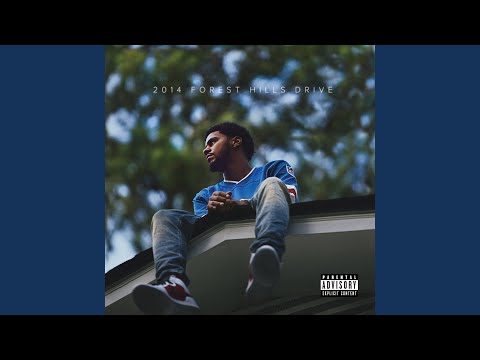


→ More from the 2020s File
View all 2020s hits →

Keep digging