The 2020s File Feature
How You Did That
How You Did That: Gunna and Kodak Black in the Streaming Era "How You Did That" represents a particular configuration of early 2020s hip-hop culture: two of …
01 The Story
How You Did That: Gunna and Kodak Black in the Streaming Era
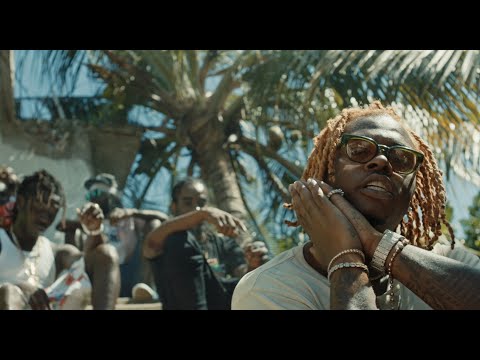
"How You Did That" represents a particular configuration of early 2020s hip-hop culture: two of Atlanta and South Florida rap's most commercially reliable figures combining for a track built for streaming playlists and social media virality. Gunna, born Sergio Giavanni Kitchens, had by 2022 established himself as one of the defining voices of the Atlanta trap scene, his melodic drawl and luxury-fixated lyricism having made him a consistent presence on the charts throughout the preceding half-decade. Kodak Black, born Bill Kahan Kapri, brought a contrasting energy, rawer and more Southern Florida in its inflections, to the collaboration.
The track appeared in 2022, a period when Gunna was navigating both extraordinary commercial success and significant legal complications that would ultimately result in a guilty plea in the YSL RICO case later that year. The album DS4Ever, on which "How You Did That" appeared, was released in January 2022 on Young Stoner Life Records and Atlantic Records. DS4Ever debuted at number one on the Billboard 200, Gunna's first chart-topping album, and it demonstrated the scale of his commercial reach at that moment. The album contained "Pushin P," one of the defining viral moments of early 2022, which gave the entire project enormous streaming and social media momentum.
The production on "How You Did That" was characteristic of the trap-influenced melodic rap that defined the mainstream hip-hop sound of the early 2020s. Dark atmospheric beats, melodic vocal hooks that blurred the line between rapping and singing, 808 bass patterns that hit hard on earbuds and car speakers alike, these were the sonic priorities that the collaborating producers understood. The track was engineered for the streaming environment where most hip-hop consumption was happening by 2022, designed to work effectively on individual listen and also to accumulate streams through repeated playlist placement.
Kodak Black's feature added a stylistic contrast that gave the track dimension beyond what a solo Gunna recording would have achieved. Kodak's Pompano Beach, Florida origins and his more confrontational lyrical approach created a tension with Gunna's smoother, more melodically oriented Atlanta style that many listeners found compelling. The contrast between the two voices and delivery styles was itself a form of musical content, a dialogue between different regional and temperamental approaches to the same basic framework.
The song charted on the Billboard Hot 100, contributing to the album's strong first-month streaming numbers. In the streaming era, the commercial success of album tracks like "How You Did That" was measured through a combination of metrics, including audio streams, video streams, and track equivalent album units, that reflected the very different consumption patterns of 2022 compared to earlier eras. By those measures, the song performed solidly as part of an album package that was one of the commercial landmarks of early 2022 hip-hop.
Gunna's melodic approach had been shaped significantly by his close association with Young Thug, his labelmate and mentor, whose pioneering manipulation of pitch, vowel, and flow had expanded the vocabulary of trap rap considerably. By 2022, Gunna had developed his own distinct version of that melodic sensibility, one recognizable enough to be imitated by dozens of younger artists but sufficiently individual to remain clearly his own. "How You Did That" deployed those melodic qualities in the service of the luxury lifestyle and romantic confidence themes that had become his signature subject matter.
The social media context around the release of DS4Ever amplified the commercial performance of all its constituent tracks, including "How You Did That." The album benefited from coordinated rollout strategies across TikTok, Instagram, and YouTube that kept its tracks in circulation through user-generated content and reactions. This form of audience participation in album rollout had become standard industry practice by 2022, and Atlantic and YSL Records executed it effectively with the DS4Ever release campaign.
Kodak Black's career in the period around this collaboration was itself a study in the complicated cultural mathematics of hip-hop in the early 2020s. He had received a presidential commutation of his sentence in January 2021 from President Donald Trump, a development that kept him in public conversation beyond his music and added a layer of cultural complexity to his public profile. His feature on "How You Did That" was one of several high-profile collaborations during this period that demonstrated his continued commercial relevance despite the legal and personal turbulence that marked his career.
The track exists as a document of a specific moment in trap's commercial evolution, when the melodic refinements introduced by the Atlanta school in the 2010s had become the mainstream standard for hip-hop production and performance. Within that landscape, Gunna and Kodak Black were among the practitioners who had helped normalize the approach, and "How You Did That" was one piece of the larger commercial mosaic that represented their shared contribution to the form.
02 Song Meaning
Status, Style, and the Question Behind the Title: The Meaning of "How You Did That"
"How You Did That" frames its central inquiry as a form of admiration, a speaker addressing someone whose command of a situation, a style, a presence, is so complete that it demands explanation. The interrogative structure of the title sets up a dynamic of fascination and aspiration that runs through trap music's long engagement with success as spectacle and performance. The question is not merely rhetorical but genuine, pointing toward an admiration that shades into the desire to understand and replicate a quality that appears almost inexplicable.
Gunna's vocal approach on the track emphasizes ease and control. His delivery communicates not effort but comfort, the sense of someone so thoroughly at home in their own abilities and circumstances that exertion becomes unnecessary. This is a studied posture, of course, one that requires considerable craft to achieve convincingly, but it is central to his artistic identity and to the trap aesthetic more broadly. The idea that success should appear effortless, that the mechanics of achievement should be invisible to the observer, connects "How You Did That" to a long tradition of cool in African American expressive culture.
Kodak Black's verse introduces a contrasting register, more intense and more explicitly grounded in the specifics of survival and street experience. His presence on the track creates a productive tension with Gunna's smoother approach, suggesting that the admiration the song expresses can come from very different emotional starting points. Kodak's version of the question carries a harder edge, a wonder at the distance between where one started and where one arrived that has less to do with romantic glamour and more to do with improbable survival.
The luxury imagery that runs through the track, references to cars, clothes, money, and the trappings of achieved wealth, serves a function beyond simple bragging. In the tradition of trap music, these material details operate as evidence of transformation, as specific, tangible demonstrations that the trajectory of a life has changed fundamentally from its starting point. The specificity of the material references grounds the abstract claim of success in concrete reality, making the achievement legible to listeners who understand those objects as markers of distance traveled.
The romantic dimension of the song is also present, with the female subject of the speaker's admiration serving as both literal and figurative object of fascination. The question of how she achieved her particular quality, her beauty, her style, her effect on those around her, echoes the broader question of how any form of excellence comes to be. This doubling of registers, romantic and professional, personal and public, is characteristic of trap music's tendency to treat all forms of success as expressions of the same fundamental quality of character.
Within the context of early 2022 hip-hop, the track reflects the genre's ongoing negotiation between melodic accessibility and lyrical specificity, between the demands of mass streaming audiences and the values of more tradition-minded hip-hop listeners. Gunna and Kodak Black both occupied positions in that negotiation that were slightly different from each other, and "How You Did That" benefited from the productive friction between their different approaches. The collaboration document that tension without resolving it, which was precisely the right artistic choice.
→ More from Gunna Featuring Kodak Black
View all Gunna Featuring Kodak Black hits →


→ More from the 2020s File
View all 2020s hits →


Keep digging