The 2020s File Feature
Like I Want You
Like I Want You: How Giveon Established His Voice With a Song About Quiet Devotion Giveon Dezmann Evans, performing under his first name Giveon, arrived as o…
01 The Story
Like I Want You: How Giveon Established His Voice With a Song About Quiet Devotion
Giveon Dezmann Evans, performing under his first name Giveon, arrived as one of the most distinctive new voices in R&B with a sound that seemed to belong to a different era entirely, deep, unhurried, and built for emotional weight rather than radio immediacy. "Like I Want You" served as a crucial early showcase for those qualities, introducing the Long Beach, California native to audiences who had first encountered him through his feature appearances on Drake's 2020 project Dark Lane Demo Tapes. "Like I Want You" was released in 2020 as part of Giveon's debut EP Take Time, released through Epic Records, a project that announced the arrival of an artist with an unusually fully-formed aesthetic sensibility for someone so new to major-label recording.
The production on the track is spare, built around piano, subtle percussion, and carefully deployed orchestral touches that allow Giveon's bass-baritone voice to occupy the center of the mix without competition. The arrangement was designed to feel intimate, almost confessional, while also carrying a grandeur appropriate to the emotional scale of what the song addresses. This balance, between the private and the ceremonial, between restraint and depth, became a hallmark of Giveon's approach across the Take Time project and beyond.
On the Billboard Hot 100, "Like I Want You" charted in 2020 and demonstrated that Giveon's appeal extended well beyond the niche of classic soul enthusiasts, connecting with a broader streaming audience that had been drawn into his work through his collaboration with Drake on "Chicago Freestyle." The success of that collaboration had created a wave of curiosity about who this baritone voice belonged to, and "Like I Want You" answered that question in the most compelling way possible: with a song that sounded like nothing else on radio at the time and justified the heightened interest entirely on its own terms.
Giveon has spoken in interviews about the influence of classic soul singers on his vocal approach, citing artists from the Motown era and beyond who understood how to use a large voice with precision rather than simply volume. The influence is apparent in "Like I Want You," where every note is placed with care and the emotional content is conveyed through subtle variation in tone and dynamics rather than through the kind of acrobatic runs that dominated contemporary R&B. This approach recalled singers like Sam Cooke and Marvin Gaye in its economy, though Giveon's specific timbre and delivery were entirely his own.
The Take Time EP, of which "Like I Want You" was a centerpiece, was nominated for a Grammy Award for Best R&B Album at the 63rd Grammy Awards in 2021, an extraordinary recognition for a debut project. This nomination placed Giveon in the company of established veterans of the genre and signaled that the Recording Academy's voters heard in his work something that transcended the category of promising newcomer. The nomination drew additional attention to "Like I Want You" and the other tracks on the EP, expanding the audience that had already been building through streaming platforms.
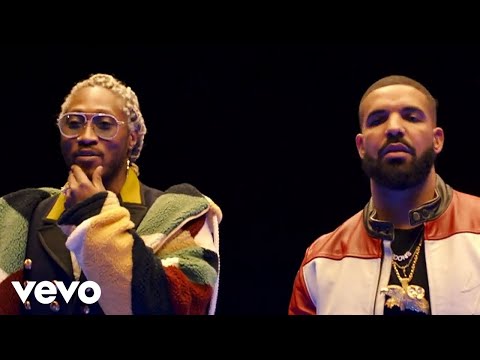
The music video for "Like I Want You" reinforced the song's emotional themes through visual restraint and intimacy. Rather than elaborate sets or high-concept imagery, the video focused on close performance footage and quiet, warm-toned scenes of connection between people. This visual approach suited the song's content and communicated to viewers that Giveon's artistic identity was one of sincerity and directness rather than spectacle. In an era when many music videos competed for attention through scale and novelty, the video's quietness was itself a statement.
Giveon's vocal range, particularly the depth of his baritone, was unusual enough in contemporary pop and R&B to be commented upon extensively by critics and audiences alike. Comparisons to Barry White were inevitable given the register, but they undersold the sophistication of Giveon's phrasing and his ability to convey vulnerability through a voice that might, in less skilled hands, communicate only authority. Part of what made "Like I Want You" such an effective introduction was that it deployed his voice in the service of tender devotion rather than dominant confidence, creating a productive tension between the weight of the instrument and the emotional openness of the performance.
The song found particular traction on social media platforms, where clips of Giveon's voice prompted widespread sharing among users who described encountering it as an almost physical experience. This organic viral quality was characteristic of the way streaming-era artists could build audiences through genuine emotional resonance rather than traditional radio promotion, and Giveon became one of the clearer success stories of that model in the early 2020s. "Like I Want You" was among the tracks most frequently shared, used in short-form video content, and cited by new listeners as the song that made them seek out his full catalog.
Following the success of Take Time and the visibility afforded by his Drake collaboration, Giveon released his second EP When It's All Said and Done in 2020, and his full-length debut album Give or Take in 2022, which debuted at number two on the Billboard 200. This rapid ascent confirmed that the promise of "Like I Want You" had not been a flash of early attention but the beginning of a sustained career built on genuine artistic distinctiveness. The song remains a reference point in discussions of his work, understood as the track that first made clear what kind of artist he intended to be and why that intention was worth taking seriously.
02 Song Meaning
The Meaning of "Like I Want You": Devotion as the Highest Form of Expression
"Like I Want You" belongs to a tradition of soul music that treats romantic devotion not as a weakness but as the most fully human thing a person can experience. Giveon approaches the subject with a seriousness that might seem unfashionable in a contemporary pop landscape where irony and emotional armor are often stylistic defaults, but that seriousness is precisely what gives the song its power and its staying quality. The song is, at its core, an argument for the radical act of loving someone completely and communicating that love without equivocation.
The central theme of "Like I Want You" is the gap between what a person feels and what they are able or willing to communicate to the person they love, and the plea that this gap be closed. The emotional logic of the song is not complicated, but it is deeply honest: the narrator knows what he feels, is aware that his partner may not fully understand the depth and specificity of that feeling, and is asking to be allowed to demonstrate it. This is a humble position for such a large voice to occupy, and the contrast between the authority of Giveon's bass-baritone and the vulnerability of the emotional content is one of the things that makes the performance so compelling.
The production reinforces this theme through its own form of restraint. A song about wanting to give everything to someone is built on an arrangement that holds back, that leaves space around each note and each phrase. This is a compositional metaphor for the situation being described: the feeling is enormous, but it is being expressed with care rather than abandon, shaped and directed rather than simply unleashed. The intimacy of the production invites the listener into a private emotional space, which is appropriate for a song about the most private of feelings.
Giveon's vocal approach throughout the song demonstrates a sophisticated understanding of the relationship between technique and emotion in soul music. Where a less skilled singer might rely on volume or ornamentation to convey the intensity of the feeling, Giveon uses stillness and precision. The notes are held just long enough, the dynamics shift subtly rather than dramatically, and the overall effect is of someone who is being very careful with something precious. This carefulness is itself meaningful: the song is about wanting to love someone as well as they deserve to be loved, and the performance enacts that desire through its own technical control.
The song connects to a longer history of Black American music that uses romantic devotion as a framework for exploring questions of dignity, worth, and the right to emotional expression. In a musical tradition that has historically had to navigate the complex politics of Black masculinity and vulnerability, a song in which a Black man with an extraordinarily powerful voice chooses tenderness and openness as his mode of expression carries a specific cultural weight. Giveon's willingness to occupy this emotional space without irony or distance is one of the things that distinguished his arrival in the marketplace and that has continued to define his artistic identity.
For listeners who discovered "Like I Want You" through the organic sharing culture of streaming platforms and social media, the song often functions as an entry point into a broader consideration of what soul music can do and what it has historically done in American culture. The emotional directness that can feel overwhelming on first exposure, the sheer weight of feeling that Giveon's voice carries, resolves on subsequent listens into something clarifying rather than overwhelming. The song earns its emotional ambition through the precision and authenticity of its execution, making it a meaningful rather than merely moving listening experience.
→ More from the 2020s File
View all 2020s hits →



Keep digging