The 2020s File Feature
War
Drake's "War": A Surprise Drop That Landed on the Billboard Hot 100 In May 2020, Aubrey Drake Graham, the Canadian rapper and singer who records professional…
01 The Story
Drake's "War": A Surprise Drop That Landed on the Billboard Hot 100
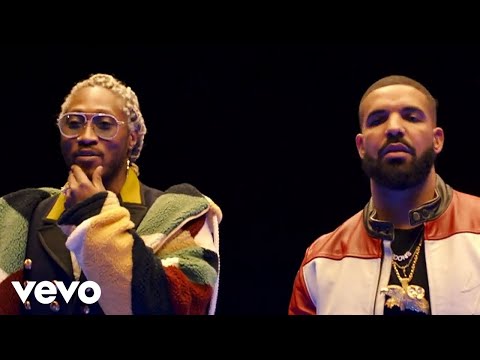
In May 2020, Aubrey Drake Graham, the Canadian rapper and singer who records professionally as Drake, released "War" as a surprise digital single. The track arrived amid the enormous upheaval caused by the COVID-19 pandemic, a period during which the global music industry had retreated largely into digital spaces for promotion and discovery. Despite arriving with minimal conventional promotion, "War" debuted on the Billboard Hot 100 at number 52 on the chart dated May 16, 2020, demonstrating the raw audience reach that Drake had built across his decade-long career at the top of popular music.
Drake's biography is one of the most extensively documented in contemporary music. Born on October 24, 1986, in Toronto, Ontario, he first became known as a teenager through his role as Jimmy Brooks on the Canadian television drama Degrassi: The Next Generation, which aired from 2001 to 2007. His transition from actor to rapper began in earnest with a series of mixtapes, most significantly Room for Improvement (2006), Comeback Season (2007), and So Far Gone (2009). It was So Far Gone, and particularly the song "Best I Ever Had," that brought him to the attention of Lil Wayne and secured him a deal with Young Money Entertainment, a subsidiary of Cash Money Records.
His major-label debut album, Thank Me Later, arrived in June 2010 and debuted at number one on the Billboard 200, establishing the commercial pattern that would define his career. Subsequent albums including Take Care (2011), Nothing Was the Same (2013), If You're Reading This It's Too Late (2015), Views (2016), More Life (2017), Scorpion (2018), and Certified Lover Boy (2021) all debuted at or near the top of the charts. By the time "War" appeared in 2020, Drake had accumulated more entries on the Billboard Hot 100 than any other artist in the chart's history, surpassing 200 individual Hot 100 appearances, a record that had previously been held by Lil Wayne.
"War" was released through Young Money Entertainment, Cash Money Records, and Republic Records. The track is notable for its production, which builds on the ambient, atmospheric textures that had characterized much of Drake's work during the late 2010s. The production employs sparse, foreboding elements that stand in contrast to the more melodic or dancehall-influenced material Drake had released on records like Views and More Life. The track features interpolations and samples that reinforce the combative, self-assertive themes that have periodically surfaced in Drake's output, particularly when he has faced perceived challenges from rival artists in the rap space.
The release context matters. In early 2020, Drake was navigating an industry landscape that had been upended by the pandemic. Live touring revenue had collapsed globally, radio promotion was disrupted, and streaming had become the near-exclusive vehicle through which new music reached audiences. Drake, whose label operations and social media presence were already oriented around direct digital-to-fan releases, was well positioned to succeed in this environment. The surprise drop model, which he had helped popularize with releases like If You're Reading This It's Too Late in 2015, served him well in this period.
The song's chart performance reflected both the strength of Drake's audience and the limitations of a one-week chart run. A single week on the Hot 100 at position 52 indicates a track that activated Drake's core fanbase immediately upon release but lacked the broader crossover appeal or sustained radio promotion that would have extended its chart presence. This pattern, in which a Drake release debut strongly but retreats quickly without a mainstream promotional campaign behind it, was consistent with several of his more introspective or combative tracks that were not positioned as lead radio singles.
The Hot 100 in May 2020 was itself a compressed and unusual chart. The pandemic had altered listener behavior significantly, with streaming consumption rising sharply as people spent more time at home. At the same time, the disruption of traditional radio programming and the collapse of physical retail sales created an environment where purely streaming-driven tracks could place higher than they might have in a normalized market. Drake's 73 million YouTube views for the video associated with "War" reflects the sustained interest in the track well beyond its brief Hot 100 window.
Within the broader arc of Drake's 2020 output, "War" functioned as a standalone statement piece rather than a preview of an album cycle. Drake released a series of loosies and collaborative tracks during 2020, maintaining his presence in the cultural conversation without committing to a formal album rollout. The year ultimately did not produce a Drake album, though the Dark Lane Demo Tapes project, which also arrived in May 2020, served as a compilation of loosely organized tracks that included "War" among other material that had circulated online or been released as standalone singles.
Drake's influence on the wider shape of hip-hop and pop music during the 2010s and into the 2020s is a subject of ongoing critical discussion. He helped establish the template for the emotionally introspective rapper who is equally comfortable singing on the hook as rapping verses, a model that influenced a generation of artists including Post Malone, Lil Baby, Roddy Ricch, and many others. His Toronto-rooted sound, often called OVO Sound after the label and collective he co-founded with producer Noah "40" Shebib and Oliver El-Khatib, helped bring Canadian hip-hop to global prominence.
Producer 40 (Noah Shebib) has been Drake's primary studio collaborator throughout his career, and his fingerprints are audible on "War" in the restrained, bass-forward production that leaves space for Drake's vocal delivery to occupy the center of the mix. The partnership between Drake and 40 is one of the most significant and sustained artist-producer relationships in contemporary hip-hop, comparable in its consistency and mutual influence to collaborations like Jay-Z and Kanye West or Kendrick Lamar and TDE's production team.
The song also fits within a long tradition in Drake's catalog of tracks that address his standing in the rap hierarchy and his readiness to respond to rivals. This combative undercurrent has run through his work from early career moments through high-profile disputes with artists including Meek Mill and Pusha T. The latter conflict, which reached its peak with the release of Pusha T's "The Story of Adidon" in May 2018, was widely regarded as one of the most significant rap beefs of the decade and shaped how Drake's subsequent combative tracks, including "War," were received critically and commercially.
"War" may not rank among Drake's most commercially celebrated singles, but it represents a specific mode of his artistic output: the surprise release that functions as a mood piece and a signal rather than a radio-engineered hit. Within a catalog that by 2020 spanned more than a decade of uninterrupted commercial dominance, the track occupies a telling position, illustrating the degree to which Drake's audience had grown large enough to push even his secondary material onto the national chart without the support of a formal promotional apparatus.
Production Credits and Label Context
The track was released under the OVO Sound and Young Money Entertainment umbrella, with Republic Records handling major-label distribution. The OVO Sound imprint, launched formally around 2012, had by 2020 become a significant force in shaping the sound of contemporary hip-hop, with affiliated artists including PARTYNEXTDOOR, Majid Jordan, dvsn, and Roy Woods extending the atmospheric, R&B-inflected sound that Drake and 40 had pioneered. "War" fit comfortably within that sonic family while also carrying the more aggressive lyrical posture that Drake reserved for tracks with an adversarial edge.
The period of 2019-2020 was also marked by Drake consolidating his business operations and expanding the OVO brand beyond music into sports team ownership, clothing, and entertainment ventures. This commercial diversification reflected his transition from recording artist to cultural enterprise, a status that only a handful of musicians in any era have achieved. The release of "War" during this period was therefore both a musical event and a continuation of Drake's ongoing project of maintaining cultural relevance across multiple spheres simultaneously.
02 Song Meaning
Themes of Conflict, Loyalty, and Artistic Territory in "War"
Drake's "War" functions as a declaration of competitive standing within the rap ecosystem, delivered with the measured confidence of an artist who has spent more than a decade at or near the summit of popular music. The track's thematic architecture is built around the assertion of dominance, the cataloging of perceived betrayals or provocations, and the signaling that Drake remains alert to challenges from rivals. Understanding the track's meaning requires situating it within both Drake's personal artistic history and the broader cultural codes that govern competitive expression in hip-hop.
At the thematic center of "War" is the concept of preparedness. The title itself frames the track as a response to an adversarial context, invoking the language of conflict not as hyperbole but as a precise description of how Drake understands his position in the music industry. Hip-hop has long used military and conflict metaphors to describe the competitive dynamics between artists, and Drake's deployment of the "war" framing places him squarely within that tradition. The track does not represent aggression for its own sake but rather a carefully calibrated reminder that Drake views his standing as something worth defending.
The emotional register of the track is notably controlled. Unlike the more nakedly emotional material that Drake has released on tracks dealing with romantic relationships or familial bonds, "War" maintains a studied coolness. This restraint is itself thematically significant: it positions Drake as someone who has moved beyond reactive emotion toward a more deliberate, strategic mode of engagement with his critics and rivals. The track's production reinforces this quality through its atmospheric, unhurried arrangement, which provides a sonic environment in which Drake's voice carries an impression of total composure.
The theme of loyalty and betrayal runs through the track in ways that connect it to a long strand of Drake's work dealing with the complications of trust in environments shaped by money, fame, and competing interests. Drake has returned repeatedly throughout his career to the difficulty of maintaining genuine relationships when one is surrounded by people whose motivations may be compromised by ambition or proximity to power. "War" engages with this concern by implying that the conflict the title announces is not abstract but rooted in specific experiences of disloyalty or encroachment.
The geographic and cultural identity dimensions of Drake's work are also relevant here. His Toronto identity has been a consistent reference point across his career, and tracks like "War" carry an implicit argument about the legitimacy of a Canadian artist's place at the center of a genre whose roots are in African American communities in New York, Los Angeles, Houston, Atlanta, and other American cities. Drake's commercial dominance has never fully neutralized the skepticism of critics who question the authenticity of his positioning, and combative tracks like "War" can be read in part as responses to that ongoing debate about cultural belonging and artistic credibility.
Self-mythologizing is a core feature of the track's rhetorical strategy. Drake has, across his career, been a deliberate architect of his own legend, using tracks to construct and reinforce a narrative in which his trajectory from Toronto actor to global rap superstar represents an unprecedented achievement. "War" continues this project by presenting Drake as a figure whose longevity and commercial success constitute evidence of something more than luck or timing. The implication is that sustained dominance at the level Drake has achieved requires exactly the quality the track advertises: a willingness to engage conflict rather than retreat from it.
The 2020 release context adds another layer of meaning. The COVID-19 pandemic had created a climate of profound collective anxiety, and music released during that period inevitably carried the weight of that context even when its explicit subject matter was unrelated to public health. "War," with its themes of resilience, threat, and the maintenance of one's position against external pressure, resonated with a cultural moment in which many people were grappling with uncertainty and the disruption of established order. The track's combative self-assurance may have offered a form of vicarious confidence to listeners navigating their own challenges.
The production's emotional function cannot be separated from the track's thematic content. The atmospheric, bass-heavy arrangement created by producer 40 situates the track in a sonic register associated with introspection and gravity. The choice of this production style over more energetic or maximalist alternatives signals that "War" is meant to be taken seriously as a statement rather than consumed as entertainment. The relationship between production texture and lyrical content in Drake's work has consistently been one of his most sophisticated artistic tools, and "War" is a clear example of this skill in action.
Within the tradition of rap conflict tracks, "War" occupies a specific position: it is more suggestive than explicit, more atmospheric than confrontational in the direct naming-of-names mode that characterized earlier rap beef records. This indirection is characteristic of Drake's approach to adversarial tracks, which often function through implication and context rather than through the overt callouts that define the more theatrical end of rap conflict culture. The effect is to preserve Drake's authority without fully exposing him to the risks of escalation that more explicit confrontations would invite.
The cultural impact of "War" within Drake's broader legacy is modest but genuine. The track represents a specific facet of his artistic identity, one that complements the romantic, introspective, and commercially oriented material that constitutes the majority of his catalog. Taken together, these different modes of expression construct a portrait of an artist who refuses to be reduced to a single emotional register or a single type of song. "War" is the Drake who is alert, competitive, and unwilling to cede ground, a dimension of his persona that his audience recognizes and that contributes to the complexity of his public artistic image.
→ More from the 2020s File
View all 2020s hits →



Keep digging