The 2020s File Feature
Toosie Slide
Toosie Slide: Drake's Quarantine Number One and the Dance That Defined Spring 2020 "Toosie Slide" is a hip-hop and dance single by Canadian rapper, singer, a…
01 The Story
Toosie Slide: Drake's Quarantine Number One and the Dance That Defined Spring 2020
"Toosie Slide" is a hip-hop and dance single by Canadian rapper, singer, and songwriter Drake, released on April 3, 2020 through Young Money Entertainment, Cash Money Records, and Republic Records. The song arrived during the early weeks of the COVID-19 pandemic lockdowns in North America, a timing that would prove to be commercially and culturally significant. Produced by OZ, the track features an Atlanta-influenced trap beat layered with a bouncy, almost novelty-adjacent hook that instructs listeners through a simple dance routine with directional cues. The result was a song engineered for viral social media dissemination, and it performed exactly as designed.
"Toosie Slide" made history by debuting at number one on the Billboard Hot 100 in its first week of chart eligibility, marking the first number-one debut of Drake's career on that chart and the first song since the chart's methodology revision to achieve a number-one debut purely through streaming and digital activity without any prior commercial release or promotional single rollout. The song logged an extraordinary first-week streaming figure that powered its instant arrival at the top of the chart, demonstrating the degree to which a well-timed, highly shareable piece of music could achieve immediate commercial dominance in the streaming era.
The cultural context of the song's release cannot be overstated. With millions of people around the world confined to their homes during the early weeks of the COVID-19 pandemic, social media platforms, particularly TikTok, experienced unprecedented spikes in engagement. "Toosie Slide" was purpose-built for this environment. The song's chorus provides literal left-right directional instructions that translate directly into a repeatable, easy-to-learn dance routine, making it ideal content for the short-form video format that TikTok had pioneered. Within days of release, the hashtag ToosieSlidechallenge was generating millions of video uploads, driving streams and downloads at a scale that translated immediately into chart dominance.
Drake, born Aubrey Drake Graham on October 24, 1986, in Toronto, Ontario, Canada, had by 2020 established himself as one of the most commercially dominant artists in music history. His record-setting relationship with the Billboard Hot 100 is well-documented: he holds multiple records for Hot 100 entries, top-40 hits, and chart longevity. A "Toosie Slide" number-one debut added a new milestone to an already extraordinary career, and it came during a period when his reputation as a hitmaker was unquestioned. The song was named for a collaborator known as "Toosie," a dancer and friend of Drake's from the Toronto area whose choreography style influenced the moves described in the track.
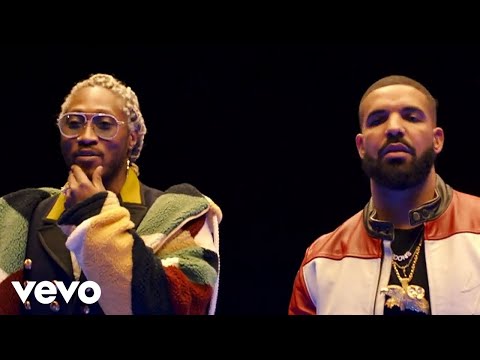
The music video for "Toosie Slide," released simultaneously with the song, was filmed inside Drake's Toronto mansion, a sprawling estate known as "The Embassy." The decision to film in this location was both practical, given pandemic-related restrictions on production, and aesthetically intentional. The video shows Drake dancing through the opulent rooms and grounds of the property with casual confidence, projecting a sense of ease and abundance that contrasted sharply with the anxious domestic confinement most listeners were experiencing. This contrast generated its own conversation, with some finding the video aspirational and others reading it as tone-deaf. Either way, it was watched extensively.
From a production standpoint, OZ's beat for "Toosie Slide" represents a relatively spare approach by the standards of Drake's more elaborate sonic excursions. The track relies on a simple, catchy melodic loop and a thumping kick pattern, keeping the arrangement clean enough that the hook's directional instructions remain legible on first listen. This simplicity was functional rather than lazy: a song designed to be learned and replicated in thirty-second TikTok videos needed to be immediately graspable, and OZ delivered a production that satisfied that requirement while still feeling at home in Drake's catalog.
The song was not universally praised by music critics, many of whom noted that its creation was clearly optimized for algorithmic virality rather than artistic depth. This criticism was largely accurate and also somewhat beside the point: Drake and his team identified an opportunity to create something perfectly suited to the cultural moment, and they executed it with precision. The critical debate around "Toosie Slide" thus became part of a broader conversation about whether chart-topping, trend-riding pop music constituted a form of artistic integrity or a form of commercialism that deserved skepticism.
Regardless of where one lands on that debate, "Toosie Slide" represents a landmark in the history of music marketing and the relationship between social media platforms and commercial music. It demonstrated conclusively that a song could be engineered to exploit the specific mechanics of short-form video platforms, and that doing so could result in immediate, record-setting commercial success. The song's number-one debut influenced how record labels and artists thought about TikTok strategy for years afterward, making it a historically significant document of the COVID-era music industry.
The track appeared as part of Drake's broader output during an enormously productive pandemic period. It preceded the release of his sixth studio album "Certified Lover Boy" by more than a year, functioning as a standalone commercial moment rather than an album promotion vehicle. Its success reinforced Drake's ability to generate commercial events independently of album cycles, a capacity that few artists in any era have matched.
02 Song Meaning
The Meaning Behind "Toosie Slide": Dance Instructions, Platform Logic, and Pandemic Pleasure
"Toosie Slide" by Drake is a song whose meaning operates on multiple levels simultaneously. On its surface it is a simple dance instruction track, a genre with a long and legitimate history in popular music stretching back through the Cha Cha Slide, the Macarena, and various line dance traditions. At a deeper level it is a sophisticated piece of platform-native content creation, a record built from the ground up to exploit the specific mechanics of short-form video sharing. And in its historical context, it is a document of a particular cultural moment, spring 2020, when the COVID-19 pandemic had confined millions of people to their homes and social media had become the primary arena of communal experience.
The directional instructions embedded in "Toosie Slide" are not incidental to the song's meaning; they are its central mechanism. By telling listeners to go left, go right, and step into specific positions, Drake created a template for user-generated content that required virtually no creative interpretation from the person filming their participation. Anyone with a phone could do the dance, film it, and upload it. This accessibility was the point. The song's meaning is partly bound up in the act of collective participation it enables, the sense that however many people are doing the dance, they are all doing the same thing at the same time, creating a form of distributed community.
This communal dimension was particularly resonant during the pandemic period. With live music cancelled, social gatherings forbidden, and most forms of public life suspended, "Toosie Slide" offered something that people genuinely needed: a shared activity, a form of low-stakes collective expression that could be done alone in a living room but published into a vast social network where others were doing the same thing. The meaning of the song is thus inseparable from the historical moment in which it arrived. It was a mechanism for connection during a period of enforced disconnection, and that function gave it a significance that its musical content alone might not have generated.
The song's title is a tribute to a Toronto-based dancer known as Toosie, whose choreographic sensibility directly inspired the moves described in the track. This personal attribution is meaningful because it roots what might otherwise seem like a purely algorithmic commercial exercise in a real human relationship and a specific creative tradition. Drake has consistently emphasized his Toronto roots and the network of collaborators and community members who have shaped his artistic identity, and naming the song after a friend and creative influence fits within that pattern of acknowledgment.
There is also something worth examining in the song's relationship to Drake's broader artistic persona. By 2020, Drake had established himself as someone who moved between emotional vulnerability in ballads and confident flexing in rap tracks with considerable fluency. "Toosie Slide" represents a third mode: playful, unserious, and oriented toward fun rather than feeling. The willingness of an artist of Drake's stature to make something this deliberately lightweight and novelty-adjacent speaks to a security and confidence that itself carries meaning. He did not need to protect his credibility by making something weighty; his credibility was sufficient to absorb a dance track and emerge intact.
Critics who read the song as pure commercialism without artistic merit are not wrong to identify the commercial calculation involved in its creation, but they may be missing the value of pleasure as a legitimate artistic aim. Pop music has always served a recreational function, providing people with something to dance to, something to share, something to do with their bodies in response to sound. "Toosie Slide" pursues that function with unusual focus and efficiency, and in a moment when recreational pleasure was in particularly short supply, the efficiency of that pursuit was itself a form of generosity.
The song also contributes to an ongoing conversation about what it means to make music in the age of algorithmic platforms. By designing a record around the specific mechanics of TikTok, Drake and his collaborators acknowledged that the platform is now as important a creative constraint as the three-minute radio format or the forty-five minute vinyl side once were. "Toosie Slide" is in this sense a historically self-aware piece of work, one that accepts the conditions of its moment and works within them deliberately and skillfully.
→ More from the 2020s File
View all 2020s hits →


Keep digging