The 2020s File Feature
Desires
Desires — Drake Featuring Future (2020) "Desires" is a track from Drake's collaborative project with Future, the surprise joint mixtape "What a Time to Be Al…
01 The Story
Desires — Drake Featuring Future (2020)
"Desires" is a track from Drake's collaborative project with Future, the surprise joint mixtape "What a Time to Be Alive 2," which arrived as part of the broader rollout of Drake's major 2020 commercial initiative. The song showcases the sustained chemistry between the two artists, a partnership that had first produced commercial and critical heat with their original joint project "What a Time to Be Alive" in 2015, and continued to be one of the most commercially reliable collaborations in hip-hop. "Desires" represents the pair at a moment of settled confidence in their shared sonic identity.
The track arrived during a period when Drake was operating at the peak of his commercial dominance. His ability to place records on the Billboard Hot 100 had become so consistent that it reshaped how the music industry thought about chart success. Drake holds the record for the most charted songs in the Hot 100's history, a statistic that reflects both his prolific output and the loyalty of a streaming audience that engaged with even his deep cuts and collaborations at rates that dwarfed most artists' lead singles. "Desires" benefited directly from this dynamic.
Future, who had himself become one of the most influential figures in hip-hop through the period stretching from his "Monster" mixtape through a string of commercially successful albums, brought to "Desires" the same melodic melancholy that had made his solo work so affecting. The production on the track, built on the atmospheric, bass-heavy sound that had come to define the Drake-Future aesthetic, created an immersive nocturnal environment that suited both performers' strengths. The beats were handled by producers operating in the ATL and Toronto traditions that both artists had helped popularize.
The Billboard Hot 100 performance of "Desires" followed the pattern that Drake collaborations typically demonstrated in the streaming era: entry based primarily on streaming volume in the first week, with positions sustained by the long tail of listener engagement. Songs from Drake's projects routinely occupied multiple positions simultaneously on the Hot 100, a phenomenon that the chart's methodology, updated in the streaming era to account for audio streams and video streams alongside physical and digital download sales, made possible for artists with the right kind of engaged audience.
The critical reception of the Drake-Future collaboration series had always been warm among rap listeners and music critics who appreciated the way the two artists complemented each other. Drake's more melodic, verbally dense approach contrasted productively with Future's more abstract, emotionally direct one. Where Drake's verses tended toward narrative and observation, Future's contributions were more impressionistic, painting emotional states rather than describing situations. This contrast gave the collaboration texture that neither artist always achieved working alone.
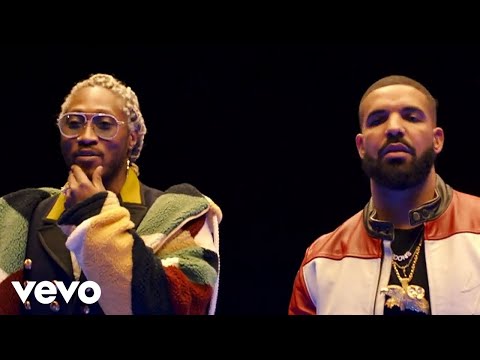
The music video and promotional material for "Desires" reflected the aspirational luxury aesthetic that had become central to both artists' visual brand. Images of opulence, travel, and romantic abundance were standard components of their visual vocabulary, and "Desires" deployed these elements with the fluency of artists who had been constructing this imagery for years. The visual world of the track was consistent with the sonic one, creating a coherent sensory environment that reinforced the song's thematic preoccupations.
Radio play for the track followed its streaming success in the pattern that had become standard for major Drake releases. Urban radio and crossover pop radio both embraced the song at different points in its commercial life, extending its reach beyond the streaming-heavy audience that had propelled its initial chart entry. The song's production, polished enough for radio formats while retaining the trap-inflected rawness that gave it credibility in hip-hop contexts, made this dual-format success achievable in a way that more genre-pure tracks could not manage.
In the context of the careers of both Drake and Future, "Desires" represents a comfortable confirmation of an established excellence rather than a breakthrough or experiment. Both artists had long since established the parameters of their collaboration, and the track operated securely within those parameters, delivering the emotional and sonic satisfactions that listeners had come to associate with their combined work. That reliability, in the context of popular music, is its own form of achievement.
02 Song Meaning
Meaning and Themes in "Desires" by Drake Featuring Future
"Desires" operates in the emotional register that both Drake and Future have made their most distinctive territory: the intersection of material abundance and personal vulnerability, where luxury and longing coexist without resolving into simple comfort or simple complaint. The song takes as its subject the persistence of want in a life that has apparently satisfied every material need, a tension that both artists have explored throughout their careers and that "Desires" revisits with characteristic efficiency.
The track's emotional core is the recognition that desire does not diminish with fulfillment but transforms, redirecting itself toward new objects and experiences even as previous ambitions are realized. For Drake and Future, two artists whose early work was saturated with aspiration toward wealth, recognition, and romantic success, this is a philosophical reckoning with what actually happens after those aspirations are met. The answer the song proposes is that desire itself is the permanent condition, not any particular desired object.
There is a melancholy underpinning this recognition that both artists communicate through tone as much as through explicit statement. The production's atmosphere, spacious and nocturnal, creates an emotional environment in which the song's themes can breathe without becoming overwrought. Future's contribution to the track is particularly effective at conveying this melancholy through compression and indirection, suggesting emotional states without naming them directly, a technique he had developed across years of mixtape and album work.
The romantic content of the track is inseparable from the broader meditation on wanting. Relationships in this framework are both genuine sources of feeling and sites where desire plays out its endless theater, where partners become objects of projection as much as actual people. Both Drake and Future had been transparent about their complicated relationships with romantic commitment across their bodies of work, and "Desires" continues that transparency without dramatizing it, presenting these complications as facts of their emotional lives rather than crises requiring resolution.
The luxury context in which these desires are explored is not incidental but essential to the track's meaning. The contrast between material satiation and emotional restlessness is the song's central argument, and it requires the luxury signifiers to function: without the evidence of wealth satisfied, the persistence of desire would simply be ordinary dissatisfaction. In this frame, success becomes not the solution to unhappiness but the condition under which a deeper and less tractable unhappiness becomes visible. It is a specifically modern and specifically rap-generation meditation on the limits of aspiration as a life philosophy.
Within the larger context of the Drake-Future collaborative body of work, "Desires" fits seamlessly into a consistent emotional and thematic world that the two artists have built together, a world defined by its ambivalence about the very things it celebrates. This ambivalence, performed with enough style and sonic pleasure that it never becomes dreary, is what gives the collaboration its lasting appeal and its cultural resonance beyond the hip-hop audience.
→ More from the 2020s File
View all 2020s hits →


Keep digging