The 2020s File Feature
Knife Talk
Knife Talk: Drake's Certified Lover Boy Album Cut That Became a Chart Force When Drake released his sixth studio album Certified Lover Boy on September 3, 20…
01 The Story
Knife Talk: Drake's Certified Lover Boy Album Cut That Became a Chart Force
When Drake released his sixth studio album Certified Lover Boy on September 3, 2021, it arrived as one of the most anticipated albums of the year and delivered commercial performance that confirmed his status as one of the most dominant forces in the history of the Billboard charts. Among the album's numerous tracks, "Knife Talk" stood out as one of the most commercially durable, producing a chart run that extended well beyond the album's initial release week and demonstrated the particular kind of sustained streaming engagement that characterizes the most successful tracks from Drake's catalog.
The track features 21 Savage and Project Pat, a pairing that connects contemporary Atlanta trap to the Memphis rap tradition in a single collaboration. 21 Savage was already established as one of Drake's most frequent collaborators, having appeared on the joint album Savage Mode II to massive commercial success in 2020. Project Pat, born Patrick Houston on February 8, 1970, in Memphis, Tennessee, is the older brother of Juicy J of Three 6 Mafia and a foundational figure in the Memphis rap tradition whose influence on contemporary trap music's lyrical and stylistic vocabulary was significant even if his name was less familiar to younger audiences than to those who knew the genre's history.
Aubrey Drake Graham was born on October 24, 1986, in Toronto, Ontario, Canada, and began his entertainment career as an actor on the Canadian teen drama Degrassi: The Next Generation before pivoting to music in the late 2000s. His ascent in hip-hop was both rapid and, given his acting background and Canadian origins, somewhat unexpected. By the time Certified Lover Boy was released, he had accumulated a chart record that was almost without precedent in the history of the Hot 100, including the most number-one hits among rap artists and entries in the record books for various measures of chart achievement.
On the Billboard Hot 100, "Knife Talk" debuted at number 5 during the chart week of September 18, 2021, following the album's initial streaming rush. The track climbed to its peak position of number 4 during the chart week of September 25, 2021, representing one of the stronger individual track performances from the album. It spent 29 weeks on the Billboard Hot 100, a run that demonstrated the track's appeal beyond the initial album release period and its capacity to maintain listener engagement through sustained streaming over an extended period.
The Certified Lover Boy album as a whole was a commercial juggernaut. The album debuted with the equivalent of 613,000 album units in its first week, the largest debut of 2021 at the time of its release. All 21 tracks on the standard version of the album entered the Billboard Hot 100 simultaneously upon the album's release, a measure of Drake's ability to convert album listeners into individual track streamers at a scale that few artists in any genre could match. "Knife Talk" was among the tracks that sustained their chart presence longest after that initial rush subsided.
The production on "No Stylist" and "Knife Talk" came from producer Pierre Bourne, known for his work with Playboi Carti and his distinctive approach to trap production that blended aggressive rhythmic patterns with atmospheric sonic elements. The beat on "Knife Talk" is characteristic of his style: a combination of hard-hitting drum programming and textural elements that create a layered, somewhat psychedelic sonic environment over which the three featured artists deliver verses in their respective styles.
21 Savage's verse reflects his characteristic combination of violent imagery, emotionless delivery, and precise rhythmic placement. Shéyaa Bin Abraham-Joseph, born on October 22, 1992, and raised in Atlanta, has built a catalog defined by a particular aesthetic of restrained menace, delivering extreme content in a voice that conveys neither excitement nor distress but a kind of flat, matter-of-fact quality that many critics have identified as one of the most distinctive vocal presences in contemporary rap. His chemistry with Drake across multiple collaborative projects had established a proven commercial formula that "Knife Talk" replicated effectively.
Project Pat's verse was a significant departure from the track's contemporary Atlanta context. His inclusion on the track functioned as a piece of hip-hop historical acknowledgment, connecting the sound and themes of "Knife Talk" to the Memphis tradition from which so much of its sonic DNA ultimately derives. Drake's decision to bring him in signaled both his knowledge of the genre's history and his willingness to use his commercial platform to elevate artists from earlier eras who deserved broader recognition.
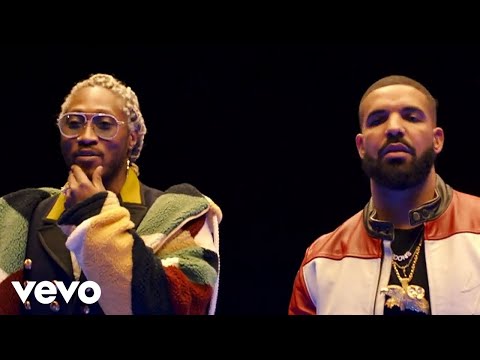
The track's music video maintained the visual aesthetic of the album campaign and contributed to its streaming performance by giving viewers a visual experience to associate with the audio. The video's aggressive visual language matched the track's sonic and lyrical tone, and its YouTube performance added to the total streaming picture that drove the track's sustained chart presence.
Album Context and Streaming Infrastructure
The commercial infrastructure surrounding Certified Lover Boy's release included OVO Sound's promotional apparatus, Republic Records' major label resources, and the algorithmic advantages that Drake's catalog commanded across all major streaming platforms. His artist profile on Spotify had consistently positioned him as one of the most-streamed artists in the platform's history, and new releases from an artist at that level of streaming platform status benefit from playlist placement, notification systems, and recommendation algorithms that give them an immediate reach that artists without comparable catalog histories cannot access. "Knife Talk" benefited from all of these structural advantages while also delivering the quality of content required to convert initial exposure into sustained engagement over a 29-week chart run.
02 Song Meaning
Aggression, Legacy, and the Geography of Violence in "Knife Talk"
"Knife Talk" is built around a set of thematic preoccupations that run through the collective catalog of its three contributors: the celebration of dominance, the projection of threat, and the assertion of loyalty within tight social circles defined by shared origin and mutual obligation. The song does not develop these themes in a narrative or discursive way but rather accumulates images and declarations that build a composite portrait of the worldview each artist has made commercially central to their work.
The title deploys a piece of street slang that treats speech itself as a form of threat, the implication being that the kind of conversation the narrators engage in when matters of violence are discussed has a quality of directness and consequence that ordinary discourse lacks. Talk that is like knife work is talk that cuts, that determines outcomes, that arrives at points without detour or euphemism. The metaphor positions the verbal as continuous with the physical, suggesting that the narrators' words carry the same weight and the same consequences as actions.
Drake's contribution to the track represents a specific mode of his artistic persona, one that positions him not as a sensitive romantic figure, the side of his catalog most associated with his popular image, but as a figure of competitive dominance and street-level credibility. Throughout his career he has navigated the tension between these two modes, and "Knife Talk" falls firmly on the aggressive side of that spectrum. The song represents Drake entering a sonic and thematic space that his collaborators occupy more naturally, and the question of authenticity that such an entry always raises is absorbed by the quality of his execution and by the implicit endorsement of his featured artists.
21 Savage's verse is the track's most formally accomplished piece of writing in terms of the specific aesthetic he has built his career on. The flat, unmoved delivery of violent content creates a specific emotional effect, one that scholars of contemporary rap have described as a kind of hyperrealist narration that refuses to aestheticize or dramatize what it describes. This refusal of emotional emphasis is itself a sophisticated artistic choice, because it places the weight of interpretation entirely on the listener rather than cueing a response through the vocal delivery.
Project Pat's presence on the track raises the most interesting questions about the song's relationship to hip-hop history. As one of the figures responsible for shaping the Memphis rap aesthetic that forms part of the sonic and stylistic ancestry of contemporary trap, his inclusion is both a tribute and an argument. The argument is that the line between Memphis rap of the 1990s and 2000s and the dominant trap aesthetics of the 2010s and 2020s is continuous rather than broken, that the current moment is an evolution of rather than a departure from the tradition he helped establish.
The song's lyrical content engages with themes of male loyalty and in-group solidarity that are central to the trap tradition. The men who are loyal, who keep the code, who demonstrate reliability in situations where reliability has real stakes, are celebrated. Those outside that circle, whether rivals, law enforcement, or the merely uncommitted, are implicitly or explicitly positioned as threats or irrelevances. This binary social geography, loyalty versus everything else, is the organizing principle of the song's social world.
The production environment created by Pierre Bourne gives the song's thematic content a sonic home that enhances rather than contradicts it. The atmospheric, somewhat spacious quality of his production style creates a sense of unhurried menace, a sound that suggests the speakers are confident enough in their positions that they do not need to be frantic or urgent about the threats they are projecting. The production is aggressive but not desperate, which mirrors the emotional posture of the lyrics.
Culturally, "Knife Talk" arrived during a period when questions about the influence of rap music on real-world violence were being actively debated in public discourse, including in legal contexts where prosecutors were beginning to introduce rap lyrics as evidence in criminal proceedings. The song's content, like much of the work of its three artists, exists in a cultural moment where the relationship between artistic expression and lived reality in hip-hop is under heightened scrutiny. The song makes no claims about its relationship to autobiography or reportage, functioning instead within a recognized artistic tradition of genre-coded bravado that listeners in the tradition understand as conventional rather than confessional.
The extended 29-week chart run of "Knife Talk" demonstrates that the song succeeded not simply as an album track consumed during the initial release week frenzy but as a piece of music that continued to attract listeners and streams for the better part of a year following its release. That sustained performance is the market's assessment of the song's quality within its genre context, a confirmation that its aggressive energy and the chemistry of its three artists produced something durable enough to outlast the album campaign and maintain independent streaming life across an extended period.
→ More from the 2020s File
View all 2020s hits →



Keep digging