The 2020s File Feature
This Christmas
This Christmas — Donny Hathaway (1970) Donny Hathaway recorded "This Christmas" in 1970 and released it through Atco Records , a subsidiary of Atlantic Recor…
01 The Story
This Christmas — Donny Hathaway (1970)
Donny Hathaway recorded "This Christmas" in 1970 and released it through Atco Records, a subsidiary of Atlantic Records. The song was written by Hathaway and Nadine McKinnon, and it arrived during a pivotal early phase of Hathaway's career, before the full recognition that would come with his landmark collaborations with Roberta Flack. Even in its original release year, the song demonstrated the extraordinary vocal and musical gifts that would define Hathaway's tragically brief career.
The recording session for "This Christmas" reflected Hathaway's deep background in gospel and classical music. He had studied at Howard University under the mentorship of Roscoe Mitchell and had absorbed a wide range of musical influences that informed his arranging approach. The production of "This Christmas" blends the warmth of soul and R&B instrumentation with a holiday setting in a way that felt both fresh and deeply rooted in the emotional directness of the gospel tradition. The song was produced and arranged by Hathaway himself, a testament to the degree of creative control he exercised even at the beginning of his professional recording career.
At the time of its original release, "This Christmas" was not an immediate crossover blockbuster. Hathaway was still building his audience, and holiday singles in the soul and R&B tradition had to work hard to break through the seasonal market dominated by pop and country acts. Nevertheless, the song found its audience at R&B radio and among listeners who responded to Hathaway's distinctive approach to holiday material, which treated the season with genuine emotional warmth rather than novelty or commerce.
The song's transformation into an enduring holiday standard happened gradually over the decades following Hathaway's death in 1979. As his catalog was reassessed and his influence on subsequent generations of soul, R&B, and gospel singers became more widely acknowledged, "This Christmas" grew in stature alongside his studio albums and the celebrated live recordings he made during his lifetime. Radio programmers and music directors at R&B and adult contemporary stations began including it in their holiday rotations, and each year it reached new listeners who encountered it as a discovered gem rather than a familiar staple.
By the 1990s, "This Christmas" had become a fixture of holiday radio programming, and it began generating measurable chart activity each December as streaming data and digital download tracking were incorporated into Billboard's methodology. The song re-enters the Billboard Hot R&B Songs and related holiday charts annually, a pattern that places it alongside a small group of mid-century soul recordings that have achieved the status of perennial seasonal standards. The chart activity logged under recent years, including the 2021 seasonal charting noted in various tracking sources, reflects this recurring phenomenon rather than any new release or recording.
The covers of "This Christmas" have been numerous and span multiple generations. Artists ranging from Christina Aguilera to Nsync to Jennifer Hudson have recorded versions, each one serving as an implicit acknowledgment of the original's foundational quality. The sheer number of covers is itself a measure of the song's canonical status in the holiday music repertoire, comparable in some ways to the most frequently covered standards in the Great American Songbook.
Hathaway's vocal performance on the original recording remains the standard against which all covers are measured. His ability to convey genuine joy without lapsing into sentimentality, and to bring gospel fervor to a seasonal lyric without making it feel like a religious exercise, is a balance that has proven difficult for subsequent interpreters to replicate. The warmth and specificity of his vocal approach on "This Christmas" are qualities that most holiday recordings in any genre have struggled to match.
The song is also notable for its arrangement, which incorporates elements of jazz, gospel, and classic soul in a blend that sounds both of its era and timeless. The horn charts, the rhythm section feel, and the interplay between Hathaway's lead vocal and the backing ensemble all reflect a level of musicianship that was characteristic of the best Atlantic and Atco productions of the early 1970s. The recording's sonic quality has held up remarkably well across the decades, partly because it was engineered with care and partly because its warmth translates effectively across the various playback technologies through which successive generations have encountered it.
"This Christmas" has become not only a holiday standard but also an entry point for many listeners into Donny Hathaway's broader catalog. For casual listeners who know it primarily as a December fixture on the radio, discovering his studio albums and live recordings often comes as a revelation about the depth of the talent behind a song they had assumed was simply a beloved seasonal piece.
02 Song Meaning
What "This Christmas" Means: Donny Hathaway's Gift to the Holiday Canon
"This Christmas" is a song about presence rather than presents. In an era when holiday recordings frequently leaned on imagery of gifts, trees, and seasonal commerce, Donny Hathaway's original 1970 recording centered the song on the experience of being with loved ones and feeling the warmth of genuine connection during the holiday season. That distinction, subtle as it might seem, is part of what has allowed the song to age so gracefully while many of its contemporaries have faded.
The lyrical perspective of "This Christmas" is celebratory without being saccharine. Hathaway's delivery suggests genuine happiness rather than performed joy, and the specificity with which he invokes the season's warmth gives the song an intimacy that impersonal holiday anthems typically lack. The narrator seems to be speaking to someone specific, expressing affection in the context of the holiday rather than simply cataloguing seasonal imagery. That personal quality is what makes the song feel like a gift rather than a greeting card.
For Hathaway's artistic identity, "This Christmas" occupies an interesting position. It was released early in his recording career, before the major collaborations with Roberta Flack and the critically acclaimed solo work that would cement his reputation. In retrospect, the song demonstrates that the qualities that would define his mature work were already fully formed: the gospel-informed emotional directness, the sophisticated musical sensibility, and the ability to inhabit a lyric with complete conviction. "This Christmas" was an early signal of what Hathaway was capable of delivering, and the decades of reappraisal that followed his death have brought that fact into clearer focus.
The song's gospel roots are audible throughout the recording. The way Hathaway inflects individual words, the phrasing choices that suggest call-and-response even in a solo performance, and the overall sense of communal warmth that the arrangement conveys all reflect the musical tradition in which he was trained and which remained central to his aesthetic throughout his career. "This Christmas" is a secular holiday song, but it carries within it the emotional architecture of the gospel tradition, and that is a significant part of its power.
The song's perennial recharting each December speaks to something important about how musical meaning accumulates over time. A recording that was modestly received in its original release year has, through decades of seasonal repetition, become deeply embedded in the collective experience of the holiday season for multiple generations of listeners. Each year, new listeners encounter it for what feels to them like the first time, while longtime fans experience the particular pleasure of a familiar return. The annual chart re-entry is not nostalgia; it is active, ongoing emotional significance.
The numerous cover versions of "This Christmas" across the decades are a form of critical assessment. When artists of the caliber who have recorded the song choose it for their own holiday projects, they are implicitly identifying it as one of the essential texts of the holiday canon, a song important enough to demand their interpretation. That those covers rarely if ever displace the original in listeners' affections is perhaps the highest compliment that can be paid to Hathaway's recording.
"This Christmas" also functions as a reminder of what was lost with Hathaway's death at thirty-three. His output during the 1970s was limited by personal struggles that have been well-documented, and the recordings he did complete represent a fraction of what his talent might have produced over a longer career. "This Christmas," heard in that context, carries an additional layer of poignancy, as an example of abundant gifts expressed in a too-brief span of years, and a recording that has outlasted its creator to become part of the shared musical inheritance of multiple generations.
→ More from Donny Hathaway
View all Donny Hathaway hits →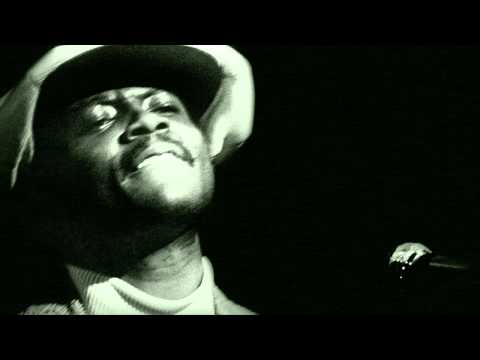


→ More from the 2020s File
View all 2020s hits →



Keep digging